


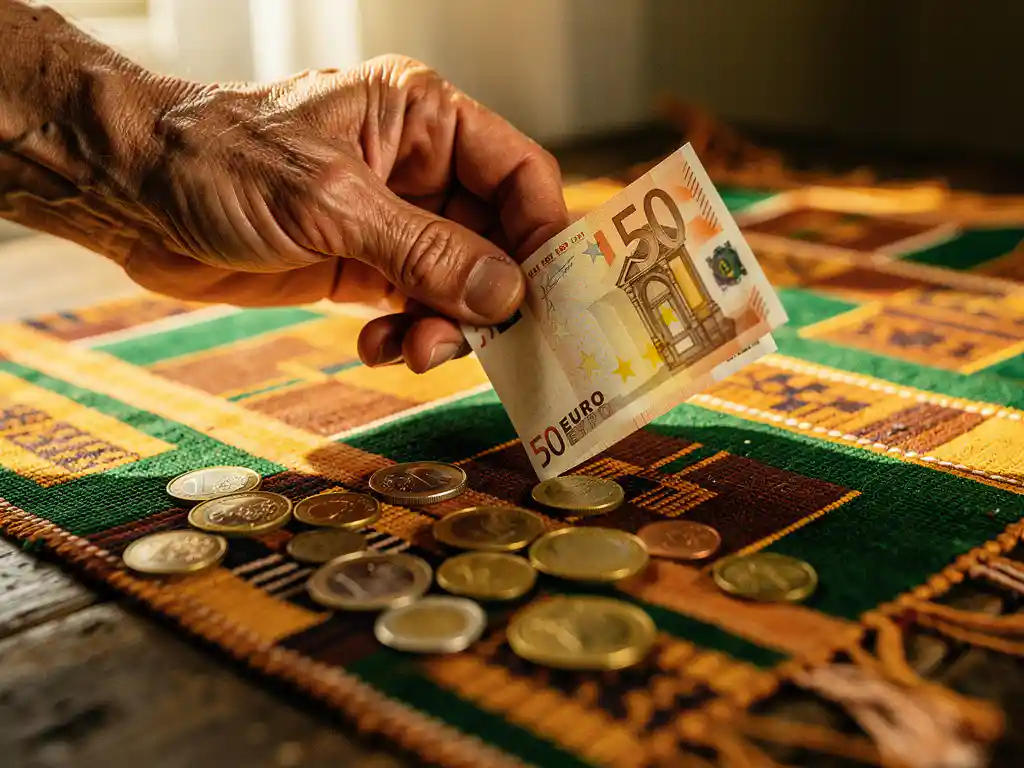
When you send money to Africa, the exchange rate you receive depends entirely on the service you use. Most money transfer providers apply a marked-up rate that sits below the mid-market rate, meaning you get fewer local currency units than the raw interbank rate would give you. The gap between services can be significant, so comparing rates before you transfer can save you real money over time. Below, we break down everything you need to know to make smarter decisions when sending money home.
Why do exchange rates vary between money transfer services?
Exchange rates vary between money transfer services because each provider sets its own markup on top of the interbank rate. This markup is one of the primary ways transfer companies earn revenue. Some services charge a low or zero transfer fee but compensate with a larger exchange rate margin, while others do the opposite. The result is that two providers can look equally affordable on the surface while delivering very different amounts to the recipient.
The level of competition in a particular corridor also plays a role. Routes with high transfer volumes, such as sending money to Nigeria or sending money to Uganda, tend to attract more providers, which drives rates closer to the mid-market benchmark. Less competitive corridors, such as sending money to Eritrea or sending money to South Sudan, may see wider margins because fewer services operate there and providers face higher operational costs and regulatory complexity.
The business model also matters. Banks typically apply the largest markups because international transfers are not their core product. Dedicated fintech transfer platforms generally offer tighter rates because they have optimised their infrastructure specifically for cross-border payments.
What is the mid-market rate and why does it matter?
The mid-market rate, also called the interbank rate or real exchange rate, is the midpoint between the buy and sell prices of two currencies on the global foreign exchange market. It is the rate you see on Google or financial data sites. It matters because it serves as the fairest benchmark for evaluating what any transfer service is actually charging you beyond its stated fee.
No retail provider offers the mid-market rate as standard, because they need to cover their own currency conversion costs and generate profit. However, the closer a provider’s offered rate is to the mid-market rate, the better the deal you are getting. When sending money to Africa from the United States, Australia, or Europe, always look up the current mid-market rate first and then compare it to the rate your chosen provider quotes you. The percentage difference is your true cost of conversion, separate from any transfer fee.
Some newer fintech platforms advertise mid-market rate transfers and instead charge a transparent flat or percentage fee. This model makes it easier to understand exactly what you are paying, which is always preferable to a bundled, opaque pricing structure.
What exchange rates do popular services offer for African corridors?
Popular money transfer services for African corridors generally fall into three tiers based on how close their offered rates are to the mid-market benchmark. Understanding where a provider sits helps you choose the right option for your specific destination, whether you are sending money to Nigeria, Tanzania, Egypt, Sudan, or beyond.
- Specialist fintech platforms (such as Wise, Remitly, and similar services) typically offer rates within 0.5% to 2% of the mid-market rate for high-volume corridors like Nigeria and Uganda, with transparent fees charged separately.
- Mobile money and regional platforms may offer competitive rates for specific country pairs, particularly for corridors like Tanzania or Uganda where mobile money infrastructure is strong, but margins can widen for less common destinations.
- Banks and traditional wire services often apply markups of 3% to 5% or more above the mid-market rate, in addition to fixed transfer fees, making them the most expensive option for most African corridors.
- Cash pickup services vary widely. Some offer strong rates to attract customers who prefer physical collection, while others offset lower fees with less favourable conversion rates.
For corridors such as sending money to Eritrea, South Sudan, or Sudan, the number of available providers is smaller, and rates may not be as competitive. Always compare at least two or three options before committing, particularly for these destinations.
How do transfer fees and exchange rates work together?
Transfer fees and exchange rates are two separate costs that together determine the total cost of sending money abroad. A low advertised fee does not mean a transfer is affordable if the exchange rate margin is high, and vice versa. To understand the true cost, you need to calculate how much local currency the recipient actually receives after both the fee and the rate conversion are applied.
Here is a practical way to think about it. Suppose you send 200 euros to Nigeria. Service A charges a 2 euro fee but applies a rate 3% below the mid-market rate. Service B charges a 6 euro fee but matches the mid-market rate exactly. Depending on the amount, Service B may deliver more naira to your recipient despite the higher headline fee. The only number that truly matters is the final amount received in the destination currency.
This is why transparency in pricing is so important for diaspora communities sending regular remittances home. Hidden margins built into exchange rates are easy to overlook, especially when a provider advertises “zero fees” prominently. Always ask for or calculate the total cost before confirming a transfer.
What factors cause exchange rates to Africa to fluctuate?
Exchange rates for African currencies fluctuate due to a combination of global economic forces and country-specific conditions. Understanding these drivers helps you anticipate when rates might move in your favour or against you when sending money to Africa from America, Australia, or Europe.
- Inflation differentials: Countries with higher inflation rates tend to see their currencies weaken over time relative to more stable currencies like the euro or US dollar.
- Central bank policy: Interest rate decisions and foreign exchange interventions by central banks in countries like Nigeria, Egypt, or Sudan directly affect how their currencies trade on international markets.
- Oil and commodity prices: Many African economies are commodity-dependent. Nigeria’s naira, for example, is closely linked to global oil prices. A drop in oil revenue puts downward pressure on the naira.
- Political stability: Political uncertainty or conflict, particularly relevant for Sudan and South Sudan, can cause rapid currency depreciation as investor confidence falls.
- Parallel market dynamics: In some countries, official and unofficial exchange rates diverge significantly, meaning the rate your recipient effectively accesses may differ from the interbank rate.
- Seasonal demand: Remittance flows often spike around holidays and festive seasons, which can temporarily affect liquidity and rates in smaller currency markets.
How can you get the best exchange rate when sending money to Africa?
Getting the best exchange rate when sending money to Africa comes down to comparing providers, timing your transfer strategically, and understanding the full cost rather than just the headline fee. A few consistent habits can make a meaningful difference in how much money your family receives over time.
- Compare the recipient amount, not the fee. Use comparison tools or manually check at least three providers. Enter the same send amount and compare how much arrives in the destination currency.
- Check the mid-market rate first. Look up the current rate on a neutral financial site before you compare providers. This gives you a benchmark to measure any provider’s rate against.
- Avoid bank transfers for international remittances. Banks consistently offer the least competitive exchange rates and highest fees for cross-border transfers to African destinations.
- Consider timing for volatile corridors. For currencies that fluctuate significantly, such as the Sudanese pound or the South Sudanese pound, monitor the rate over a few days if your transfer is not urgent.
- Use a single trusted platform for regular transfers. Some services offer loyalty benefits or slightly improved rates for frequent senders. Consolidating your transfers also makes it easier to track costs over time.
- Choose providers with transparent, per-second or itemised pricing. Services that show you exactly what you pay in fees and exactly what rate they apply make it much easier to verify you are getting a fair deal.
If you send money regularly, small improvements in the rate you receive add up significantly over months and years. Treating each transfer as a financial decision worth a few minutes of comparison is one of the simplest ways to protect the value of your remittances.
How FroggyTalk helps you stay connected and supported across borders
We built FroggyTalk specifically for African diaspora communities in Europe, because we know that staying connected to home is not just about phone calls. It is about feeling heard, seen, and noticed, no matter where you are.
When it comes to managing your money and communication across borders, here is what we offer:
- Transparent pricing with no hidden charges. Whether you are making international calls or using our money transfer service, we charge on a per-second basis with no surprise fees.
- Multilingual support in your language. Everything in the FroggyTalk app can be navigated in your preferred language, including Tigrinya, Hausa, Amharic, Arabic, French, and more, so you never have to struggle with a language barrier when managing your finances or communication.
- Sending money to Eritrea, Nigeria, Sudan, and beyond. Our international money transfer service is built on the same principles of affordability and accessibility that power our calling platform.
- A single platform for communication and financial needs. Manage your calls home and your transfers to family in one trusted place, without switching between multiple apps.
- Culturally sensitive customer support. Our team understands the specific challenges of the corridors we serve, from Nigeria to South Sudan to Egypt.
We are here to make your life abroad a little easier and your connection to home a little stronger. If you have questions about our services or want to know more about how we can support your community, get in touch with us and we will be happy to help.
Frequently Asked Questions
How do I know if the exchange rate I'm being quoted is fair?
The simplest way is to look up the current mid-market rate on a neutral source like Google or XE.com, then calculate the percentage difference between that rate and the one your provider is offering. If the gap is more than 2–3%, you may be paying a hidden margin that significantly reduces what your recipient receives. As a rule of thumb, anything within 0.5–1.5% of the mid-market rate for a major corridor like Nigeria or Uganda is considered competitive.
What is the best way to compare money transfer services for African destinations?
Rather than comparing fees in isolation, enter a fixed send amount on at least three different platforms and compare the final amount delivered in the destination currency. Comparison websites like Monito or SaveOnSend can speed this process up by aggregating multiple providers side by side. Always make sure you are comparing like for like — the same send amount, the same delivery method, and the same destination country.
Are there corridors to Africa where it is especially difficult to get a good exchange rate?
Yes. Corridors like Eritrea, South Sudan, and Sudan have far fewer competing providers than high-volume routes like Nigeria or Uganda, which means providers face less pricing pressure and margins tend to be wider. Additionally, some of these countries operate parallel or black-market exchange rates that diverge significantly from the official interbank rate, making it harder to assess the true value your recipient will access. For these corridors, it is especially important to use a provider with local expertise and transparent pricing.
What common mistakes should I avoid when sending money to Africa?
The most common mistake is focusing solely on the advertised transfer fee while ignoring the exchange rate margin — a provider offering ‘zero fees’ may still be charging you significantly through an unfavourable rate. Another frequent error is defaulting to a bank transfer out of habit, as banks consistently offer the least competitive rates for African remittance corridors. Finally, avoid sending large amounts without first checking whether the rate has moved recently, particularly for volatile currencies like the Sudanese pound or the South Sudanese pound.
Does the amount I send affect the exchange rate I receive?
In some cases, yes. Certain providers offer tiered pricing where larger transfer amounts attract a smaller percentage fee or a marginally better exchange rate, effectively rewarding higher-value transfers. However, the exchange rate margin itself is usually fixed regardless of amount for most retail platforms. It is worth checking whether your provider has any thresholds or loyalty incentives if you send regularly or in larger amounts.
How often do exchange rates for African currencies change, and should I try to time my transfers?
Exchange rates for African currencies can shift daily or even intraday, driven by factors like oil prices, central bank interventions, and political developments. For non-urgent transfers to highly volatile corridors, monitoring the rate over a few days can sometimes yield a noticeably better outcome. That said, for most regular remittances — especially smaller amounts sent frequently — the time spent waiting rarely outweighs the benefit, and consistency in using a low-margin provider will deliver more value over time than trying to time the market.
Is it safe to use fintech apps for sending money to Africa instead of my bank?
Yes, provided the platform is properly licensed and regulated in the country it operates from. Reputable fintech transfer services are authorised by financial regulators such as the FCA in the UK, FinCEN in the US, or AUSTRAC in Australia, and are subject to the same anti-money laundering and consumer protection rules as banks. Always verify that a service is regulated before using it, and look for clear contact details, transparent terms, and a verifiable track record — all of which are signs of a trustworthy provider.
Related Articles
- Can you send money to Sudan with low fees?
- How do you call Africa from your phone without buying a SIM card?
- Can you listen to African radio while using the same app to call family?
- How do you call Tanzania from Europe without hidden fees?
- How do you protect yourself from international money transfer scams?