


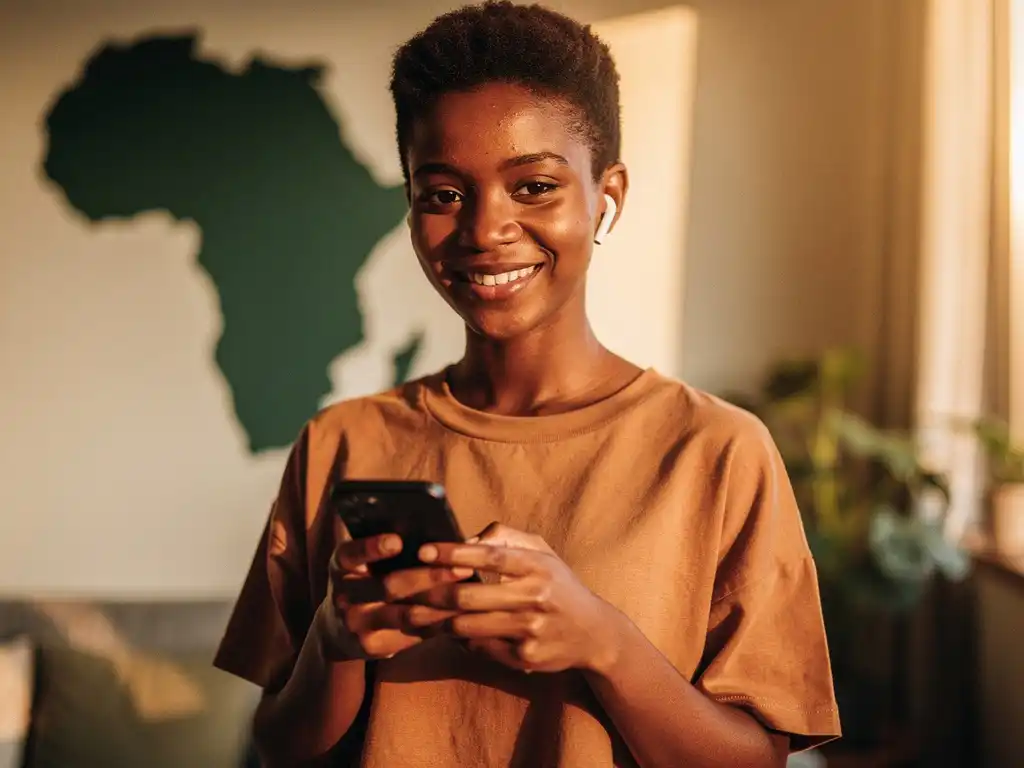
Yes, you can listen to African radio and call family using the same app. FroggyTalk combines international calling with a built-in Radio Hub that streams African FM stations, so you can switch between the two without leaving the app. Below, we answer the most common questions about how it all works.
Does one app really handle both calling and radio streaming?
Yes, a single app can handle both international calling and African radio streaming at the same time. FroggyTalk brings these two features together in one place, meaning you do not need a separate calling app and a separate radio app sitting on your phone. Everything lives under one roof, and the app can be fully navigated in your local language.
The Radio Hub inside the app aggregates African FM stations from across the continent, while the calling feature lets you dial any phone number abroad using your internet connection. Users have already logged more than 3.6 million listening minutes on the Radio Hub alone, which gives you a sense of how actively people use it. Whether you want to catch the morning news from Addis Ababa before calling your mother in Lagos, or simply stream music while you check your call balance, the experience is designed to feel seamless rather than stitched together.
What African radio stations can you actually listen to?
The Radio Hub aggregates FM stations from multiple African countries and regions, giving you access to news, music, talk shows, and cultural programming from your home region. Rather than hunting for streams across different websites, you can find them collected in one place inside the app.
The selection covers stations from countries including Eritrea, Ethiopia, Sudan, Nigeria, Niger, and beyond. This matters because diaspora communities often want more than just a phone call home. Hearing a familiar presenter, catching local news in your language, or listening to traditional music are all small but meaningful ways of staying connected to where you come from. The Radio Hub was built with exactly that in mind.
How does calling family in Africa work without them having the app?
You call any regular phone number in Africa directly from the app, and the person on the other end picks up on their mobile or landline as a normal call. They do not need to download anything, create an account, or have an internet connection. All they need to do is answer.
This works because the app routes your call over your internet connection on your end, then connects to the recipient’s phone through the regular telephone network on their end. It is one of the most practical aspects of this kind of international calling service, because it removes a real barrier. You cannot always ask an elderly parent or a relative in a rural area to install an app and set up an account just to receive your call. With this approach, the technical side is entirely your responsibility, and theirs is simply to pick up the phone.
Which African countries and languages are supported?
The app supports calls to a wide range of African countries, including Eritrea, Sudan, Ethiopia, Niger, Nigeria, Uganda, Tanzania, Egypt, and South Sudan, among others. On the language side, the app interface and support are available in Tigrinya, English, Arabic, Hausa, Amharic, Dutch, French, Swedish, Danish, Norwegian, and Italian.
That language support is worth pausing on. Many international calling services operate only in English or a handful of European languages, which creates a real barrier for users who are not comfortable in those languages. When every part of the app, from top-up instructions to billing details, is readable in your own language, the whole experience becomes less stressful. You understand exactly what you are paying for and how to use the service, without needing to rely on someone else to translate for you.
Is it cheaper than regular international calling methods?
Calling Africa through an internet-based app is generally significantly cheaper than using traditional phone cards or standard international rates from a mobile carrier. The key difference lies in the billing model and the absence of hidden fees.
Traditional phone cards often advertise a low per-minute rate but then subtract connection fees, maintenance fees, or rounding charges that eat into your balance before you have even said hello. With a per-second billing model and no hidden fees or connection charges, you pay only for the seconds you actually speak. That means if you have a five-minute conversation, you pay for five minutes, not for a rounded-up block or a connection fee on top.
For families who call frequently, those differences add up quickly over a month. If you are regularly making calls to Eritrea, Nigeria, Sudan, or other African countries, the amount of actual talk time you get for your money is the number that matters most, and transparent per-second billing consistently delivers more minutes for the same spend compared to traditional phone card alternatives.
Who is this kind of app actually built for?
This type of app is built for African diaspora communities in Europe, specifically migrants, refugees, and established diaspora members who maintain regular contact with family, friends, and business connections back home. It is designed for people who need affordable, reliable calls to Africa as a regular part of their lives, not an occasional luxury.
Beyond the practical need to call home, this audience often faces a combination of challenges that a standard calling app does not address. Language barriers, high communication costs, and a sense of cultural disconnection are all real and daily experiences. An app that lets you call Nigeria, listen to a radio station from Lagos, and navigate the whole thing in Hausa or Yoruba is not just convenient. It is a small but meaningful acknowledgment that your needs and your identity matter.
The broader vision is to create a digital home base where connection, culture, and practical support come together in one place. That is a very different proposition from a generic calling app that happens to include some African countries in its rate list.
How FroggyTalk helps you stay connected to Africa
FroggyTalk was built specifically for the African diaspora in Europe, and that focus shapes every part of the experience. Here is what that looks like in practice:
- Affordable calls to Africa with per-second billing and no hidden fees, so you always know how many minutes your balance covers
- No app required on the other end, meaning family in Eritrea, Nigeria, Sudan, Ethiopia, Uganda, Tanzania, Egypt, or South Sudan can receive your call on any phone
- African FM radio streaming through the Radio Hub, keeping you connected to news, music, and culture from home
- Full app translation into your local language, including Tigrinya, Arabic, Hausa, Amharic, French, and more, so nothing gets lost in translation
- Support for a wide range of African countries, including destinations that are often underserved or overpriced by mainstream providers
We built FroggyTalk because we believe every person in the diaspora deserves to feel heard, seen, and valued, and that starts with being able to call home without worrying about the cost or the quality. If you want to learn more or have questions about how the service works for your specific country, get in touch with us and we will help you get started.
Frequently Asked Questions
How do I top up my calling credit, and what payment methods are accepted?
You can top up your balance directly inside the FroggyTalk app using common payment methods available in your country, such as credit or debit cards. The top-up process is designed to be straightforward, and because the app interface is available in your local language, every step of the billing process is easy to follow without confusion. Once your balance is topped up, it is immediately available for calls, so there is no waiting period before you can dial.
What happens to my call if my internet connection drops mid-conversation?
If your internet connection becomes unstable or drops during a call, the call may experience reduced audio quality or disconnect, similar to what happens with any internet-based voice service. To get the best call quality, it is recommended to use a stable Wi-Fi connection where possible, though the app also works over a 4G or 5G mobile data connection. If a call does drop, you can simply redial immediately, and because billing is per-second with no connection fees, you will only be charged for the seconds you were actually connected.
Can I use FroggyTalk to call African countries that are typically expensive or hard to reach through mainstream providers?
Yes, one of the specific goals behind FroggyTalk is to serve destinations that are often underserved, overpriced, or simply excluded from mainstream international calling services. Countries like Eritrea and South Sudan, for example, are frequently expensive or unreliable through standard carriers, yet they are priority destinations for many diaspora communities in Europe. FroggyTalk's rate structure is built with these communities in mind, so it is worth checking the specific rates for your destination country directly in the app.
Is there a minimum top-up amount, and does my credit expire if I don't use it?
Minimum top-up amounts and credit expiry policies can vary, so it is best to check the current terms directly within the app or on the FroggyTalk website for the most accurate and up-to-date information. What is important to know is that the per-second billing model means your balance is not eroded by hidden fees or connection charges between calls, so your credit goes further compared to traditional phone cards. If you have specific questions about your account, the FroggyTalk support team can clarify the exact terms for your situation.
Can I listen to the Radio Hub while making a call at the same time?
The Radio Hub and the calling feature are both housed within the same app, but actively streaming radio audio and conducting a voice call simultaneously on the same device would create audio conflicts, so most users switch between the two rather than running them at the same time. A common pattern is to listen to a favourite African FM station before or after a call, using the radio as part of the same connected experience without needing to jump between multiple apps. Think of it as having both features readily available in one place, ready to use whenever you need them.
What if a family member in Africa has trouble receiving my calls — is there a troubleshooting process?
Since the person you are calling does not need the app, most receiving issues are related to standard mobile network conditions on their end, such as poor coverage, a switched-off phone, or a full voicemail box — the same reasons any regular call might not connect. On your end, ensure you are dialling the correct international format for the number, including the country code, as an incorrectly formatted number is one of the most common reasons a call fails to connect. If problems persist, the FroggyTalk support team can help you verify the number format and confirm that the destination is active on the network.
How is FroggyTalk different from just using WhatsApp or another free calling app to reach family in Africa?
Apps like WhatsApp require both parties to have the app installed, an active internet connection, and an account — which is a real barrier when calling elderly relatives, people in rural areas with limited data access, or anyone who simply does not use smartphones regularly. FroggyTalk routes your call to any standard mobile or landline number, so the person on the other end just needs to answer their phone as they would any normal call. Combined with the African Radio Hub and full multilingual support, FroggyTalk is purpose-built for the diaspora experience rather than being a general-purpose messaging tool that happens to support voice calls.