


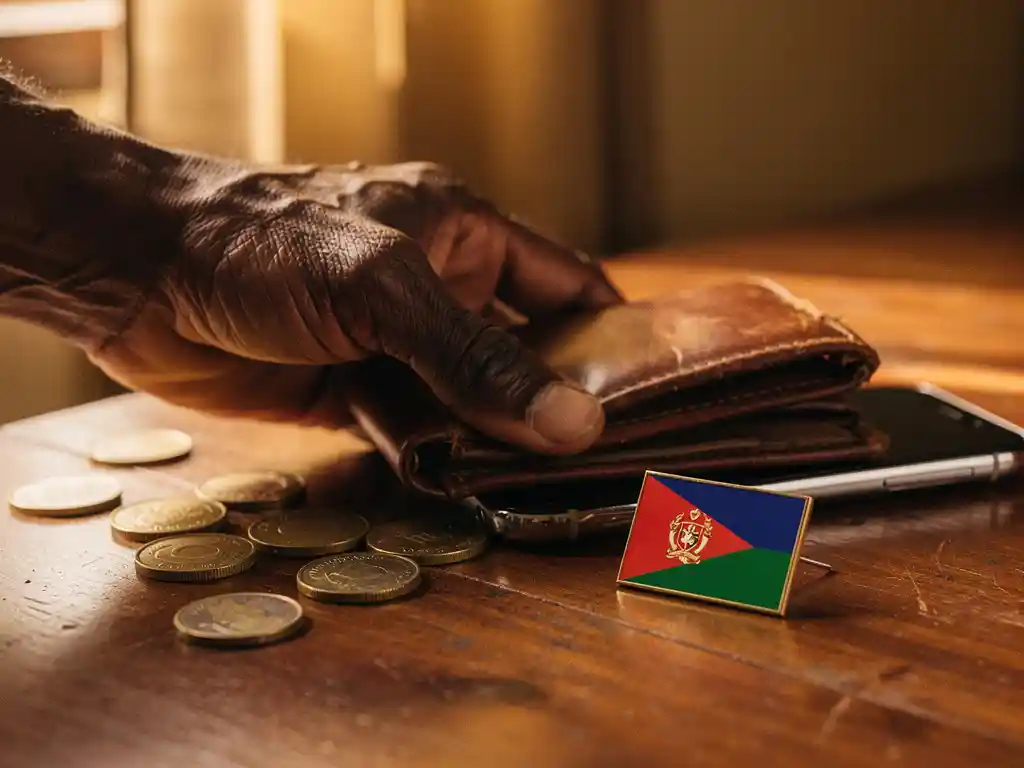
Finding a money transfer service that supports Tigrinya speakers is genuinely challenging, but it is possible. Look for platforms that offer multilingual customer support, in-app language settings that include Tigrinya, and transparent fee structures with no hidden charges. Services built specifically for the African diaspora in Europe are your best starting point, as they are far more likely to have invested in the languages their communities actually speak.
For Eritrean and Ethiopian communities in Europe, language access is not a luxury — it is a basic requirement for using a financial service safely and confidently. The questions below walk you through exactly what to look for, what to avoid, and where to find services that truly meet your needs.
What languages do most money transfer services support?
Most mainstream money transfer services support a small set of widely spoken languages, typically English, French, Spanish, Arabic, and Portuguese. A handful of larger platforms also include German, Dutch, or Italian. This covers a broad global user base but leaves out hundreds of millions of people whose first languages fall outside that narrow list.
For African diaspora communities specifically, this gap is significant. Languages like Tigrinya, Amharic, Hausa, and Somali are spoken by millions of people across Europe and Africa, yet they are rarely prioritized by large financial platforms. The assumption seems to be that users will manage in English or French, but for someone navigating a financial transaction in a second or third language, that assumption creates real risk.
- English, French, Spanish, and Arabic are the most commonly supported languages
- Amharic occasionally appears on platforms focused on East African corridors
- Tigrinya is almost entirely absent from mainstream transfer services
- Hausa support is rare despite the size of the Nigerian diaspora in Europe
- Most platforms offer customer support in fewer languages than their app interface
The practical result is that many diaspora users end up relying on a family member or community contact to help them complete transfers, which creates dependency and privacy concerns when sending money to family back home.
Why is Tigrinya so rarely supported by transfer platforms?
Tigrinya is rarely supported by transfer platforms because it is not considered commercially large enough to justify the investment by most fintech companies. The language is spoken primarily by Eritreans and parts of northern Ethiopia, a population that is significant in human terms but small in the market logic used by large financial institutions.
This reflects a broader pattern in the fintech industry: language support tends to follow revenue potential rather than community need. When a platform is deciding which languages to add, they typically look at user volume, transaction value, and operational cost. Tigrinya-speaking communities, despite their strong remittance culture and genuine financial need, often do not meet the thresholds that trigger investment in language localization.
There is also a political dimension. Eritrea’s complex geopolitical situation means that many Eritreans in Europe arrived as refugees or asylum seekers, not as a high-income migrant segment. Financial services have historically underserved refugee communities, even when those communities are among the most active users of international money transfer services.
The result is a serious gap: people who most need accessible, clearly explained financial services are the least likely to find them in a language they fully understand.
What should you look for in a Tigrinya-friendly transfer service?
A genuinely Tigrinya-friendly transfer service should offer in-app navigation in Tigrinya, customer support staffed by Tigrinya speakers, and transparent pricing that does not rely on small print to hide fees. Language support that only exists in the marketing material but not inside the app itself does not count.
Here is a numbered checklist to use when evaluating any transfer service:
- In-app language settings: Can you switch the entire app interface to Tigrinya, not just the homepage?
- Customer support language: Is there a live support option in Tigrinya, or at minimum in Amharic or Arabic as a fallback?
- Transparent fee structure: Are all fees shown upfront before you confirm the transfer, with no connection charges or surprise deductions?
- Supported destinations: Does the service cover Eritrea, Ethiopia, Sudan, and other key corridors for Tigrinya-speaking communities?
- Real-time tracking: Can you follow your transfer from send to receipt without needing to contact support?
- No minimum transfer barriers: Are small, frequent transfers possible without penalty fees that eat into the amount sent?
Transparency is especially important. When you pay bills or transfer funds across borders, hidden fees can significantly reduce what your family actually receives. A service that shows you the exact amount arriving before you send is far more trustworthy than one that only reveals the exchange rate after the transaction is complete.
How do you verify that a service genuinely supports Tigrinya?
To verify that a service genuinely supports Tigrinya, test the language setting before creating an account, and contact their support team directly in Tigrinya to see how they respond. Marketing pages that mention Tigrinya do not always reflect the actual in-app experience.
Here are practical steps to check before committing to a platform:
- Download the app and look for Tigrinya in the language selection menu before registering
- Send a message to customer support written in Tigrinya and measure both the response time and the quality of the reply
- Check community forums and diaspora Facebook groups for first-hand reviews from Eritrean users in Europe
- Look at the app store reviews filtered by your region and search for mentions of language support
- Ask at local Eritrean community organizations, which often have direct experience with which services actually work
Community word of mouth is often the most reliable source of truth here. Eritrean and Tigrinya-speaking communities in Europe are well connected, and a service that genuinely works for them tends to spread quickly through those networks. If a platform is hard to find in community conversations, that is itself a signal.
Are there apps built specifically for the African diaspora in Europe?
Yes, there are apps built specifically for African diaspora communities in Europe, and they tend to offer a meaningfully different experience from mainstream financial platforms. These services are designed around the actual languages, corridors, and cultural needs of communities from Eritrea, Nigeria, Sudan, Ethiopia, and beyond, rather than treating African users as an afterthought.
Diaspora-focused platforms are more likely to support languages like Tigrinya, Amharic, Hausa, and Arabic alongside European languages such as Dutch, Swedish, French, and Italian. They also tend to be more transparent about fees because their users are particularly sensitive to costs, and they understand that every euro matters when you are supporting family across borders.
The difference in approach is real. A mainstream app might list “Africa” as a supported region while only covering a few major corridors with limited language options. A diaspora-focused service is more likely to have been built by people from those communities, which means the design decisions reflect lived experience rather than market assumptions.
How FroggyTalk helps with finding a Tigrinya-friendly money transfer service
We built FroggyTalk around a simple belief: everyone deserves to feel heard, seen, and noticed, regardless of which language they speak or where they come from. That is why our International Money Transfer Service was designed from the ground up with the African diaspora in Europe at its center.
- Full multilingual support: Everything in the app can be navigated in your own language, including Tigrinya, Amharic, Arabic, Hausa, Dutch, French, Swedish, Danish, Norwegian, and Italian
- Transparent pricing: No hidden fees, no connection charges, and no surprises — you see exactly what arrives before you confirm
- Supported corridors: We cover key destinations including Eritrea, Sudan, Ethiopia, Nigeria, Niger, and beyond, so your transfer reaches the people who need it
- Real-time tracking: Follow your transfer from the moment you send to the moment it arrives
- One platform, two services: Manage both your international calls and your money transfers in a single app, built for your community
If you want to send money to Eritrea, send money to Nigeria, or reach family anywhere across Africa, we are here to make that as straightforward as possible, in a language that feels like home. Get in touch with our team and we will help you get started.
Frequently Asked Questions
Can I use a Tigrinya-friendly transfer service if I live in a smaller European country, not just the UK or Germany?
Yes, diaspora-focused transfer services are typically designed to serve Tigrinya-speaking communities across all of Europe, not just the largest countries. Platforms like FroggyTalk support users in countries such as Sweden, Norway, Denmark, the Netherlands, and Italy, reflecting where Eritrean communities have actually settled. When evaluating a service, check whether your specific country of residence is listed as a supported sending country before registering.
What is the safest way to get started with a new money transfer service for the first time?
Start with a small test transfer before sending a larger amount, so you can verify the full process — including fees, exchange rate, delivery speed, and recipient confirmation — without significant risk. Make sure the platform is licensed and regulated by a financial authority in your country of residence, such as De Nederlandsche Bank (DNB) in the Netherlands or the FCA in the UK. Once you have confirmed the transfer arrived correctly and the fees matched what was shown upfront, you can proceed with confidence for future sends.
What happens if my transfer is delayed or something goes wrong — can I get support in Tigrinya?
With a genuinely Tigrinya-friendly service, you should be able to reach customer support directly in Tigrinya, either via live chat, phone, or email, without needing to switch to English or rely on a third party to explain your issue. Before committing to a platform, test this specifically by contacting support in Tigrinya and evaluating both the response time and the quality of the reply. A platform that cannot respond clearly in Tigrinya when something goes wrong is not truly Tigrinya-supported, regardless of what its marketing page claims.
Are money transfers to Eritrea subject to any special restrictions I should be aware of?
Sending money to Eritrea can involve specific regulatory considerations depending on your country of residence and the transfer corridor used, so it is important to use a licensed platform that is familiar with this route. Diaspora-focused services that explicitly list Eritrea as a supported destination are more likely to have navigated these compliance requirements on your behalf. Always confirm with the platform that your intended transfer corridor is fully operational before initiating a send, particularly if you are using a service for the first time.
How do exchange rates affect how much my family actually receives, and how can I get the best rate?
The exchange rate applied to your transfer can have just as much impact on the final amount received as the transfer fee itself, and some platforms offer attractive low fees while quietly applying a poor exchange rate. Always look at the total amount your recipient will receive in local currency, not just the headline fee, before confirming any transfer. Comparing two or three services side by side on the same day — using the same send amount — is the most reliable way to identify which platform genuinely delivers the most value to your family.
Is it safe to manage both international calls and money transfers within a single app?
Yes, using a single regulated platform for both calls and transfers can actually improve security and convenience, since you are managing fewer accounts and sharing your personal data with fewer third parties. The key requirement is that the platform holds the appropriate financial licenses for money transfer in your country and uses strong data encryption across all services. Combining both services in one app also makes it easier to stay connected with family while supporting them financially, without switching between multiple providers.
What are the most common mistakes Tigrinya speakers make when choosing a money transfer service?
The most common mistake is trusting a platform based on its marketing language alone — a homepage or advertisement in Tigrinya does not guarantee that the full app experience, fee disclosures, or customer support are also available in Tigrinya. Another frequent issue is overlooking the exchange rate and focusing only on the advertised transfer fee, which can result in the recipient receiving significantly less than expected. Finally, many users skip the step of checking community reviews from other Eritrean users in Europe, which is often the fastest and most reliable way to find out whether a service truly delivers on its promises.