


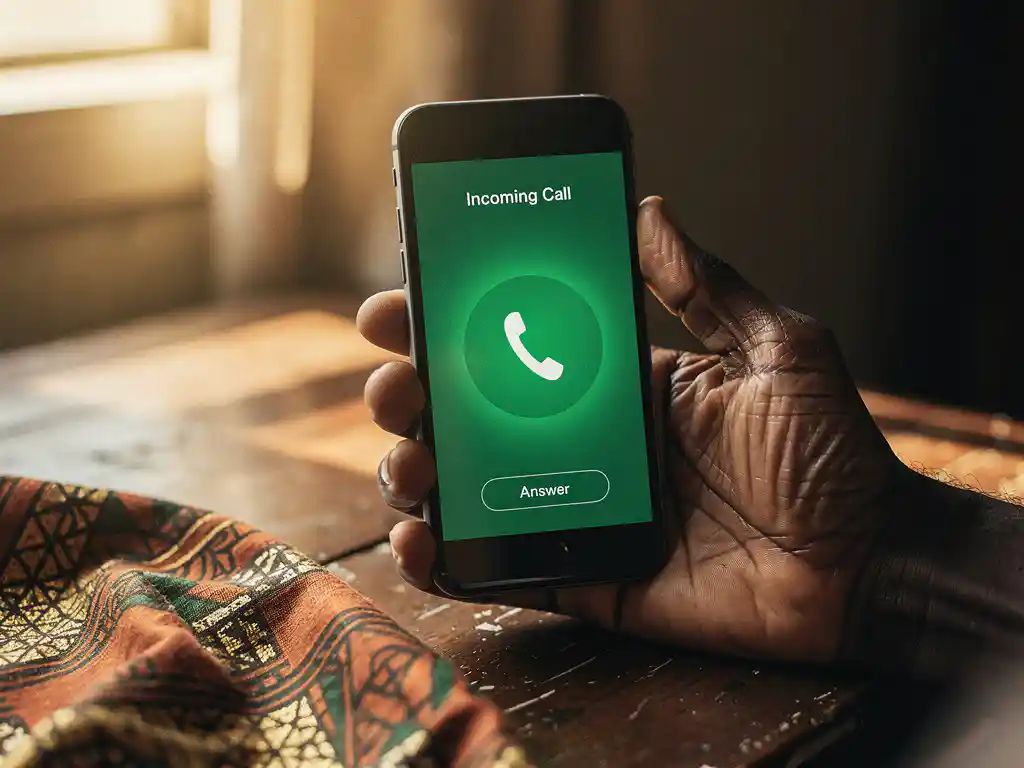
No, you do not need a SIM card to call Africa from your phone. All you need is an internet connection and a calling app that routes your call over the internet directly to a mobile or landline number in Africa. The person you are calling does not need the app or internet access on their end.
This approach, often called VoIP calling, has made it genuinely affordable for people in Europe to stay in touch with family and friends across the continent. Whether you want to make a call to Nigeria, a call to Eritrea, or reach someone in Sudan or Ethiopia, the process works the same way. Below, we answer the most common questions people have before making their first SIM-free call to Africa.
Do you need a SIM card to make international calls to Africa?
You do not need a SIM card to make international calls to Africa. A calling app that uses your Wi-Fi or mobile data connection can connect your call directly to any phone number in Africa, including mobile and landline numbers. The recipient picks up just like a normal phone call, with no app required on their side.
Traditional SIM-based international calls can be expensive and unpredictable in quality. Internet-based calling cuts out the middlemen and routes your voice data over the internet instead of through a phone network, which is why the costs are significantly lower. As long as you have a stable internet connection, you have everything you need.
How does calling Africa over the internet actually work?
Calling Africa over the internet works through a technology called Voice over Internet Protocol, or VoIP. When you speak into your phone, the app converts your voice into data packets, sends them over the internet to a server, and then routes them to the recipient’s phone number through a local telephone network in their country. The whole process happens in milliseconds.
From the recipient’s perspective, the call arrives like any other phone call. They do not need an app, a smartphone, or even an internet connection. This is what makes internet calling so practical for reaching family members in rural areas of Nigeria, Ethiopia, or Sudan, where smartphone access or data connectivity may be limited.
The quality of your call depends mostly on your own internet connection. A stable Wi-Fi signal or a strong 4G connection will give you clear, reliable audio. A weak or unstable connection is the most common reason calls sound choppy or drop, which we cover in more detail at the end of this article.
What’s the cheapest way to call Africa from Europe?
The cheapest way to call Africa from Europe is to use an internet-based calling app with per-second billing and no connection fees. Per-second billing means you only pay for the exact time you spend on the call, rather than being rounded up to the nearest minute. Over time, this adds up to meaningful savings, especially for frequent callers.
When comparing options, look for these features to make sure you are getting real value:
- Per-second billing: You pay only for what you use, not rounded-up minutes
- No connection fees: Some providers charge a fee just for connecting the call, before you have said a single word
- No hidden charges: The rate you see should be the rate you pay
- Transparent rate display: You should be able to see exactly how many minutes your balance buys before you top up
Phone cards were once the standard solution for affordable international calls to Africa, but they often came with expiry dates, hidden fees, and poor call quality. Internet calling apps have largely replaced the phone card to call Africa model with something more transparent and more reliable.
Which African countries can you call without a SIM card?
You can call virtually any African country without a SIM card using an internet calling app. Most apps support calls to mobile and landline numbers across the continent. Commonly supported destinations include Nigeria, Eritrea, Ethiopia, Sudan, South Sudan, Egypt, Uganda, Tanzania, Niger, and many others.
Coverage and call rates vary by destination, so it is worth checking the rate for your specific country before topping up. Here is a quick overview of destinations that diaspora communities in Europe most frequently call:
- Nigeria — one of the most dialed destinations from Europe, with strong diaspora communities in the UK, Netherlands, and Italy
- Eritrea — a priority destination for many communities in Scandinavia and the Netherlands
- Ethiopia — frequently called by communities across Germany, Sweden, and the UK
- Sudan and South Sudan — important destinations for communities across Europe
- Egypt — a major destination in North Africa with reliable connectivity
- Uganda and Tanzania — growing diaspora communities across Europe maintain regular contact with these countries
If you are unsure whether your destination is supported, check the app’s rate page or country list before you commit to a top-up.
What do you need to start calling Africa from your phone today?
To start calling Africa from your phone without a SIM card, you need three things: a smartphone, an internet connection, and a calling app with credit loaded. That is it. Setup takes only a few minutes, and you can be on your first call the same day.
Here is how to get started:
- Download a calling app that supports your destination country in Africa
- Create an account using your phone number or email address
- Set your preferred language — a good app will let you use the interface in your own language, whether that is Tigrinya, Hausa, Amharic, Arabic, or another language
- Top up with credit and check how many minutes your balance gives you for your specific destination
- Dial the number using the full international format, including the country code
You do not need to teach the person you are calling anything new. They simply receive a call on their regular phone number and answer as normal.
Why do calls to Africa drop or sound unclear — and how can you fix it?
Calls to Africa drop or sound unclear most often because of a weak or unstable internet connection on your end. Since the call travels over the internet before reaching the phone network in Africa, the quality of your connection directly affects the quality of the audio. A slow or congested network causes delays, crackling, and dropped calls.
Here are the most common causes and how to fix them:
- Weak Wi-Fi signal: Move closer to your router or switch to mobile data if your Wi-Fi is unreliable
- Too many devices on the network: If your household is streaming video or downloading files at the same time, your call quality can suffer. Reduce network traffic during calls
- Mobile data in a low-coverage area: If you are on 3G or have one bar of signal, call quality will be poor. Wait until you have a stronger connection
- App running in the background: Make sure your calling app has the necessary permissions to run properly and is not being restricted by your phone’s battery saver settings
- Network congestion at peak times: Calling during off-peak hours can sometimes improve quality if the issue is on the network side
If the problem persists after checking your connection, try closing and reopening the app, or switch between Wi-Fi and mobile data to see which gives better results. Most call quality issues are resolved by simply improving the stability of your internet connection.
How FroggyTalk helps you call Africa affordably and clearly
We built FroggyTalk specifically for diaspora communities who need reliable, affordable ways to stay connected with family and friends across Africa. We know how much these calls matter, and we want every person using our app to feel heard, seen, and valued, no matter where they are calling from or where home is.
Here is what makes FroggyTalk different:
- Per-second billing with no hidden fees: You see exactly how many minutes your credit buys before you top up, and you are never charged a connection fee
- No SIM card needed: Call Nigeria, Eritrea, Ethiopia, Sudan, South Sudan, Egypt, Uganda, Tanzania, and more using just your internet connection
- The person you call does not need the app: They receive a normal phone call on their regular number
- Full language support: Everything in the app can be used in your preferred language, including Tigrinya, Hausa, Amharic, Arabic, French, and more
- Transparent, reliable service: No surprises, no confusing billing, just clear calls at fair rates
Ready to make your first call? Get in touch with us or explore our international calling guide to find the best rates for your destination and get started today.
Frequently Asked Questions
Can I use a calling app to reach African numbers if I'm roaming in another country?
Yes, as long as you have an active internet connection — whether through local Wi-Fi or a roaming data plan — you can use a VoIP calling app to reach any supported African number. This makes it especially useful for travelers who want to avoid expensive roaming charges on top of international call rates. Just be mindful of your roaming data allowance if you are not connected to Wi-Fi, as voice calls do consume a small amount of data.
How much data does an internet call to Africa actually use?
A typical VoIP call uses roughly 0.5 MB to 1 MB of data per minute, depending on the app and the audio quality settings. This means a 10-minute call would use around 5–10 MB, which is very manageable even on a limited mobile data plan. If you are making long or frequent calls, connecting to Wi-Fi is always the most cost-effective option.
Is it safe to top up credit inside a calling app, and how does billing work?
Reputable calling apps use standard secure payment methods — such as credit cards, debit cards, or PayPal — with encrypted transactions, so topping up is safe. Most apps work on a prepaid credit model, meaning you load a balance and draw it down as you make calls, with no risk of unexpected monthly charges or overage fees. Always look for apps that clearly display the rate per minute for your destination before you commit to a top-up.
What if the person I'm calling in Africa has a different number or switches SIM cards frequently?
This is a common situation in many African countries, where people often use multiple SIM cards or switch numbers to take advantage of different network deals. The best approach is to save multiple numbers for the same contact and confirm the active number before calling. Since calls are billed per second, a quick check call costs very little and saves the frustration of calling a number that is no longer in use.
Can I receive calls back from Africa on the same app?
Most VoIP calling apps are designed primarily for outbound calls, meaning you use them to call out but the app does not provide you with a local number that others can dial back. If someone in Africa wants to call you back, they would typically call your regular mobile number. Some apps do offer virtual number features as an add-on, so it is worth checking the app's features page if two-way calling is important to you.
Are there any restrictions on which phone or operating system I need to use a calling app?
Most calling apps are available for both Android and iOS, covering the vast majority of smartphones in use today. You do not need a high-end or recent device — even older smartphones running reasonably up-to-date software will work fine for VoIP calls. If you are unsure, check the app's listing on the Google Play Store or Apple App Store, where minimum operating system requirements are clearly listed.
What's the difference between calling Africa through a calling app versus using WhatsApp or a similar messaging app?
Apps like WhatsApp require both parties to have the app installed and an active internet connection, which means the person you are calling in Africa also needs a smartphone and mobile data. A dedicated calling app like FroggyTalk routes calls directly to any standard phone number — mobile or landline — with no app or internet required on the recipient's end. This makes VoIP calling apps far more practical for reaching family members who may not have smartphones or reliable data access.