


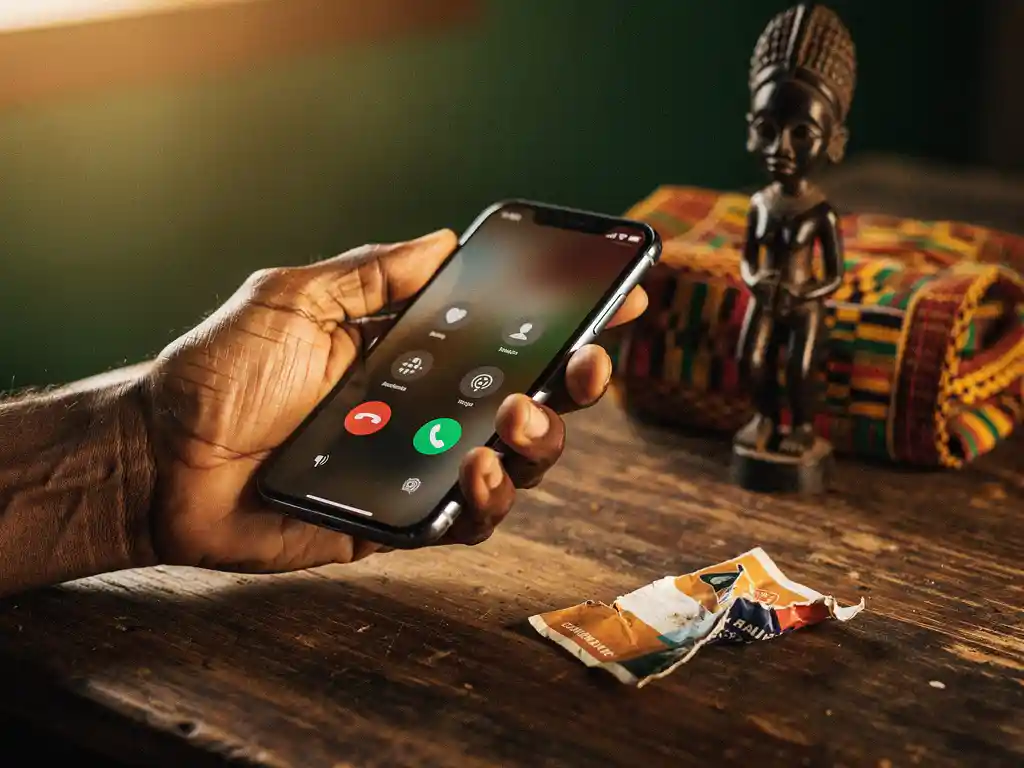
The best way to avoid losing money on unused calling credit when you call Africa is to switch from prepaid credit cards with expiry dates to a per-second billing app that only charges you for the time you actually use. Traditional phone cards and many calling apps lock your money into credit that vanishes if you do not use it within 30 to 90 days. The sections below explain exactly how these billing traps work and what to look for instead.
Why does unused calling credit expire so fast?
Calling credit expires quickly because most providers design their products around a subscription or prepaid model that encourages repeat purchases rather than long-term value. When you buy a phone card to call Africa, the expiry date is built into the business model. Providers count on a percentage of customers never using their full balance, which becomes pure profit.
There are a few specific reasons why expiry periods tend to be short:
- Revenue incentives: Short expiry windows push customers to top up more frequently, even when they still have a remaining balance.
- Regulatory minimums: In some markets, providers are only required to keep credit valid for a minimum period, so they set expiry dates as close to that floor as possible.
- Inactivity clauses: Many providers expire credit not just after a fixed date but also after a period of account inactivity, which can catch irregular callers off guard.
- Bundle structures: Weekly or monthly calling bundles reset regardless of how much you used, meaning any leftover minutes simply disappear.
If you call Africa irregularly, for example when there is a family event or a time difference that makes scheduling difficult, you are especially vulnerable to losing credit. The solution is to move away from time-limited bundles entirely and toward a model where your balance does not have an arbitrary deadline attached to it.
What’s the difference between per-second and per-minute billing for international calls?
Per-second billing charges you only for the exact seconds your call lasts, while per-minute billing rounds every call up to the nearest full minute. For international calls to Africa, this difference can quietly drain a significant portion of your balance over time, especially if you make many short calls or calls that end a few seconds into a new minute.
Here is a practical example. Imagine you make a call that lasts 1 minute and 10 seconds. Under per-minute billing, you are charged for 2 full minutes. Under per-second billing, you pay for exactly 70 seconds. On a single call, that difference seems small, but across dozens of calls per month, it adds up to real money you never actually spent talking.
Per-minute billing was designed for an era of circuit-switched telephone networks where billing in smaller increments was technically complicated. With modern international calling apps running over the internet, per-second billing is entirely achievable and far fairer to the customer. When comparing calling options, always check the billing increment in the terms and conditions, not just the advertised rate per minute.
How do connection fees and hidden charges drain your calling balance?
Connection fees are flat charges deducted from your balance the moment a call connects, regardless of how long you speak. Hidden charges can include network surcharges, maintenance fees, or currency conversion costs that are buried in the fine print. Together, these fees can consume a large share of your credit before a single word is spoken.
A connection fee of even a few cents sounds trivial, but consider this: if you call Nigeria, Sudan, or Eritrea and the call connects for just 20 seconds before the line drops, you have paid the connection fee for essentially nothing. On a busy or unreliable network, dropped calls happen regularly, and every reconnect triggers a new connection fee.
Other charges to watch out for include:
- Monthly maintenance fees that reduce your balance even when you are not calling
- Different rates for mobile versus landline numbers that are not clearly disclosed upfront
- Higher rates during peak hours that are not shown on the main pricing page
- Rounding up to a minimum call duration, such as charging for at least 3 minutes even if you only spoke for 30 seconds
The only reliable way to avoid these charges is to choose a provider that explicitly states it has no connection fees and no hidden costs, and to verify that by reading the actual billing terms rather than the marketing copy.
Which countries in Africa are the most expensive to call?
Calling costs to Africa vary widely by country and by whether you are dialing a mobile or landline number. In general, calls to remote or conflict-affected regions tend to be the most expensive due to limited telecommunications infrastructure and fewer competing providers routing traffic into those areas.
Countries that consistently appear among the more expensive destinations for international callers include Eritrea, South Sudan, and Sudan. These countries have limited competition in their telecoms markets, which keeps wholesale call termination rates high. Calls to urban centers in Nigeria, Egypt, Tanzania, and Uganda are typically more affordable because those markets have more carriers competing for traffic.
A few factors that drive up the cost of a specific destination:
- Infrastructure gaps: Countries with limited fiber or mobile network coverage require more expensive routing to complete calls.
- Regulatory environment: Some governments impose high termination fees on international calls, which providers pass on to customers.
- Mobile versus landline: Mobile numbers almost always cost more to call than landlines in African countries.
- Provider routing: Cheaper providers often use lower-quality routes that drop calls, while better-quality routes cost more to maintain.
If you regularly call to Eritrea or South Sudan, it is worth comparing per-minute rates specifically for those destinations rather than relying on a provider’s general Africa rate, which is often based on cheaper destinations like Nigeria or Egypt.
What should you look for in an affordable international calling app?
An affordable international calling app should offer per-second billing with no connection fees, clear per-minute rates for every African destination you call, no credit expiry, and reliable call quality. Transparency in pricing is the single most important feature, because a low advertised rate means nothing if hidden fees erase the savings.
Beyond pricing, here is what separates a genuinely useful calling app from one that just looks cheap:
- No app required on the receiving end: The person you are calling in Nigeria, Sudan, Ethiopia, or Tanzania should be able to pick up on any regular mobile or landline number without needing to download anything.
- Multilingual support: If you are more comfortable in Hausa, Arabic, Amharic, or Tigrinya, the app should work in your language. Everything in the app being available in your local language is not a luxury, it is a basic accessibility requirement.
- Stable call quality: Low rates are worthless if calls drop constantly. Look for user reviews specifically mentioning call quality to destinations you care about.
- Honest balance management: Your credit should not disappear because of inactivity or arbitrary expiry dates.
- Customer support in your language: When something goes wrong, you need to be able to reach someone who understands you.
Whether you are looking for a phone card to call Africa or a modern app-based solution, apply this checklist before committing any money to a service.
How can you make sure every cent of your calling credit gets used?
The most effective way to ensure every cent of calling credit gets used is to avoid services with expiry dates altogether and to use a provider with per-second billing, so no credit is wasted on rounding. Beyond choosing the right provider, a few habits can help you get the most out of every top-up.
First, top up only what you expect to use within a reasonable timeframe if your provider does apply expiry rules. It is better to top up smaller amounts more frequently than to load a large balance that risks expiring. Second, check whether your provider offers a minimum top-up amount that aligns with your actual usage. If you only call Africa once or twice a week, a large bundle with bundled minutes you will never use is not a good deal, even if the per-minute rate looks attractive.
Third, keep track of your balance regularly. Many people lose credit simply because they forget to check it before an expiry date arrives. A provider with a clear, easy-to-read balance display in the app removes that friction. Finally, make sure you understand the exact rate for every country you call, not just your most frequent destination. If you occasionally call Uganda or Tanzania in addition to your main country, knowing those rates prevents surprise deductions that leave your balance lower than expected.
How FroggyTalk helps you get more from every call to Africa
We built FroggyTalk specifically because we saw how much money diaspora communities were losing to expired credit, hidden fees, and per-minute rounding. Our approach is straightforward: you should feel heard, seen, and valued, and that starts with a calling service that treats your money with respect.
Here is what we offer to solve the problems covered in this article:
- Per-second billing with no connection fees: You pay only for the seconds you actually speak, whether you call Nigeria, Eritrea, Sudan, Egypt, Uganda, South Sudan, or Tanzania.
- No hidden charges: The rate you see is the rate you pay. No maintenance fees, no rounding, no surprises.
- No app needed on the receiving end: Your family picks up on their regular mobile or landline, no downloads required.
- Full multilingual support: Everything in the app can be used in your local language, including Tigrinya, Hausa, Arabic, Amharic, French, and more, so language is never a barrier.
- Transparent balance management: Your credit is yours, with clear visibility into every deduction.
If you are tired of watching your calling credit disappear before you have had a chance to use it, we would love to show you a better way. Get in touch with us and we will help you find the most cost-effective way to stay connected with the people who matter most.
Frequently Asked Questions
Can I use my existing calling credit if I switch to a new app like FroggyTalk?
Unfortunately, calling credit is tied to the specific provider you purchased it from and cannot be transferred to a different service. Before switching, use up any remaining balance on your current provider or let it expire naturally if the amount is small. Going forward, the best approach is to top up only what you need on your new provider until you are confident in the service, then adjust your top-up habits based on actual usage.
What happens to my balance if I don't call Africa for a few months?
With most traditional phone cards and many calling apps, inactivity clauses will expire your balance after a set period, often as short as 30 to 90 days of no activity. This is one of the most common ways irregular callers lose money without realizing it. To avoid this, choose a provider that explicitly offers no-expiry credit, and always read the inactivity policy in the terms and conditions before topping up, not just the main pricing page.
Is call quality to countries like Eritrea or South Sudan actually reliable with internet-based calling apps?
Call quality to higher-cost destinations like Eritrea and South Sudan can vary significantly between providers, because cheaper services often use lower-quality routing to keep their costs down. A provider that invests in quality routing will deliver noticeably more stable calls, even to countries with limited infrastructure. Before committing to a service, look for user reviews that specifically mention call quality to the exact country you are calling, not just general Africa reviews.
How do I calculate whether a low per-minute rate is actually a good deal once fees are included?
Start by identifying every charge that applies to a single call: the per-minute or per-second rate, any connection fee, and any minimum call duration charge. Then simulate a realistic call scenario, for example a 3-minute call and a 45-second dropped call, and calculate the total cost under each provider. A rate that looks 20% cheaper can easily become more expensive once a connection fee and per-minute rounding are applied, so always do the math on your actual calling patterns rather than comparing headline rates alone.
Do I need a strong Wi-Fi connection to make good-quality international calls to Africa?
A stable internet connection helps, but you do not necessarily need high-speed Wi-Fi. Most modern calling apps are optimized to work on standard 4G mobile data as well as Wi-Fi, and a consistent connection matters more than raw speed. Where call quality tends to suffer most is on unstable or switching connections, such as moving between Wi-Fi and mobile data mid-call, so staying on one network type for the duration of a call will give you the best experience.
What's the best way to avoid surprise charges when calling mobile numbers in Africa?
The single most effective step is to look up the exact rate for the specific country and number type, mobile versus landline, before you call rather than assuming a general Africa rate applies. Mobile numbers in most African countries cost more to call than landlines, and that difference is often not prominently displayed on a provider's main pricing page. A transparent provider will show you separate rates for mobile and landline numbers for every destination, so if that breakdown is not available, treat it as a red flag.
Are there any red flags I should watch for when reading the terms and conditions of a calling service?
Yes, several specific clauses are worth scanning for: inactivity expiry periods shorter than six months, connection fees listed in a separate fee schedule rather than the main pricing page, minimum call duration charges such as being billed for a full minute even on a 10-second call, and monthly maintenance or account fees that reduce your balance automatically. If the terms and conditions are difficult to find, written in overly complex language, or contradict the marketing copy, that is itself a strong warning sign that the service is not fully transparent about its costs.