


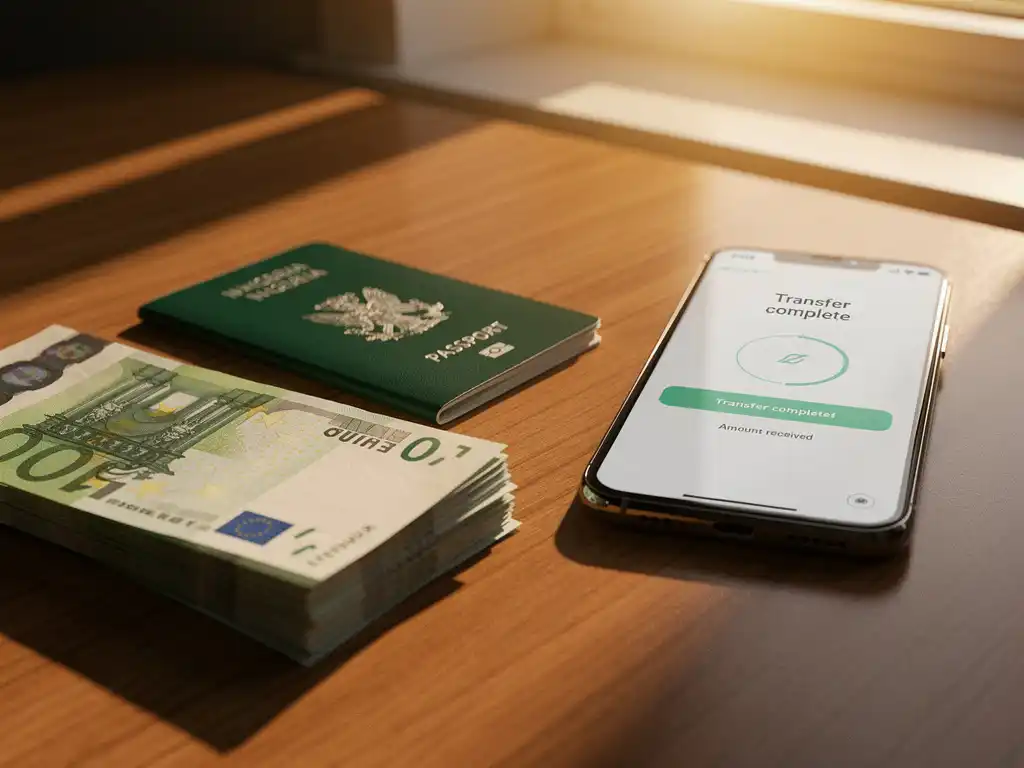
If you live in Europe and regularly support family back home, you have probably wondered whether sending money to Nigeria is straightforward or whether there are rules you need to follow. The good news is that transferring funds internationally is completely legal, but there are important guidelines that protect both you and your recipients. Understanding these rules helps you send money to Nigeria confidently, without delays or complications.
Whether you are sending funds for school fees, medical bills, or everyday household expenses, knowing the legal framework gives you peace of mind. This guide walks you through everything you need to know, from the legal methods available to the documents required and what to avoid.
Is it legal to send money to Nigeria from Europe?
Yes, it is completely legal to send money to Nigeria from Europe. Both European countries and Nigeria permit international money transfers, and millions of diaspora members send remittances home every year through regulated channels. As long as you use an authorised service and follow the relevant financial regulations in your country of residence, there are no legal barriers to transferring funds.
Nigeria actively encourages remittances from its diaspora community, as these transfers represent a significant source of foreign currency for the country. European countries also permit outbound transfers, provided that the funds are not linked to illegal activity and that the transfer is reported when it exceeds certain thresholds. The key is always to use official, regulated services rather than informal channels.
What are the legal ways to send money to Nigeria?
The legal ways to send money to Nigeria include licensed banks, regulated money transfer operators, and authorised fintech platforms. Any service you use must be registered with the relevant financial authority in your country of residence, such as De Nederlandsche Bank (DNB) in the Netherlands, or equivalent regulators across Europe.
Here are the most commonly used legal methods:
- Bank wire transfers: Sending funds directly from your European bank account to a Nigerian bank account. This is secure but can be slower and more expensive.
- Licensed money transfer operators: Services that specialise in international remittances and are regulated by financial authorities.
- Regulated fintech platforms: Digital platforms that combine speed, transparency, and competitive rates while operating under financial licences.
- Mobile money services: Some platforms allow recipients in Nigeria to receive funds directly into mobile wallets.
Always verify that the service you choose holds the appropriate licence before making a transfer. A legitimate provider will display its regulatory credentials clearly and offer transparent fee structures with no hidden charges.
How much money can you legally send to Nigeria at once?
There is no universal legal cap on how much money you can send to Nigeria in a single transfer. However, transfers above certain thresholds trigger mandatory reporting requirements under anti-money laundering regulations. In most European countries, transfers of €10,000 or more must be reported to financial authorities, and transfer providers are required to verify the source of funds.
For amounts below this threshold, you can still expect your provider to ask questions if a transaction appears unusual relative to your normal activity. This is a standard compliance process, not an accusation. Being prepared with documentation for larger transfers makes the process smoother. It is also worth noting that Nigerian authorities may have their own receiving limits or reporting requirements, so checking with your recipient’s bank in advance is a sensible step for very large transfers.
What documents do you need to send money to Nigeria legally?
To send money to Nigeria legally, you typically need a valid government-issued photo ID, proof of address, and the recipient’s details. For larger transfers, providers may also request documentation showing the source of the funds, such as a payslip, bank statement, or business invoice.
The standard documents required include:
- Valid photo identification: A passport, national identity card, or residence permit.
- Proof of address: A recent utility bill, bank statement, or official letter dated within the last three months.
- Recipient details: Full name, bank account number, and the name of the recipient’s bank in Nigeria.
- Source of funds documentation: For larger amounts, a payslip, bank statement, or contract may be requested.
Having these documents ready before you initiate a transfer prevents unnecessary delays. Regulated providers are legally obligated to carry out these checks, so they are a normal and expected part of the process rather than an obstacle.
Are there taxes or fees on money sent to Nigeria?
In most European countries, there is no specific tax on sending money to Nigeria as a personal remittance. However, you should be aware of transfer fees and exchange-rate margins charged by your provider, which effectively reduce the amount your recipient receives. Nigeria does not generally tax incoming personal remittances, though business-related transfers may be treated differently.
What you will encounter are service fees, which vary widely between providers. Some charge a flat fee per transfer, while others build their margin into the exchange rate. The most transparent providers show you exactly what your recipient will receive before you confirm the transaction, with no surprises at the end. When comparing services, look at the total cost, including both the fee and the exchange rate, not just the headline figure.
What happens if you send money to Nigeria illegally?
Sending money to Nigeria through unofficial or unlicensed channels is illegal and carries serious consequences. Using informal hawala networks, unlicensed brokers, or undeclared cash couriers can result in criminal charges related to money laundering or tax evasion, even if your intentions were innocent. Funds can be seized, and you may face fines or prosecution in your country of residence.
Beyond the legal risks, informal channels offer no consumer protection. If a transfer goes wrong or the funds disappear, you have no legal recourse. The recipient may also face difficulties if funds arrive through unregulated means, as Nigerian banks are required to report suspicious incoming transfers. The short-term convenience of informal methods is simply not worth the financial and legal exposure they create.
How FroggyTalk helps with sending money to Nigeria
We built FroggyTalk because we know how important it is to feel heard, seen, and valued—especially when you are far from home and trying to support the people who matter most to you. Our International Money Transfer Service is designed specifically for African diaspora communities across Europe, making it simple and affordable to send money to Nigeria and other African countries through a platform you already trust.
Here is what makes our service different:
- Transparent fees with no hidden charges: You see exactly what your recipient receives before you confirm.
- Competitive exchange rates: We keep costs low so more of your money reaches your family.
- Multilingual support: Everything in the app can be translated into your local language, including Hausa, Amharic, Arabic, Tigrinya, and more, so you always understand exactly what you are doing.
- Real-time transaction tracking: Know where your money is at every step.
- Integrated platform: Manage your calls and your transfers in one place, because your time matters.
You can also use our bill payment service to handle utilities and other expenses directly for your loved ones back home. If you have questions or need support, our multilingual team is ready to help. Get in touch with us today and experience a service built with your community in mind.