


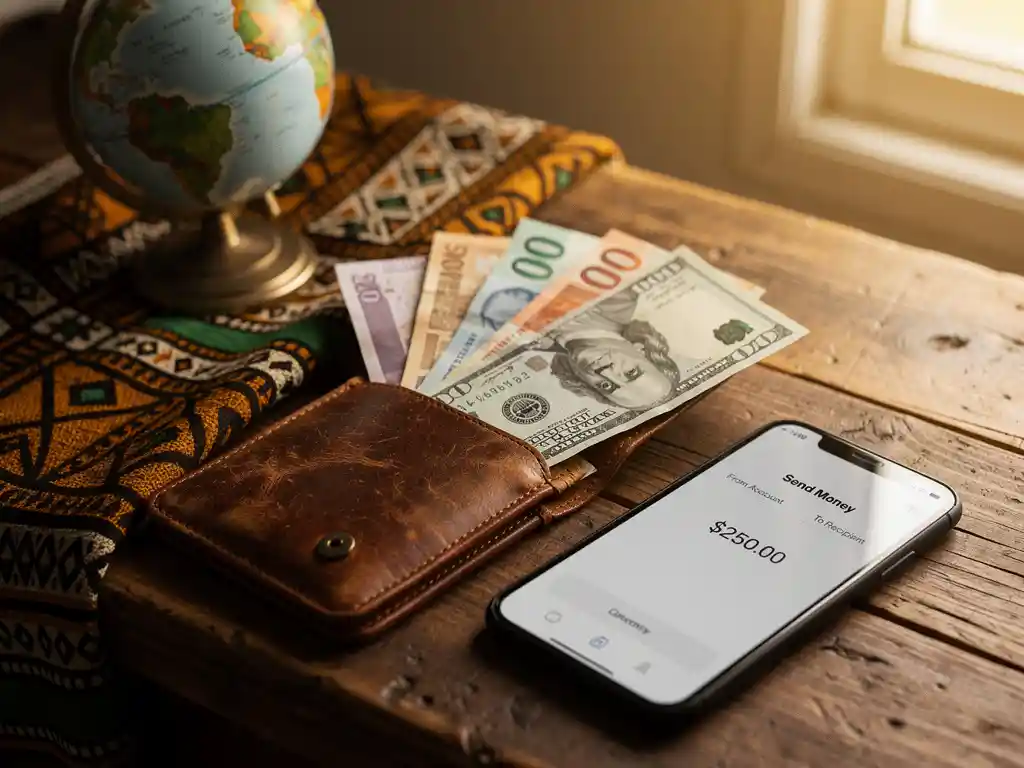
Sending money across borders is one of the most important financial tasks for diaspora communities. Whether you are supporting family back home, paying for education, or contributing to a business, understanding how international money transfers work for large amounts can save you time, money, and stress. This guide answers the most common questions so you can send with confidence.
Large transfers come with more scrutiny, more paperwork, and more potential for unexpected costs. The good news is that with the right preparation, the process is straightforward. Read on for clear, practical answers to everything you need to know.
What counts as a large international money transfer?
A large international money transfer is generally considered any single transaction above €1,000 to €2,000, though the exact threshold varies by provider and country. Most financial institutions and transfer services apply stricter verification and reporting requirements once a transfer crosses this level, and regulatory bodies in many European countries require providers to flag or report transactions above €10,000.
In practice, what counts as “large” depends on context. A remittance of €500 sent weekly may attract the same compliance attention as a one-off transfer of €5,000. Banks, money transfer operators, and fintech platforms each define their own internal thresholds, so it is worth checking the specific rules of the service you plan to use before initiating a transfer.
What are the best methods for sending large sums abroad?
The best methods for sending large amounts internationally are bank wire transfers, specialist online money transfer services, and fintech platforms. Each option balances speed, cost, and security differently, and the right choice depends on where you are sending money and how quickly it needs to arrive.
Bank wire transfers
Banks offer a familiar and regulated route for large transfers. They typically provide strong security and direct account-to-account delivery. The trade-off is cost: banks often charge high flat fees and apply unfavorable exchange rates, which can significantly reduce the amount your recipient receives.
Specialist transfer services and fintech platforms
Dedicated money transfer services and fintech platforms are increasingly popular for diaspora communities because they offer competitive exchange rates, lower fees, and faster delivery times. Many are built specifically for corridors between Europe and destinations across Africa and beyond, meaning they understand the local banking infrastructure and can deliver funds reliably even to regions with limited access to banking services.
What fees and exchange rates should you watch out for?
When making an international money transfer, watch out for three main costs: the transfer fee, the exchange rate margin, and any receiving fees charged by the recipient’s bank. The exchange rate margin is often the largest hidden cost, as providers may offer a rate significantly worse than the mid-market rate without making this obvious upfront.
Always compare the total amount your recipient will receive, not just the advertised fee. A service with a low flat fee but a poor exchange rate can cost more overall than one with a slightly higher fee and a rate closer to the mid-market benchmark. Look for providers that clearly display their rates and fees before you confirm a transaction, with no surprises at checkout.
- Transfer fee: a flat or percentage-based charge applied by the sending platform
- Exchange rate margin: the difference between the mid-market rate and the rate you are offered
- Receiving fees: charges applied by the recipient’s bank or mobile money provider
- Intermediary bank fees: relevant for traditional wire transfers passing through correspondent banks
Are there limits on how much money you can send internationally?
Yes, most money transfer services and banks impose limits on international transfers. These limits exist for two reasons: regulatory compliance and platform risk management. In the European Union, anti-money laundering rules require financial institutions to verify the identity and source of funds for large transactions, which often means transfer caps until full verification is complete.
Typical daily or per-transaction limits for unverified accounts range from €500 to €2,000. Once you complete identity verification and, for very large amounts, provide documentation of the source of funds, limits are usually raised substantially. If you need to send a particularly large sum, contact your chosen provider in advance to understand what documentation they need and whether the transfer can be processed as a single transaction or must be split.
What documents do you need to transfer large amounts internationally?
To transfer large amounts internationally, you typically need a valid government-issued ID, proof of address, and documentation showing the source of the funds. These requirements are standard across regulated financial services and exist to protect both the sender and the recipient from fraud and financial crime.
Commonly requested documents include:
- Government-issued photo ID such as a passport, national identity card, or residence permit
- Proof of address such as a utility bill, bank statement, or an official government letter dated within the last three months
- Source of funds documentation such as a payslip, employment contract, bank statement, or proof of a property sale or inheritance
- Purpose of transfer for very large amounts, some providers ask for a brief explanation of why the money is being sent
Preparing these documents in advance speeds up the process considerably. Providers operating in Europe are legally required to conduct these checks, so having everything ready means your transfer is processed without delays.
How do you send money safely to family abroad?
To send money safely to family abroad, use a regulated, reputable transfer service that supports the specific country and delivery method your recipient needs. Safety comes from choosing a licensed provider, verifying the recipient’s details carefully before confirming, and keeping a record of every transaction, including confirmation numbers and receipts.
It is also worth considering how your recipient will access the funds once they arrive. In many parts of the world, including across much of Africa, mobile money services are widely used and can be more accessible than traditional bank accounts, especially in rural areas. For communities sending money to countries such as Eritrea, Sudan, Ethiopia, Niger, or Nigeria, a good transfer service will offer multiple payout options, including bank deposit, mobile money, and sometimes cash pickup.
Always double-check the recipient’s phone number or account details before sending. Errors in these details are one of the most common causes of delayed or misdirected transfers, and recovery can be slow. If you are sending a large amount for the first time, consider sending a small test transfer first to confirm everything arrives correctly.
How FroggyTalk helps with international money transfers
We built FroggyTalk around one belief: that Africans abroad deserve to feel heard, seen, and valued. Our international money transfer service is a natural extension of that mission, giving you a trusted, transparent way to support your family back home without hidden fees or confusing exchange rates.
Here is what makes our service different:
- Transparent fees and competitive exchange rates with no hidden charges
- Support for transfers to Eritrea, Sudan, Ethiopia, Niger, Nigeria, and more
- Multilingual support so you can navigate every step in your own language, including Tigrinya, Hausa, Amharic, Arabic, French, and more
- Seamless integration with our calling and bill payment services so you can manage communication and finances in one place
- Real-time transaction tracking so you always know where your money is
Everything in the app can be used in your local language, making the experience accessible no matter where you are on your integration journey. Ready to send? Get in touch with our support team and we will help you every step of the way.