


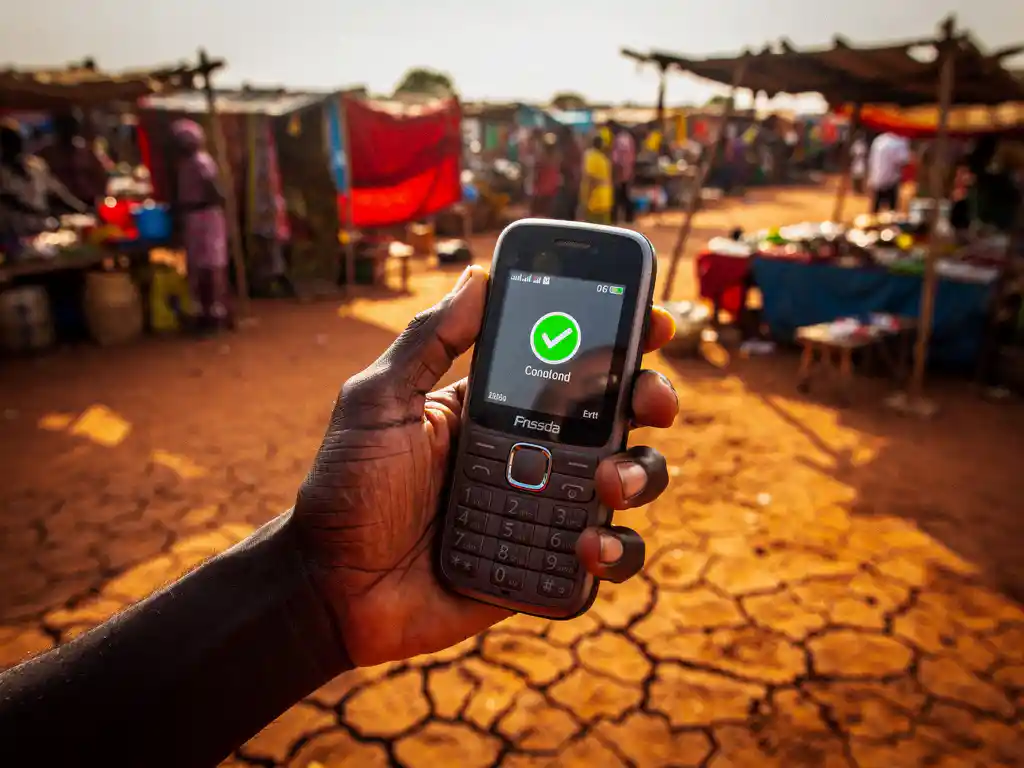
South Sudan is one of the world’s youngest nations, and for the millions of people who call it home or have family there, staying financially connected across borders is a real, daily concern. Whether you’re a South Sudanese migrant in Europe trying to support loved ones back home, or simply curious about how digital finance works in the region, understanding mobile money in South Sudan is an important first step.
This guide answers the most common questions about mobile money in South Sudan, including how to send money to South Sudan reliably and affordably from abroad.
What is mobile money, and how does it work?
Mobile money is a financial service that lets people send, receive, and store money using a mobile phone, without needing a traditional bank account. It works through a registered mobile wallet linked to a phone number, allowing users to make payments, transfer funds, and access basic financial services directly from their handset.
The system is especially valuable in regions where banking infrastructure is limited. Instead of visiting a physical bank branch, users can deposit cash with local agents, transfer funds to another mobile number, pay bills, and withdraw cash at agent locations. All of this happens through a simple mobile interface, often without requiring internet access—just a basic mobile network signal.
Mobile money has transformed financial access across much of sub-Saharan Africa, giving millions of people a safe and practical way to manage money for the first time.
Is mobile money available in South Sudan?
Yes, mobile money is available in South Sudan, but its reach and reliability are limited compared to more developed mobile money markets in East Africa. The country faces significant infrastructure challenges, including inconsistent mobile network coverage, frequent power outages, and low smartphone penetration in rural areas, all of which affect how widely mobile money can be used day to day.
Urban areas like Juba have better access to mobile money services than rural communities, where network connectivity can be unreliable or entirely absent. Ongoing political instability and economic pressures have also slowed the growth of digital financial services.
That said, mobile money in South Sudan is growing, and for many residents, it remains one of the few practical ways to access financial services outside cash transactions.
What mobile money services can you use in South Sudan?
A small number of mobile money providers operate in South Sudan, primarily through local telecom networks. The most commonly used services include:
- M-Gurush — one of the most established mobile money platforms in South Sudan, offering wallet services, bill payments, and transfers
- Vivacash — a mobile financial service offered through Vivacell, providing basic transfer and payment functionality
- MTN Mobile Money — available in some areas through MTN’s network coverage in the country
Each of these services requires users to register with a valid phone number and, in most cases, a form of identification. Availability varies significantly by location, so it is worth checking which networks have coverage in the specific area where your recipient lives before choosing a transfer method.
How do you send money to South Sudan from abroad?
To send money to South Sudan from abroad, you have several options depending on the urgency, the amount, and where your recipient is located. The most practical routes include international money transfer services, bank transfers, and mobile-to-mobile transfers through platforms that support South Sudan.
Here is a step-by-step overview of how the process typically works:
- Choose a transfer service that supports South Sudan as a destination
- Register and verify your identity on the platform
- Enter the recipient’s details, including their phone number or bank account
- Select the amount and review the exchange rate and fees before confirming
- Complete the payment and share the transaction reference with your recipient
- Your recipient collects the funds via a mobile wallet, cash pickup, or bank deposit
Cash pickup networks and agent-based services are often the most reliable option for recipients in areas with limited mobile money infrastructure. Always confirm that your chosen service has a payout network in the specific region where your family member or contact is located.
What are the biggest challenges with mobile money in South Sudan?
The biggest challenges with mobile money in South Sudan include poor network infrastructure, currency instability, low digital literacy in rural areas, and limited agent networks outside major cities. These factors combine to make mobile money less accessible and less reliable than in neighbouring East African countries.
Currency volatility is a particularly significant issue. South Sudan has experienced severe inflation and exchange rate fluctuations, which can affect the real value of transfers by the time funds are received. This makes it especially important to use a transfer service that offers transparent, real-time exchange rates with no hidden fees.
Power supply is another practical barrier. Many mobile money agents rely on electricity to operate their terminals, and frequent outages can make it difficult for recipients to access funds quickly. For diaspora members sending money home, building in some flexibility around timing and having a backup plan—such as a trusted local contact who can assist—can help manage these uncertainties.
What’s the best way to stay connected with family in South Sudan?
The best way to stay connected with family in South Sudan is to combine affordable international calling with a reliable way to send money, so you can maintain both emotional and financial ties across the distance. Voice calls remain the most direct and personal form of communication, especially for family members who may not have consistent internet access for video calls or messaging apps.
Staying connected is about more than logistics. For many migrants and refugees, regular contact with home is essential for mental well-being, family coordination, and maintaining a sense of cultural identity. Finding services that are affordable, easy to use, and available in your own language makes a real difference in how connected you actually feel.
How FroggyTalk helps you stay connected and send money to South Sudan
We built FroggyTalk for exactly this reason: to make sure that distance never means disconnection. Whether you want to call home or support your family financially, we bring everything together in one place, designed specifically for African diaspora communities in Europe.
Here is what we offer:
- Affordable international calls charged per second, so you only pay for what you use, and every minute counts
- An international money transfer service with transparent fees and no hidden charges, so your family receives what you intend to send
- Full multilingual support, with the entire app translatable into your local language, including Tigrinya, Arabic, Hausa, Amharic, French, and more
- A platform built around the values of your community: you deserve to feel heard, seen, and valued
We want to be your digital home base abroad: a single, trusted place where communication and financial support come together. Get in touch with our team to find out how we can help you stay close to the people who matter most.
Related Articles
- Can you send money to Egypt through a calling app platform?
- Why did WhatsApp ban my number in Nigeria?
- What is the difference between a bank transfer and an online international money transfer?
- What is the difference between a money transfer operator and a bank for sending money abroad?
- What is the best way to call Africa from Europe?