


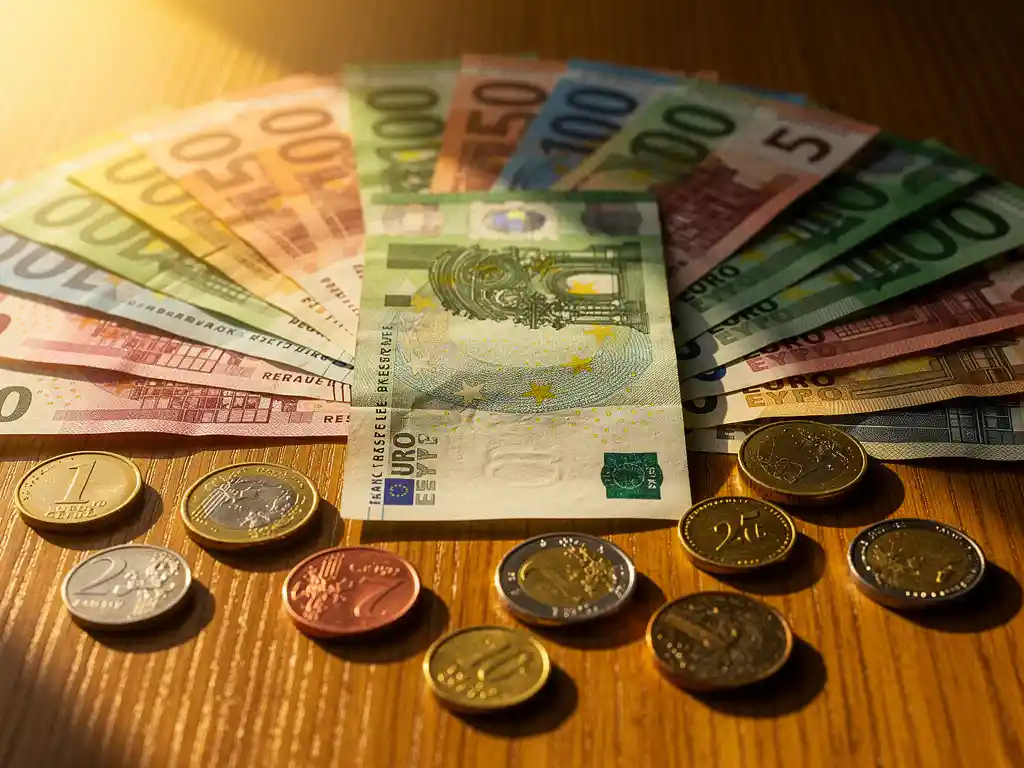
Sending money home to family is one of the most important financial actions millions of people in Europe take each month. For those supporting relatives abroad, the amount that actually arrives depends heavily on one thing: the exchange rate you receive. Understanding how international money transfers work, and how to get the best value, can make a real difference for the people you care about most.
This guide walks you through everything you need to know—from understanding exchange rates to timing your transfer wisely—so your money goes further every single time.
What is an exchange rate, and why does it affect your transfer?
An exchange rate is the price at which one currency converts into another. When you send euros to a recipient in another country, the exchange rate determines exactly how much local currency they receive. Even a small difference in the rate—say, a fraction of a cent per unit—can significantly change the final amount when multiplied across a larger transfer.
There are two exchange rates you need to know about. The mid-market rate is the real rate you see on Google or a currency website. It sits exactly between the buying and selling prices on global currency markets. The rate a provider actually offers you is almost always slightly lower than this. That gap is where the provider makes money, and it is often where your transfer loses value without you realizing it.
The bigger the gap between the mid-market rate and the rate you are offered, the less money arrives at the other end. This is why comparing rates before you send is not optional. It is essential.
What are the hidden fees that reduce your transfer amount?
Hidden fees are charges that reduce the amount your recipient receives, beyond the obvious transfer fee you see at checkout. They include inflated exchange rate margins, flat service fees, receiving bank charges, and sometimes intermediary bank fees that get deducted mid-transfer without warning.
Here are the most common hidden costs to watch for:
- Exchange rate margin: The provider offers you a rate worse than the mid-market rate and keeps the difference.
- Flat transfer fee: A fixed fee charged per transaction, which hits smaller transfers proportionally harder.
- Receiving bank fee: The recipient’s bank may deduct a fee when the funds arrive.
- Correspondent bank charges: When transfers pass through intermediary banks, each one may take a cut.
- Currency conversion fee: Some providers charge an additional percentage on top of the exchange rate margin.
The only way to see the true cost of a transfer is to look at the final amount your recipient will receive, not the amount you are sending. Transparent providers show you this figure upfront. If a provider only shows you a flat fee without confirming the final delivered amount, treat that as a red flag.
What’s the difference between banks and specialist transfer services?
Banks typically offer worse exchange rates and higher fees than specialist transfer services. A high street bank may charge a flat transfer fee, apply a wide exchange rate margin, and route the transfer through multiple correspondent banks, each adding its own deduction. Specialist transfer services are built specifically for international transfers and compete aggressively on rate and speed.
Banks have the advantage of familiarity and existing account integration, but for regular remittances—particularly to African countries such as Nigeria, Ethiopia, Eritrea, and Sudan—this convenience usually comes at a significant cost. Specialist services, including fintech platforms designed for diaspora communities, often offer rates far closer to the mid-market rate, lower flat fees, and faster delivery times.
For diaspora communities sending money regularly, the difference between using a bank and using a specialist service can add up to a meaningful sum over a year. Choosing the right provider is one of the simplest ways to increase the value of every transfer you make.
How do you compare exchange rates across transfer providers?
To compare exchange rates effectively, always use the same transfer amount across every provider you check, and focus on the final received amount rather than the advertised rate or fee in isolation. The provider with the lowest fee is not always the best value if its exchange rate margin is wide.
- Decide on a fixed amount to send, for example, €200.
- Visit each provider and enter that exact amount for the same destination country and currency.
- Note the final amount the recipient will receive in local currency.
- Compare those final figures directly, not the fees or rates in isolation.
- Check for any additional receiving fees that may apply at the destination.
- Factor in delivery speed if urgency matters for your transfer.
Comparison websites can give you a useful starting point, but always verify the final figure directly on the provider’s platform before confirming. Rates change throughout the day, so check as close to your intended send time as possible.
When is the best time to send an international money transfer?
The best time to send an international money transfer is when the exchange rate for your currency pair is favorable compared to its recent average. Currency values fluctuate based on economic news, political events, and market sentiment, which means the rate you receive on Monday morning may be noticeably different from the rate on Friday afternoon.
While it is impossible to predict currency movements with certainty, a few practical habits can help. Monitoring the mid-market rate for your currency pair over several days gives you a sense of the recent range. If the rate is near the stronger end of that range, it is generally a reasonable time to send.
Avoid sending money immediately after major economic announcements or political events in either country, as these moments often cause sharp, short-term rate movements. Sending during stable, routine market periods tends to produce more predictable outcomes. For non-urgent transfers, giving yourself a window of a few days to watch the rate can be worthwhile.
How can you lock in a good exchange rate before sending?
You can lock in a good exchange rate by using a forward contract or a rate alert feature offered by many specialist transfer providers. A forward contract lets you agree on an exchange rate today for a transfer you plan to make in the future, protecting you from unfavorable rate movements in the meantime.
Rate alerts are a simpler option for most people. You set a target rate and the provider notifies you when the market reaches it, so you can act quickly without having to monitor rates constantly. This is especially useful if you send money regularly and want to build a habit of transferring at better rates rather than at whatever rate happens to be available when you remember to send.
Not every provider offers these tools, so it is worth checking whether your chosen service supports rate alerts or forward contracts if you value rate control. For regular remittances, even small improvements in the rate you lock in can compound into meaningful savings over time.
How FroggyTalk helps with international money transfers
We built FroggyTalk because we know how much it matters to feel heard, seen, and valued—especially when you are far from home and trying to take care of the people you love. Our international money transfer service is designed with the African diaspora in Europe at its heart, offering the same transparency and affordability that drive everything we do.
- Competitive exchange rates with no hidden fees or surprise deductions
- Transparent fee structures so you always see exactly what your recipient will receive before you confirm
- Multilingual support in Tigrinya, English, Arabic, Hausa, Amharic, Dutch, French, Swedish, Danish, Norwegian, and Italian, and the app can be translated into your local language
- Seamless integration with our calling and bill payment services, so you can manage communication and finances in one trusted place
- Built specifically for transfers to Eritrea, Sudan, Ethiopia, Niger, Nigeria, and beyond
We want every euro you send to arrive with as much value as possible. Get in touch with our team if you have any questions. We are here for you.