


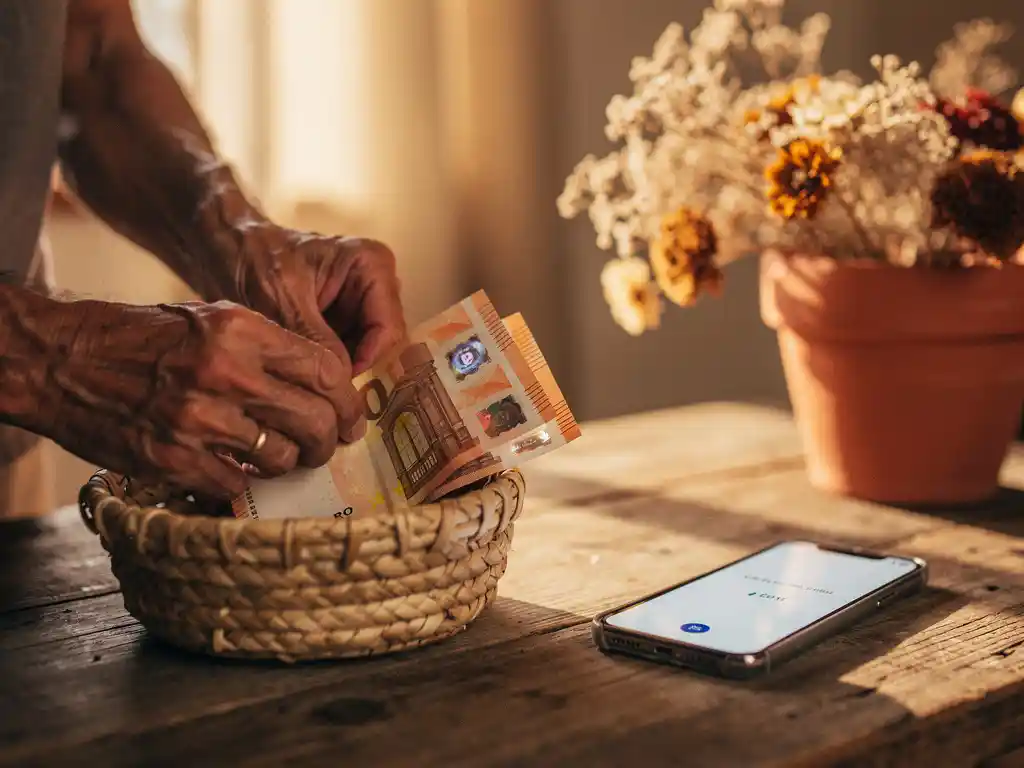
Yes, you can schedule recurring money transfers to Sudan, but the options are more limited than for many other countries. Due to international sanctions, banking restrictions, and infrastructure challenges, only a small number of specialist transfer services support automated or standing-order payments to Sudan. Most families relying on regular financial support from Europe or further abroad need to plan carefully and often combine more than one method to keep money flowing reliably.
This article walks through which services support recurring payments, why Sudan presents unique challenges, and how to protect your family’s financial lifeline no matter where you are sending from.
Which money transfer services support recurring payments to Sudan?
Very few mainstream money transfer providers offer fully automated recurring transfers to Sudan. Services such as WorldRemit, Dahabshiil, and certain hawala networks are among the most commonly used options for regular remittances to Sudan, though the availability of scheduled or standing-order features varies significantly by platform and by the recipient’s location within Sudan.
Here is what to look for when evaluating a provider:
- Scheduled transfer functionality: Some apps allow you to set a fixed date each month for an automatic transfer, similar to a direct debit.
- Manual recurring options: Many users simply save their recipient details and repeat the transfer manually each month, which gives more control over timing.
- Hawala and informal networks: These are widely trusted within Sudanese diaspora communities and often more reliable than formal banking channels, though they do not offer automated scheduling.
- Mobile money integration: Where available, mobile wallet delivery can speed up receipt and reduce the need for the recipient to visit a physical agent.
Because the landscape changes frequently due to regulatory updates, it is worth checking the current status of any provider directly before committing to a regular payment schedule.
Why is sending money to Sudan more complicated than other countries?
Sending money to Sudan is more complicated than sending money to Nigeria, Eritrea, Egypt, Uganda, or Tanzania, primarily because of longstanding international sanctions and the country’s limited integration with the global banking system. Sudan was listed on the US State Sponsors of Terrorism list for decades, and while significant sanctions were lifted in 2017, residual restrictions and compliance caution among banks continue to create barriers.
Several compounding factors make the process harder:
- Banking infrastructure gaps: Many Sudanese banks are not connected to SWIFT or international payment networks, which means standard bank transfers simply do not reach their destination.
- Currency instability: The Sudanese pound has experienced significant volatility, which affects how much value actually arrives after conversion.
- Ongoing conflict: Since April 2023, armed conflict across parts of Sudan has disrupted financial infrastructure, closed agent locations, and made cash pickup unreliable in certain regions.
- Compliance pressure on providers: Even providers willing to serve Sudan face heavy compliance requirements, which drives up costs and limits the number of players in the market.
This is why people sending money to Sudan often face fewer choices and higher fees than those sending money to Africa from Australia, the United States, or Europe to countries like Nigeria or Tanzania.
What are the alternatives when recurring transfers aren’t available?
When automated recurring transfers to Sudan are not available, the most practical alternative is to build a consistent manual routine combined with a trusted local contact who can distribute funds. Many diaspora members in Europe send money to a trusted relative inside Sudan who then distributes it to other family members, reducing the number of individual transactions needed.
Other effective alternatives include:
- Bulk transfers: Instead of monthly small amounts, sending a larger sum every two or three months can reduce the impact of fees and exchange rate fluctuations.
- Hawala networks: These informal value transfer systems operate through trusted brokers and are deeply embedded in Sudanese financial culture. They often reach areas where formal services cannot.
- Cryptocurrency or stablecoins: Some diaspora members use digital currencies as an intermediate step, converting to local currency at the recipient’s end. This approach carries its own risks and requires technical confidence.
- Multi-country routing: In some cases, sending money to a neighbouring country such as Egypt or Uganda and then onward to Sudan through a local contact can be more reliable, though this adds complexity and cost.
No single alternative works for every family or every region of Sudan. The most resilient approach is usually a combination of methods with a backup plan in place.
How do exchange rates and fees affect regular transfers to Sudan?
Exchange rates and fees have an outsized impact on regular transfers to Sudan compared to more stable corridors. Because fewer providers compete for this route, transfer fees tend to be higher, and exchange rate margins can quietly erode a significant portion of the money sent. Over the course of a year, the difference between a poor-value provider and a competitive one can amount to several months’ worth of transfers.
Key things to watch for include:
- The exchange rate margin: Providers rarely offer the mid-market rate. The gap between the rate they offer and the real rate is effectively a hidden fee. Always compare this, not just the headline transfer fee.
- Fixed versus percentage fees: A fixed fee hurts more on small transfers; a percentage fee hurts more on large ones. Know which model a provider uses before committing.
- Parallel market rates: In Sudan, the official exchange rate and the parallel market rate have historically differed significantly. Recipients may receive less value in practice than the official rate suggests.
- Timing: Sending at consistent times each month and monitoring rate trends can help you avoid particularly unfavourable moments.
Transparency in fees is not a luxury but a necessity for families depending on these transfers. Always request a full breakdown of what the recipient will actually receive before confirming any payment.
What’s the safest way to ensure family in Sudan receives money reliably?
The safest approach to reliable money transfers to Sudan combines a trusted primary transfer method with a clear backup option and direct communication with the recipient before and after each transfer. Reliability in this corridor is less about finding a perfect single solution and more about building a system that can adapt when one channel fails.
Practical steps to improve reliability include:
- Confirm delivery methods in advance: Speak with your recipient about which pickup locations or mobile wallets are accessible to them right now, not just in theory.
- Use providers with real-time tracking: Transaction tracking lets you and your recipient know exactly when money has been sent and when it is available for collection.
- Keep a backup provider ready: Register with a second service so that if your primary provider experiences issues, you can switch immediately without delay.
- Stay in close contact: Regular communication with family in Sudan is essential, not only to confirm receipt but also to understand changing local conditions that might affect how money can be accessed.
- Document every transaction: Keep records of transfer confirmations, reference numbers, and receipts in case you need to raise a dispute or trace a payment.
Staying connected through affordable calls is just as important as the financial transfer itself. Knowing your family is safe, understanding their current situation, and coordinating the timing of transfers all depend on being able to reach them. affordable international calling makes that ongoing coordination possible without adding to your costs.
How FroggyTalk helps with sending money to Sudan
We built FroggyTalk because we know what it means to be far from home and to carry the responsibility of keeping family connected and supported. That is why we have extended our platform beyond calls to include an International Money Transfer Service designed specifically for African diaspora communities in Europe.
Here is what makes our approach different:
- Transparent fees with no hidden charges: You see exactly what your family receives before you confirm the transfer. No surprises.
- Multilingual support: Everything in the app can be navigated in your own language, including Arabic, Hausa, Amharic, Tigrinya, French, and more, so you never have to struggle with a process that was not built with you in mind.
- One platform for calls and transfers: Coordinate your transfer and then call your family to confirm receipt, all within the same trusted app.
- Real-time transaction tracking: Know exactly when your money is on its way and when it arrives.
- Built for your community: We are not a generic service that added Africa as an afterthought. We were created by and for African diaspora communities, and that shapes every decision we make.
You deserve to feel heard, seen, and noticed, and so does your family waiting at home. If you want to know more about how we can support your regular transfers to Sudan or any other African country, get in touch with our team and we will help you find the right solution.
Frequently Asked Questions
How do I know if a money transfer provider is still actively operating in Sudan before I set up a regular payment?
The best approach is to contact the provider’s customer support directly and ask specifically about current service availability in your recipient’s region of Sudan, not just Sudan as a whole. You can also check recent user reviews on platforms like Trustpilot or community forums used by Sudanese diaspora groups, as these often surface real-time issues faster than official announcements. Given how frequently the situation changes, it is worth re-verifying availability every few months even if a service has been working reliably.
What should I do if a transfer to Sudan gets stuck or doesn't arrive?
Start by gathering your transaction reference number, the date and amount sent, and the delivery method selected, then contact your provider’s customer support immediately. Most reputable services have a dispute or trace process, and providing complete documentation speeds up resolution significantly. If the provider is unresponsive or unable to resolve the issue within a reasonable timeframe, you can escalate to the financial regulator in your country of residence, such as the Financial Conduct Authority (FCA) in the UK or the relevant authority in your European country.
Are hawala transfers legal for sending money to Sudan from Europe?
Using hawala networks is not inherently illegal in most European countries, but regulations vary, and some jurisdictions require hawala operators to be registered or licensed as money service businesses. As a sender, your primary responsibility is to use a reputable broker and to keep a record of every transaction, including the amount sent, the date, and any reference provided. It is always worth checking the rules specific to your country of residence, and if in doubt, consulting a financial adviser or legal professional familiar with remittance regulations.
How can I protect the value of my transfers given the Sudanese pound's instability?
One practical strategy is to monitor exchange rate trends and time your transfers during periods of relative stability rather than sending on a rigid fixed date regardless of conditions. Sending slightly larger, less frequent transfers can also reduce your exposure to short-term volatility compared to small weekly payments. Additionally, discuss with your recipient whether there are local financial instruments or trusted contacts who can help preserve the value of funds once received, as how money is managed on the ground in Sudan can matter just as much as the rate at the point of transfer.
Can I send money to Sudan on behalf of someone else, such as an elderly parent who isn't tech-savvy?
Yes, most transfer services allow you to set up and manage transfers on behalf of a family member, as long as you are using your own verified account and the funds are genuinely yours to send. You would simply add the intended recipient in Sudan as the beneficiary, and the sender details would reflect your own information. Be aware that sending money on behalf of a third party using their funds may raise compliance flags with some providers, so always ensure the account is registered in the name of the person whose money is being sent.
What's the minimum amount worth sending to make a transfer to Sudan cost-effective?
This depends on the fee structure of your chosen provider, but as a general rule, fixed-fee providers become more cost-effective the larger the transfer amount, since the fee represents a smaller percentage of the total. For providers charging a percentage-based fee, the cost scales with the amount, so smaller transfers are comparatively less penalised. A useful benchmark is to aim for a total fee-to-transfer ratio of no more than 5%, which is the threshold recommended by the UN Sustainable Development Goals for remittance costs, though Sudan corridors often exceed this due to market limitations.
Is it possible to send money to specific regions of Sudan that are affected by the ongoing conflict?
Reaching conflict-affected areas of Sudan, particularly Khartoum, Darfur, and parts of North Kordofan, has become significantly harder since the outbreak of fighting in April 2023, with many agent locations closed and mobile infrastructure disrupted. In these cases, hawala networks with local brokers who have on-the-ground presence often remain the most reliable channel, as they can adapt routing more flexibly than formal services. It is essential to speak directly with your recipient about what is currently accessible in their specific location before initiating any transfer, as conditions can change rapidly at a local level.