


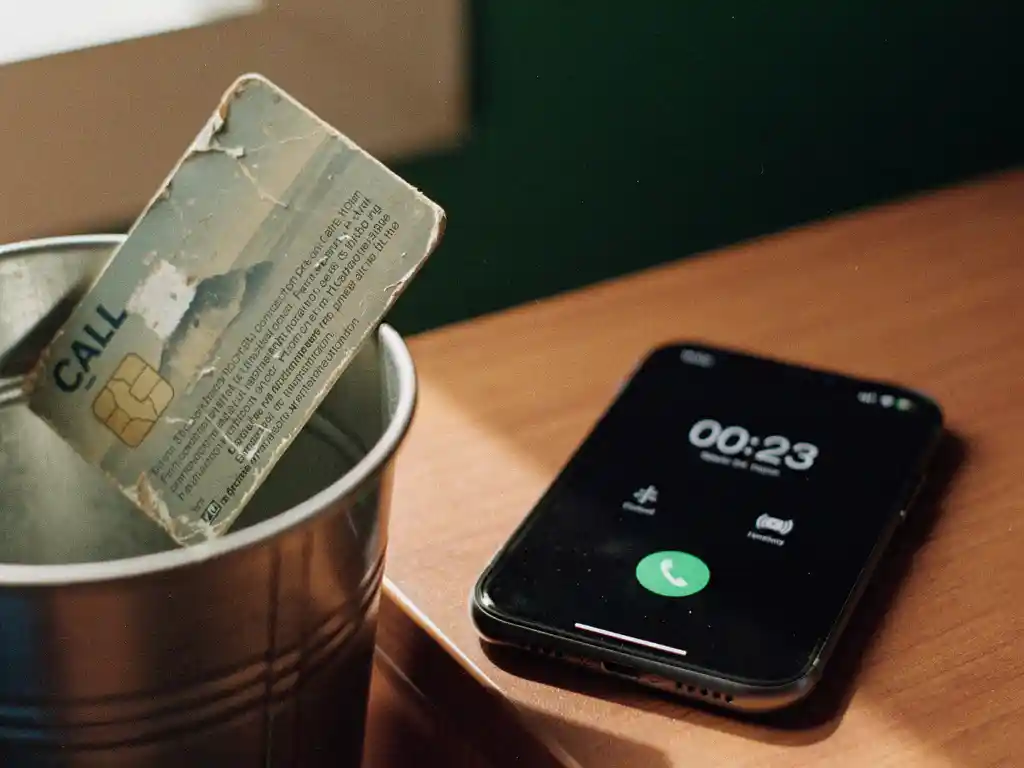
You should avoid phone cards with connection fees when calling Africa because they quietly drain your calling credit before you even speak a single word. Every time you dial, a fixed charge is deducted from your balance regardless of how long the call lasts, meaning short or interrupted calls can cost you far more per minute than the advertised rate suggests. Below, we break down exactly how these fees work, what they really cost you, and what to look for instead.
What exactly is a connection fee on a phone card?
A connection fee on a phone card is a fixed charge that is automatically deducted from your balance the moment a call connects, before any per-minute billing begins. It is separate from the per-minute rate and applies regardless of how long the call lasts. Even a two-second call triggers the full connection fee.
Phone card providers typically bury this charge in the fine print, presenting it as a small amount, often between 10 and 50 cents per call. The issue is that it stacks on top of the advertised per-minute rate, so the rate you see on the label is never the rate you actually pay. When you make a call to Nigeria, Eritrea, or Sudan, that connection fee is deducted first, and only then does the per-minute clock start running.
How much do connection fees actually cost you over time?
Connection fees can easily double or triple your effective cost per minute when you make frequent short calls. If you call family in Africa five times a day and each call carries a 30-cent connection fee, you spend an extra €1.50 per day, or roughly €45 per month, on fees alone before a single minute is counted.
The real damage becomes visible when you compare minutes received versus minutes paid for. A phone card advertised at 5 cents per minute sounds affordable. But add a 30-cent connection fee, and a 3-minute call to Egypt or Uganda actually costs you 45 cents instead of 15 cents. That is three times the advertised rate. Over a month of regular calls, the gap between what you expect to pay and what you actually pay grows significantly.
Why are short calls to Africa especially expensive with connection fees?
Short calls to Africa are disproportionately expensive with connection fees because the fixed charge represents a much larger share of the total call cost when the call is brief. On a 1-minute call with a 30-cent connection fee and a 5-cent per-minute rate, the connection fee alone accounts for 86% of what you pay. The shorter the call, the worse the ratio becomes.
This is particularly painful for diaspora communities who make quick check-in calls, calls to verify that a family member is safe, or calls that get cut off due to poor network conditions on the other end. A call to Sudan or Tanzania that drops after 30 seconds still costs you the full connection fee. You pay for a connection, not for a conversation, which is exactly the opposite of what transparent billing should look like.
What are the other hidden fees phone cards use besides connection fees?
Beyond connection fees, phone cards commonly use several other hidden charges that reduce the value of your balance without being clearly advertised upfront.
- Maintenance fees: A weekly or monthly deduction from your balance simply for holding the card, even if you do not use it.
- Rounding-up billing: Calls billed in full-minute increments rather than per second, so a 61-second call is charged as 2 full minutes.
- Payphone surcharges: Extra fees applied when calling from a public phone or certain mobile networks.
- Expiry penalties: Unused credit that expires within 30 to 90 days, causing you to lose any remaining balance.
- Disconnection and reconnection fees: Some providers charge an additional fee if a call drops and you redial within a short window.
Each of these fees individually seems minor, but together they can consume 30 to 50 percent of the credit you purchase. When you are budgeting carefully to stay in touch with family across Africa, these charges add up to a real financial burden.
What should you look for in a phone card alternative for calling Africa?
The best phone card alternative for calling Africa offers per-second billing, zero connection fees, no maintenance charges, and a clearly stated rate before you commit. Transparency is the single most important factor. You should be able to calculate exactly how many minutes you get for your money before making any payment.
Here is what to prioritize when evaluating an alternative:
- Per-second billing: You pay only for the seconds you actually speak, not for rounded-up minutes.
- No connection fee: Your balance should not decrease the moment a call connects.
- No maintenance or expiry fees: Your credit should remain available until you use it.
- Clear rate display: The rate per minute to your destination country should be visible before you dial.
- No app required on the receiving end: Family in Nigeria, Eritrea, or South Sudan should be reachable on any phone, with no setup required from them.
- Multilingual support: The service should be accessible in your preferred language, whether that is Hausa, Tigrinya, Arabic, or French.
Internet-based calling services have largely replaced traditional phone cards for diaspora communities because they meet these criteria more consistently. The international calling guide can help you compare rates and understand exactly what you are paying for before you make your first call.
How can you verify a calling service has no hidden fees before committing?
You can verify a calling service has no hidden fees by checking three things before adding any credit: the billing model (per second or per minute), whether a connection fee is listed in the terms and conditions, and whether the rate shown is the final rate with no additional surcharges. If any of these are unclear or require you to dig through fine print, treat that as a warning sign.
Practical steps to check before committing include reading the FAQ section for the words “connection fee,” “maintenance fee,” and “rounding,” testing with a minimum top-up before committing to a larger amount, and checking whether the service displays a live rate calculator that shows you exactly how many minutes your balance will buy. A trustworthy service makes this information impossible to miss, not something you have to search for.
How FroggyTalk helps you call Africa without hidden fees
We built FroggyTalk specifically because we know how frustrating and costly hidden fees can be, especially when you are trying to stay close to family back home. We want you to feel heard, seen, and valued, and that starts with making sure you always know exactly what you are paying for.
Here is what we offer:
- Per-second billing with no connection fees: You pay only for the time you actually talk. Not a second more.
- No hidden charges: No maintenance fees, no expiry penalties, no surcharges buried in fine print.
- No app needed on the receiving end: Whether you are calling Nigeria, Eritrea, Sudan, Uganda, or Tanzania, the person on the other end simply picks up their regular phone.
- Full language support: Everything in the app can be translated into your local language, including Tigrinya, Arabic, Hausa, Amharic, French, and more, so you never have to navigate a service that does not speak your language.
- Transparent rate display: You see exactly how many minutes your balance buys before you make a single call.
If you have questions about rates, your account, or how to get started, reach out to our team and we will help you in the language you are most comfortable with.
Frequently Asked Questions
Can I use FroggyTalk to call any country in Africa, or only specific ones?
FroggyTalk supports calls to a wide range of African countries, including Nigeria, Eritrea, Sudan, Uganda, Tanzania, Egypt, Ethiopia, South Sudan, and many more. You can check the exact list of supported destinations and their live per-minute rates directly in the app or on the FroggyTalk website before adding any credit. If you are unsure whether your destination is covered, reach out to the support team and they will confirm availability in your preferred language.
What happens to my credit if I accidentally make a call that drops immediately?
With a per-second billing service like FroggyTalk that charges no connection fees, a dropped call that lasts only a second or two will cost you virtually nothing, just the fraction of a cent corresponding to those seconds. This is the key advantage over traditional phone cards, where a dropped call still triggers the full connection fee regardless of duration. Always confirm with any service you use that their terms explicitly state no connection fee applies on dropped or very short calls.
Is it safe to top up a calling app with my payment details, and how do I avoid scam services?
Legitimate calling services use standard, encrypted payment processors and will never ask for payment through informal channels like wire transfers or gift cards. To avoid scam services, look for a clearly listed company name, a verifiable customer support contact, transparent pricing pages, and user reviews on independent platforms. Starting with a small minimum top-up before committing to a larger amount is always a smart first step, as it lets you verify call quality and billing accuracy with minimal financial risk.
How does per-second billing actually compare to per-minute billing in practice?
Per-second billing means you are charged only for the exact duration of your call, down to the last second, while per-minute billing rounds every call up to the nearest full minute. For example, a 1 minute and 10 second call billed per minute costs you the same as a 2-minute call, wasting 50 seconds of credit. Over dozens of calls per month, per-minute rounding can silently consume 10 to 20 percent of your balance, making per-second billing a significantly better deal for frequent callers.
Do the people I call in Africa need to download any app or have internet access to receive my calls?
No. When you use a service like FroggyTalk, the call is routed to the recipient's regular mobile or landline phone number, so they simply receive it like any ordinary incoming call with no app, no internet connection, and no setup required on their end. This is especially important when calling family in areas with limited smartphone penetration or unreliable data connectivity, as it ensures you can always reach them regardless of their technical setup.
What is the best way to get the most minutes out of my calling credit when phoning Africa?
The single most impactful step is choosing a service with per-second billing and zero connection fees, as these two factors alone can double the effective value of your credit compared to a traditional phone card with hidden charges. Beyond that, avoid services with maintenance or expiry fees that drain your balance between calls, and always check the rate for your specific destination country before topping up, since rates can vary significantly between countries. Consolidating your calls into slightly longer conversations rather than many very short check-ins can also stretch your credit further on any billing model.
Are there any situations where a traditional phone card might still make sense over an app-based service?
Traditional phone cards can still be useful if you are calling from a landline or a phone where you cannot install apps, or if you are in a location with no internet access on your own device. However, in most everyday situations, app-based calling services offer better rates, greater transparency, and no hidden fees, making them the superior choice for regular calls to Africa. If you do need to use a phone card in a specific situation, apply the same verification checklist: confirm there is no connection fee, check the billing increment, and read the expiry and maintenance terms before purchasing.