


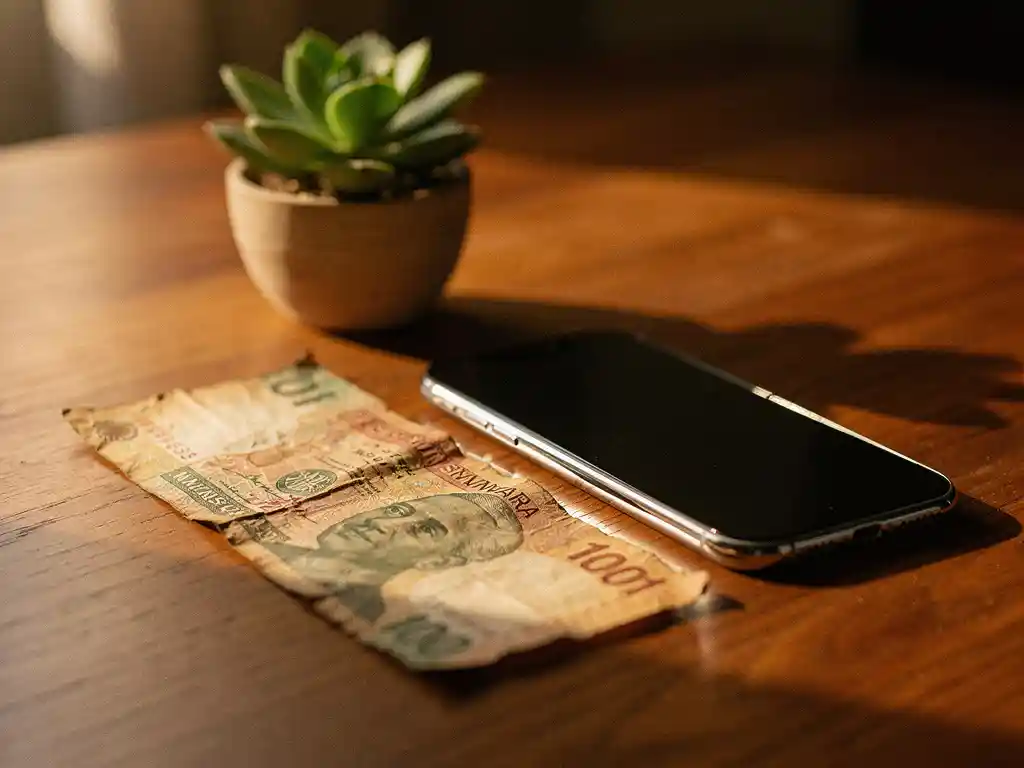
Exchange rates matter when sending money to Nigeria because they determine how many naira your recipient actually receives. Even a small difference in the rate applied to your transfer can mean hundreds or thousands of naira more or less in your family’s hands. The sections below break down everything you need to know to send smarter.
How do exchange rates affect how much money arrives in Nigeria?
The exchange rate is the multiplier applied to every euro, dollar, or pound you send. If you send €100 at a rate of 1,600 naira per euro, your family receives 160,000 naira. If the rate offered is 1,500, they receive 10,000 naira less for the exact same transfer. The rate your provider uses is the single biggest factor controlling the real value of what lands in Nigeria.
This matters especially for diaspora families who depend on regular remittances to cover rent, school fees, groceries, and healthcare. A consistently unfavorable rate quietly erodes the purchasing power of every transfer you make over a year. When you multiply even a 50-naira-per-euro difference over twelve monthly transfers of €200, the gap becomes significant.
This is why comparing the rate, not just the transfer fee, is the most important habit you can build before hitting send.
What is the difference between the official rate and the parallel market rate?
The official rate is the exchange rate set or guided by Nigeria’s Central Bank, while the parallel market rate (sometimes called the black market or street rate) is the rate at which naira is bought and sold outside formal banking channels. In practice, these two rates have historically differed, sometimes considerably, meaning recipients can end up with very different amounts depending on which rate a transfer service applies.
Nigeria has gone through several periods of currency reform, and the gap between these two rates has narrowed or widened at different times depending on government policy. In recent years, Nigerian authorities have moved toward a more unified, market-reflective exchange rate, but differences can still exist between what a bank offers and what the open market reflects.
For senders in Europe, the practical takeaway is straightforward: always check which rate your transfer provider is actually using and compare it against publicly available mid-market rates. The mid-market rate (the midpoint between buying and selling prices on global currency markets) is the fairest benchmark, and the closer a provider’s rate is to it, the better the deal for your family.
Why do different money transfer services offer different exchange rates?
Different services offer different exchange rates because each provider builds their profit margin into the rate they quote you. They buy currency at one price and sell it to you at a slightly worse price, keeping the difference. The size of that margin varies widely depending on the provider’s business model, their banking partnerships in Nigeria, their operational costs, and how competitive they want to be.
- Banking infrastructure: Providers with direct banking relationships in Nigeria can often pass better rates to customers than those relying on intermediaries.
- Transfer volume: Services that process high volumes of naira transfers can negotiate better wholesale rates and share some of that advantage with users.
- Business model: Some providers charge a low flat fee but compensate with a worse exchange rate. Others advertise zero fees but embed all their profit in the rate.
- Technology overhead: Leaner, app-based platforms often have lower operating costs than traditional operators, which can translate into better rates for users.
The key lesson is that “no fee” never means free. If a service charges nothing upfront, look carefully at the rate they offer compared to the mid-market benchmark. That gap is where the real cost hides.
What fees should you watch for beyond the exchange rate?
Beyond the exchange rate margin, money transfer services can charge several additional fees that reduce what your family receives. The most common are transfer fees, recipient bank charges, and currency conversion fees. Some providers also charge different amounts depending on how you fund the transfer.
- Transfer fee: A flat or percentage-based charge applied at the time of sending. This is the most visible cost and the one most providers advertise (or advertise as zero).
- Funding method surcharge: Paying by credit card often costs more than paying by bank transfer or debit card. This surcharge can range from 1% to 3% on top of the base fee.
- Recipient bank charges: Some Nigerian banks deduct a processing fee when receiving an international wire. This is charged on the receiving end and is outside the sending provider’s control, but a good provider will be transparent about whether it applies.
- Intermediary bank fees: Traditional bank transfers sometimes pass through one or more correspondent banks, each of which may deduct a handling fee before the money reaches its destination.
- Minimum transfer amounts: Some platforms set minimums that may not suit smaller, more frequent transfers, effectively pricing out a portion of users.
The safest approach is to always check the total amount your recipient will receive before confirming any transfer, not just the fee line. Reputable services will show you this number clearly before you commit.
When is the best time to send money to Nigeria?
There is no universally perfect moment to send money to Nigeria, but exchange rates do fluctuate based on global currency market movements, Nigerian economic news, and Central Bank policy decisions. Monitoring the naira-to-euro or naira-to-dollar rate over a few days before a large transfer can sometimes help you catch a more favorable window.
That said, for regular family support transfers, trying to time the market perfectly is rarely practical or worth the stress. A few practical principles are more useful:
- Avoid sending immediately after major economic announcements, when rates can be temporarily volatile.
- Midweek transfers (Tuesday through Thursday) tend to process more smoothly than weekend transfers, which may sit in queues until banking hours resume.
- For larger one-off transfers, setting a rate alert through your provider (if that feature is available) can notify you when the rate reaches a target you are comfortable with.
- Sending during Nigerian banking hours can speed up delivery for bank-to-bank transfers.
Consistency matters more than perfection. Families relying on regular remittances benefit more from a reliable transfer schedule than from sporadic attempts to chase the best rate.
How can you make sure your family receives the most naira possible?
To maximize the naira your family receives, compare the effective exchange rate (not just the advertised fee) across at least two or three providers before each transfer. Use the mid-market rate as your benchmark. Choose a provider that shows you the exact amount your recipient will receive before you confirm the transaction, with no hidden charges appearing afterward.
A few additional habits make a real difference over time:
- Send larger, less frequent transfers when possible to reduce the impact of fixed fees per transaction.
- Pay by bank transfer or debit card rather than credit card to avoid funding surcharges.
- Use a platform with per-second or transparent billing structures, so you are never paying for services you did not use.
- Choose a service that supports your language, so you can read every term clearly and avoid surprises. bill payments and transfers should never feel confusing because of a language barrier.
How FroggyTalk helps you send money to Nigeria
We built FroggyTalk around one idea: you should feel heard, seen, and noticed, whether you are calling home or sending money there. Our International Money Transfer Service brings the same transparency and affordability we apply to our calling rates directly to remittances, so your family in Nigeria, Eritrea, Sudan, Ethiopia, or beyond gets the most value from every transfer.
Here is what sets our service apart:
- Transparent rates with no hidden fees: We show you exactly how much naira arrives before you confirm, with no surprises on the other end.
- Multilingual support: Everything in the app can be navigated in your language, whether that is Hausa, Tigrinya, Arabic, Amharic, French, or any of the other languages we support. You should never have to guess what you are agreeing to.
- One platform for calls and transfers: Manage your communication and your financial support for family in one place, with the same trusted interface you already use for international calls.
- Culturally sensitive service: We understand the communities we serve because we are part of them. Our support team is equipped to help you navigate the process in a way that feels familiar and respectful.
Whether you are sending money to Nigeria from Europe or making an international call to check in with family, we are here to make both as affordable and straightforward as possible. get in touch with us to learn more or get started today.
Frequently Asked Questions
How do I find the mid-market exchange rate to use as a benchmark before sending money to Nigeria?
You can check the mid-market rate for free on sites like Google Finance, XE.com, or Wise’s currency converter — simply search for ‘EUR to NGN’ or ‘GBP to NGN’ and the rate shown is the mid-market benchmark. Before confirming any transfer, compare your provider’s offered rate against this figure. The smaller the gap between the two, the less margin the provider is taking. A difference of more than 1–2% is worth questioning, especially on larger transfers.
What is the safest way to send money to Nigeria for the first time?
Start by choosing a regulated money transfer provider that is licensed in your country and clearly displays the recipient’s exact payout amount before you confirm. Avoid services that only show a fee without disclosing the final naira amount. For your first transfer, consider sending a smaller test amount to confirm the money arrives correctly and at the expected rate before committing to a larger sum.
Can exchange rate fluctuations cause my recipient to get less than the amount shown at the time I sent the transfer?
This depends on whether your provider locks in the exchange rate at the moment you initiate the transfer or applies the rate at the time the funds are settled. Most reputable digital transfer services lock the rate immediately, meaning the naira amount shown at confirmation is exactly what your recipient receives. Always check your provider’s rate-lock policy before sending, particularly for larger transfers where even small fluctuations can have a meaningful impact.
Is it better to send money to a Nigerian bank account or use a mobile wallet or cash pickup?
It depends on your recipient’s access and preferences. Bank-to-bank transfers are reliable for recipients with active Nigerian bank accounts, but processing times can vary. Mobile wallet options are increasingly fast and practical for recipients in areas with strong mobile network coverage. Cash pickup is a solid fallback when a recipient doesn’t have easy banking access, though it may come with slightly higher fees. Discuss the most convenient option with your family before setting up your first transfer.
How long does an international money transfer to Nigeria typically take?
Transfer times vary by provider and delivery method. Many app-based services complete transfers to Nigerian bank accounts within minutes to a few hours, while traditional bank wire transfers can take one to three business days. Delays are more common around Nigerian public holidays, weekends, or when transfers are initiated outside Nigerian banking hours. If speed is a priority, check your provider’s estimated delivery time for Nigeria specifically before sending.
Are there limits on how much money I can send to Nigeria from Europe?
Yes, both sending platforms and financial regulators impose transfer limits, and these vary by provider, your country of residence, and your verification level. Most services require identity verification (such as a passport or national ID) before allowing higher transfer amounts, in line with anti-money laundering regulations. If you regularly send large amounts, it’s worth completing full verification on your chosen platform in advance so limits don’t delay an urgent transfer when you need it most.
What should I do if my transfer to Nigeria is delayed or the wrong amount arrives?
Contact your provider’s customer support immediately with your transaction reference number, the amount sent, and the expected payout amount. Reputable services have dedicated support processes for tracing delayed or incorrect transfers and can escalate issues with their Nigerian banking partners. Keep a record of every transfer confirmation you receive, including the locked exchange rate and expected delivery time, as this documentation speeds up any dispute resolution significantly.