


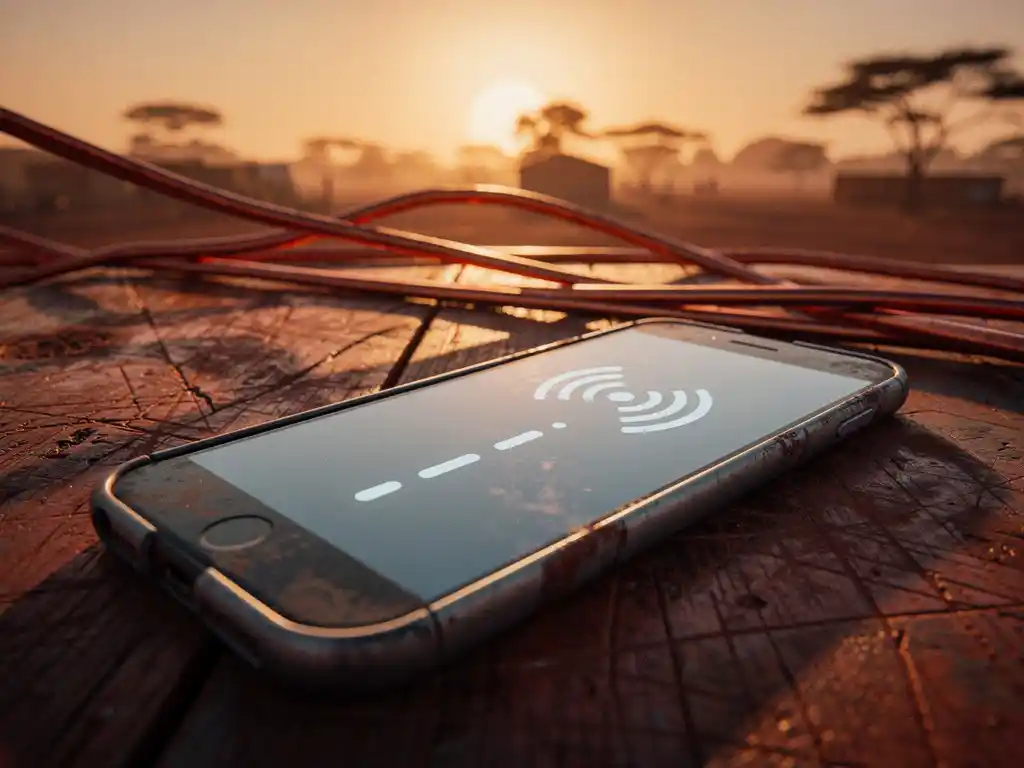
Calling apps sometimes fail when calling African countries because of a combination of infrastructure limitations, unstable internet connections, and technical mismatches between VoIP technology and local telecom networks. These issues affect call quality, cause dropped connections, and create frustrating distortion — and they tend to hit African routes harder than calls to Europe or North America. Below, we break down the most common causes and what you can do about them.
What makes calling Africa harder than calling other regions?
Calling Africa is harder than calling other regions because telecom infrastructure varies significantly across the continent, and many networks rely on older technology or limited international routing capacity. Unlike calls within Europe or North America, a call to Nigeria, a call to Sudan, or a call to Eritrea often travels through multiple network handoffs before reaching the recipient’s phone — and each handoff is a potential point of failure.
Several factors make African routes more technically demanding:
- Fewer direct routing agreements between international VoIP providers and local African carriers
- Variable mobile network quality, with some regions still dependent on 2G or 3G infrastructure
- High demand on limited bandwidth in densely populated urban areas
- Geographic distance, which increases latency on voice data packets
- Inconsistent landline coverage in rural areas, meaning most calls terminate on mobile networks with their own congestion challenges
This does not mean quality calls to Africa are impossible — it means the calling app and provider you choose matter more than they would for a domestic call.
Why do VoIP calls to Africa drop or sound distorted?
VoIP calls to Africa drop or sound distorted primarily because voice data travels as packets over the internet, and when those packets arrive out of order, too late, or not at all, the result is choppy audio, robotic voices, or a sudden disconnection. This is called packet loss and jitter, and it is more common on long-distance routes with multiple network transitions.
Distortion specifically happens when your app cannot reassemble audio packets fast enough to play them smoothly. On shorter routes — say, a call within the Netherlands — packets travel fewer hops and arrive more consistently. On a call to Tanzania, a call to Uganda, or a call to Egypt, those packets may cross several continents and carrier boundaries before reaching the destination.
Poor codec selection also plays a role. A codec is the technology that compresses and decompresses your voice during the call. Some apps use codecs built for high-bandwidth environments, which perform poorly when bandwidth is limited or inconsistent — exactly the conditions that often apply when calling across Africa.
How does internet quality affect international call reliability?
Internet quality directly determines how reliable your international call will be. VoIP calls require a stable, low-latency connection to function well — not necessarily fast internet, but consistent internet. A fluctuating connection is more damaging to call quality than a slow but steady one.
When you make a call to South Sudan or a call to Sudan from Europe, your voice data needs to flow in real time. Any interruption in your internet connection — even for a fraction of a second — can cause audible gaps or trigger a complete disconnection. This is why calls made over congested public Wi-Fi or weak mobile data signals are particularly unreliable.
Key internet factors that affect your call quality include:
- Latency (ping): The time it takes for data to travel between your device and the server. Higher latency means a noticeable delay in conversation.
- Jitter: Variation in packet arrival times. High jitter causes choppy, broken-up audio.
- Packet loss: When data packets fail to arrive entirely. Even 2-3% packet loss can make a call nearly unintelligible.
- Bandwidth: While VoIP does not need much bandwidth, it does need a minimum threshold — typically around 100 kbps per call — maintained consistently throughout.
Switching from Wi-Fi to a strong 4G or 5G mobile connection often resolves quality issues, especially if your home broadband is shared across multiple devices.
What causes sudden disconnections mid-call to African numbers?
Sudden disconnections mid-call to African numbers are most often caused by network timeouts, session expiry on the VoIP provider’s servers, or a brief drop in your internet connection that the app cannot recover from. On African routes, they can also be triggered by congestion on the receiving carrier’s network, particularly during peak hours.
Another common cause is NAT (Network Address Translation) timeouts. Many home routers use NAT to manage internet traffic, and if a VoIP session goes quiet for even a few seconds — for example, during a pause in conversation — some routers interpret the silence as an inactive session and close the connection. This is a technical quirk that affects all VoIP calls but is more noticeable on longer-distance calls where recovery is slower.
If you frequently experience mid-call drops when trying to call Nigeria or call Eritrea, the issue may also lie with the app’s ability to maintain a session through network transitions — for example, when your phone switches between Wi-Fi and mobile data. Apps built with diaspora communication in mind are typically better optimized to handle these transitions gracefully.
Does the calling app you use make a difference for African calls?
Yes, the calling app you use makes a significant difference for African calls. Not all VoIP apps are built with African telecom routes in mind. Some apps are optimized for high-bandwidth, low-latency environments typical in North America and Western Europe, and they perform poorly when connecting to African mobile networks with different technical characteristics.
What separates a well-suited app from a generic one comes down to several factors:
- Routing quality: Does the provider have direct agreements with African carriers, or do calls travel through multiple intermediaries?
- Codec flexibility: Can the app adapt its audio compression to lower-bandwidth conditions?
- Billing transparency: Are you charged per second or rounded up to the nearest minute? On unreliable routes, per-second billing means you only pay for the time you actually connected.
- Language support: Can you navigate the app in your own language? This matters more than it sounds when you are troubleshooting a failed call under stress.
- Recipient accessibility: Does the person you are calling need to have the app installed, or can you reach any phone number directly?
Using a dedicated international calling service built specifically for African diaspora communities typically delivers better results than repurposing a general-purpose messaging app for international calls.
How can you get clearer, more reliable calls to Africa?
You can get clearer, more reliable calls to Africa by improving your internet connection, choosing a calling app optimized for African routes, and calling during off-peak hours when network congestion is lower. Small adjustments on your end can make a meaningful difference even when the destination network is beyond your control.
Practical steps to improve your call quality:
- Use a stable connection: A strong 4G or 5G signal often outperforms congested home Wi-Fi. If you are on Wi-Fi, move closer to the router.
- Close background apps: Streaming services, downloads, and video calls on other devices all compete for the same bandwidth your voice call needs.
- Call at off-peak times: Mornings and early afternoons (local time at the destination) tend to have less network congestion than evenings.
- Use a per-second billing app: If a call drops after 30 seconds, you should only pay for 30 seconds — not a full minute.
- Check your calling credits before you dial: Running out of credit mid-call is a separate but common cause of sudden disconnections.
If you regularly use a phone card to call Africa or are looking for a better way to stay connected, reviewing your provider’s routing quality and pricing structure is worth the effort. The difference between a frustrating call and a clear conversation often comes down to the infrastructure behind the app, not just your Wi-Fi speed.
How FroggyTalk helps with reliable calls to Africa
We built FroggyTalk specifically to solve the problems described in this article. We know that a dropped call to a family member in Eritrea, Nigeria, or Sudan is not just a technical inconvenience — it is a missed moment that matters. That is why we designed our service around the real conditions of African telecom routes, not just the ideal ones.
Here is what makes calling with us different:
- Per-second billing with no hidden fees: You pay only for the minutes you actually use — no connection charges, no rounding up. More minutes for your money, every time.
- No app required on the recipient’s end: You can call any phone number directly, so the person you love does not need to download anything.
- Full app translation into your local language: Everything in the app can be used in your preferred language, including Tigrinya, Hausa, Amharic, Arabic, and more — because you deserve to feel at home in the tools you use.
- Optimized routes to African destinations: We focus specifically on connectivity to countries including Eritrea, Sudan, Ethiopia, Niger, Nigeria, Uganda, Tanzania, and beyond.
- Transparent, affordable rates: Check exactly how many minutes your credit gets you before you dial, with our international calling guide.
We want you to feel heard, seen, and noticed — not frustrated by a dropped line. If you have questions about our service or want help getting started, get in touch with us and we will help you find the best solution for your situation.
Frequently Asked Questions
Can I improve call quality if the problem is on the recipient's end in Africa?
While you cannot control the network conditions at the destination, you can reduce the impact by choosing a calling app with direct routing agreements with African carriers — fewer network handoffs mean fewer points of failure. Calling during off-peak hours (typically mornings local time at the destination) also helps, as congestion on the receiving carrier's network tends to be lower. If a specific number is consistently hard to reach, it may be worth asking the recipient whether their mobile signal is strong at the time you call, or whether calling a different number (such as a different mobile carrier) produces better results.
Why does my call to Africa connect but then go silent after a few seconds?
Silence followed by a disconnection is often caused by a NAT timeout on your home router, which mistakes a brief conversational pause for an inactive session and closes the VoIP connection. It can also indicate that your calling app lost its session with the provider's server due to a momentary internet blip that was too short to notice but long enough to break the call. Switching to a mobile data connection (4G or 5G) instead of home Wi-Fi often resolves this, as mobile connections handle VoIP session continuity more reliably in many cases.
Is it better to use a dedicated calling app or my phone's built-in international dialing for calls to Africa?
A dedicated international calling app almost always offers better value and, when optimized for African routes, better quality than dialing internationally through your standard phone carrier. Standard international calls through mobile carriers are typically billed at significantly higher per-minute rates with no quality optimization for specific routes. A purpose-built app like FroggyTalk uses VoIP infrastructure specifically tuned for African telecom routes and offers per-second billing, meaning you get more value even when a call is shorter than expected.
What is the minimum internet speed I need to make a reliable call to Africa?
VoIP calls require surprisingly little bandwidth — typically around 100 kbps (0.1 Mbps) per call — but the key requirement is consistency, not speed. A 5 Mbps connection that fluctuates heavily will produce worse call quality than a steady 1 Mbps connection. Before making an important call, close any bandwidth-heavy background activity such as streaming, large downloads, or video calls on other devices on the same network to ensure your call gets a consistent, uncontested slice of your available connection.
Do I need to worry about the time zone difference when calling Africa to get better call quality?
Yes — beyond the social consideration of calling at a reasonable hour, time zones directly affect network congestion at the destination. Evenings at the destination tend to coincide with peak mobile network usage, which can degrade call quality even if your own connection is strong. Aiming to call during morning or early afternoon hours at the recipient's location — when fewer people are simultaneously using the local network — can meaningfully improve audio clarity and reduce the chance of a dropped call.
What should I do if my calling app keeps failing to connect to a specific African country?
If calls consistently fail to connect to a specific country — rather than dropping mid-call — the most likely cause is that your app's provider lacks a reliable routing agreement with carriers in that country. Start by checking whether other users report the same issue, then consider switching to a provider that explicitly lists that country as a supported destination with optimized routing. It is also worth verifying that you are dialing the correct international format, including the country code, as formatting errors are a surprisingly common and easily overlooked cause of failed connections.
Are phone cards to call Africa still a good option, or are calling apps better?
Traditional phone cards have largely been replaced by calling apps, which offer greater transparency, more flexible billing, and easier top-up options without the physical limitations of a card. However, the underlying principle is the same — both rely on a provider's routing infrastructure to connect your call, meaning the quality difference between a good and a poor provider applies equally to both formats. If you currently use a phone card and experience frequent call quality issues, switching to a dedicated calling app with per-second billing and African-optimized routing is likely to deliver a noticeably better experience at a comparable or lower cost.
Related Articles
- How do you make sure your call to Nigeria goes through every time?
- What is the cheapest country in Africa to call from Europe?
- Which money transfer has been suspended in Ghana?
- Which is the best money transfer app to Nigeria?
- What is the difference between an international money transfer and a remittance?