


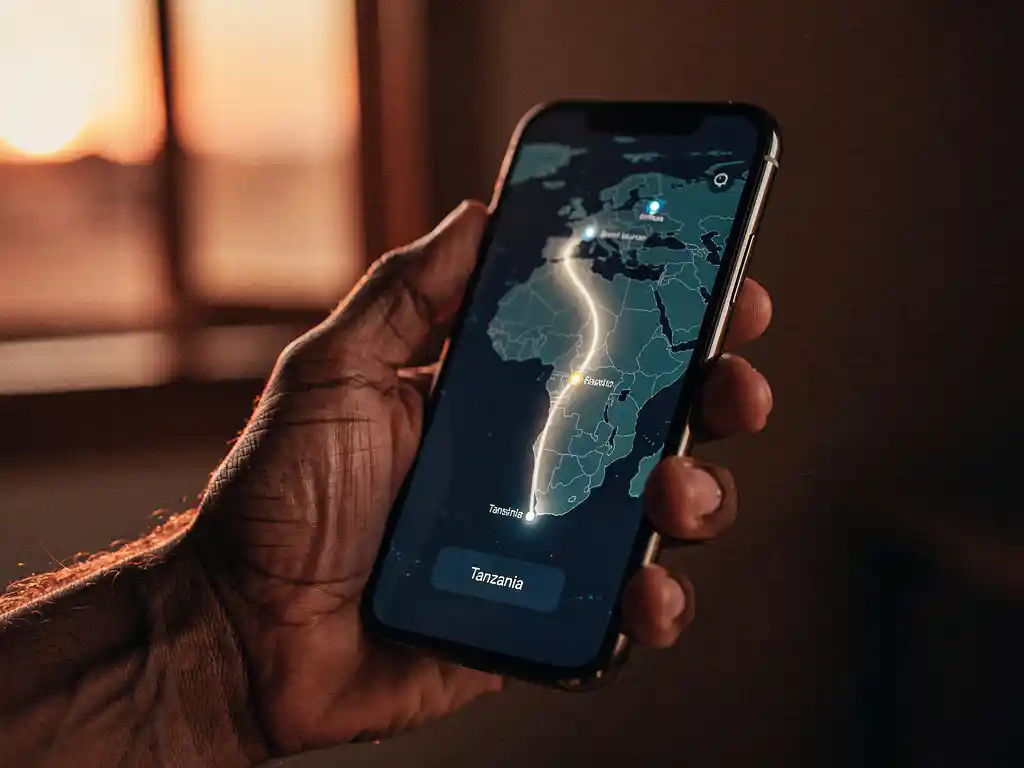
Real-time transaction tracking in money transfers to Tanzania means you can monitor the exact status of your transfer as it moves through each processing stage, from the moment you send it to the moment it arrives. Instead of waiting and wondering, you get live updates that show where your money is at any given point. This article unpacks how the tracking process works, what the different status stages mean, and what to do if something goes wrong.
How does real-time transaction tracking actually work?
Real-time transaction tracking works by connecting your transfer to a live monitoring system that logs and reports each processing event as it happens. When you initiate a transfer, the system assigns it a unique reference number and begins recording its journey through each processing node, updating your status feed automatically as the transfer moves forward.
Behind the scenes, money transfers pass through several financial systems, including the sending platform, intermediary payment networks, and the receiving bank or mobile money provider in Tanzania. Each time the transfer moves from one system to the next, a status update is triggered and pushed to your app or email in near real time.
The key word here is near real time. Most modern transfer platforms refresh status updates within seconds to a few minutes of each processing event. This is made possible through API connections between the sending service and its banking or payment partners, which share event data automatically rather than requiring manual checks.
What are the typical stages shown in a transfer status update?
Most money transfer services to Tanzania display between four and six distinct stages in a transfer status update, moving from initiation through to final delivery. While exact labels vary by provider, the core stages follow a consistent pattern that reflects how international payments are processed.
Here are the typical stages you will see:
- Transfer initiated: Your payment has been submitted, and the platform has received your request.
- Payment confirmed: Your funding source (bank account, card, or wallet) has been successfully charged.
- Transfer processing: The funds are moving through the payment network toward the receiving country.
- Sent to partner: The transfer has reached the local payout partner or bank in Tanzania.
- Funds available / Completed: The recipient can access the money in their account or mobile wallet.
Some platforms add an intermediate stage for compliance or identity verification checks, which is common when sending larger amounts or when a transfer triggers an automated fraud review. If your transfer pauses at this stage, it does not necessarily mean something is wrong. It usually means the system is running a routine check before releasing the funds.
Why don’t all money transfer services offer real-time tracking?
Not all money transfer services offer real-time tracking because building and maintaining live status updates requires deep technical integration with banking partners, mobile money networks, and payment processors. Smaller or older platforms often rely on manual reconciliation processes that only update transfer statuses in batches, sometimes just once or twice a day.
There are a few practical reasons why this gap exists:
- Legacy infrastructure: Some providers use older banking systems that do not support instant API communication, making live status feeds technically difficult to implement.
- Partner limitations: Even if the sending platform has modern technology, the receiving bank or mobile money provider in Tanzania may not support real-time event reporting.
- Cost of integration: Building real-time tracking requires ongoing investment in developer resources and partner relationships, which smaller providers may not prioritize.
- Regulatory complexity: Cross-border payments involve multiple compliance checkpoints that can interrupt automated status flows, especially in corridors with stricter financial oversight.
The result is that some services can only tell you that a transfer is “in progress” without any meaningful detail about where it actually is. For diaspora communities sending money to Tanzania regularly, this lack of visibility can be genuinely stressful, particularly when family members are waiting for funds for urgent needs.
What’s the difference between real-time tracking and transfer confirmation?
Real-time tracking and transfer confirmation are two different things. A transfer confirmation is a single notification sent when your transfer is successfully submitted, confirming that the platform has received your request and payment. Real-time tracking, by contrast, is an ongoing stream of status updates that follows your transfer through every stage until it reaches the recipient.
Think of it this way: a confirmation is a receipt, while real-time tracking is a live map. The confirmation tells you the journey has started. The tracking tells you exactly where the transfer is at any moment during that journey.
Many services offer confirmation but not tracking. You receive an email or notification saying your transfer was accepted, and then you hear nothing more until the money arrives or, in some cases, until something goes wrong. Real-time tracking fills that gap by keeping you informed throughout the entire process, not just at the beginning and end.
This distinction matters most when transfers take longer than expected. With only a confirmation, you have no way of knowing whether a delay is happening at the sending end, in transit, or at the receiving bank in Tanzania. With real-time tracking, you can pinpoint exactly where the transfer is sitting and take informed action if needed.
How can tracking help if a transfer to Tanzania is delayed or lost?
If a transfer to Tanzania is delayed or appears lost, real-time tracking gives you the specific information you need to resolve the issue quickly. Rather than contacting customer support with only a reference number and a vague concern, you can share the exact stage at which the transfer has stalled, which allows support teams to investigate the right part of the payment chain immediately.
Here is how tracking helps in practice when something goes wrong:
- Identifies where the delay is happening: If the transfer is stuck at the “sent to partner” stage, the issue is likely on the receiving end in Tanzania. If it has not moved past “processing,” the problem may be with the payment network or a compliance hold.
- Speeds up support resolution: Customer support teams can act faster when they know exactly which processing node is involved, rather than having to trace the transfer from scratch.
- Provides evidence for disputes: If a transfer shows as completed in the tracking system but the recipient has not received the funds, the status log becomes a key piece of evidence for filing a dispute with the receiving bank or mobile money provider.
- Reduces unnecessary worry: Many apparent delays are simply normal processing times that look unusual without context. Tracking lets you see that the transfer is moving, even if it is slower than expected.
If your transfer appears genuinely stuck with no status update for an extended period, the tracking reference and status history are the most important things to have ready when you reach out for help. A good transfer service will use that information to trace the funds and either confirm delivery or initiate a recovery process.
How FroggyTalk helps with money transfers to Tanzania
We built our International Money Transfer Service around the same values that drive everything we do: transparency, affordability, and making sure you feel heard, seen, and noticed. Sending money to Tanzania or anywhere else across Africa should not leave you anxious and in the dark. Here is what we offer to make the experience clear and stress-free:
- Real-time transaction tracking so you always know where your transfer is, from the moment you send to the moment it arrives
- Transparent fee structures with no hidden charges and competitive exchange rates, so you know exactly what your recipient will receive
- Multilingual support in Tigrinya, English, Arabic, Hausa, Amharic, Dutch, French, Swedish, Danish, Norwegian, and Italian, and the entire app can be translated into your local language
- A single platform for both communication and financial transfers, so you can stay connected with your family and support them financially in one place
- Culturally sensitive customer support that understands the specific corridors and communities we serve, including Tanzania, Nigeria, Eritrea, Sudan, Ethiopia, and beyond
Whether you need to pay bills abroad or send money directly to a family member, we are here to make it simple, reliable, and affordable. Have questions about a transfer or want to know more about how our service works? Get in touch with us and we will be happy to help.
Frequently Asked Questions
How do I find my transfer's reference number if I need to contact support?
Your transfer reference number is typically included in the confirmation email or notification sent immediately after you initiate a transfer. You can also find it in your transaction history within the app or platform you used to send the money. Always keep this number accessible, as it is the fastest way for customer support teams to locate and trace your transfer in the payment system.
How long should a money transfer to Tanzania realistically take, and when should I start worrying?
Most money transfers to Tanzania are completed within minutes to 24 hours, depending on the service used, the payout method (bank account vs. mobile wallet), and the time of day the transfer is initiated. Transfers sent during weekends or public holidays may take longer due to reduced banking activity. If your transfer has shown no status update for more than 48 hours and has not moved past an early processing stage, that is a reasonable point to contact your provider’s customer support with your reference number and tracking history.
Is mobile money delivery in Tanzania tracked the same way as bank account transfers?
The tracking process is largely the same for both delivery methods, but the final stage can differ slightly. Mobile money transfers to networks like M-Pesa or Tigo Pesa in Tanzania often complete faster than bank account transfers and may show a ‘funds available’ status sooner. However, the visibility of that final delivery confirmation depends on whether the mobile money provider shares real-time event data with the sending platform, which not all providers currently do.
What should I do if the tracking shows 'completed' but my recipient in Tanzania hasn't received the money?
First, ask your recipient to check all possible delivery points, including their mobile wallet, bank account, and any SMS notifications from their provider, as funds sometimes arrive without a prominent alert. If the money is genuinely not there, take a screenshot of your completed tracking status and contact your transfer provider immediately, as this status log is critical evidence for raising a dispute. The provider can use the tracking record to contact the receiving partner in Tanzania and confirm or recover the funds.
Can I set up notifications so I don't have to keep checking the tracking status manually?
Most modern money transfer platforms, including FroggyTalk, offer push notifications and email alerts that automatically update you each time your transfer moves to a new stage, so you do not need to actively monitor the app. Check your account settings or notification preferences to make sure these alerts are enabled before sending. This is especially useful for transfers made outside of business hours, when you may not be actively watching the status feed.
Does a compliance or fraud review hold mean my transfer will be cancelled or my account flagged?
Not at all. Compliance holds are a routine part of international payment processing and are triggered automatically by factors like transfer amount, frequency, or destination, not by any wrongdoing on your part. In most cases, the review is completed quickly and your transfer continues without any action required from you. If the provider does need additional information, they will contact you directly, and resolving it is usually straightforward.
What's the best way to compare money transfer services to Tanzania based on tracking quality?
Look specifically for services that show multiple named status stages rather than a single generic ‘in progress’ label, as this indicates genuine real-time integration rather than batch updates. It is also worth checking whether the service sends automatic notifications at each stage or only at the start and end of the transfer. Reading recent user reviews focused on delay experiences and customer support responsiveness can also give you a realistic picture of how well a provider’s tracking actually performs in practice.