


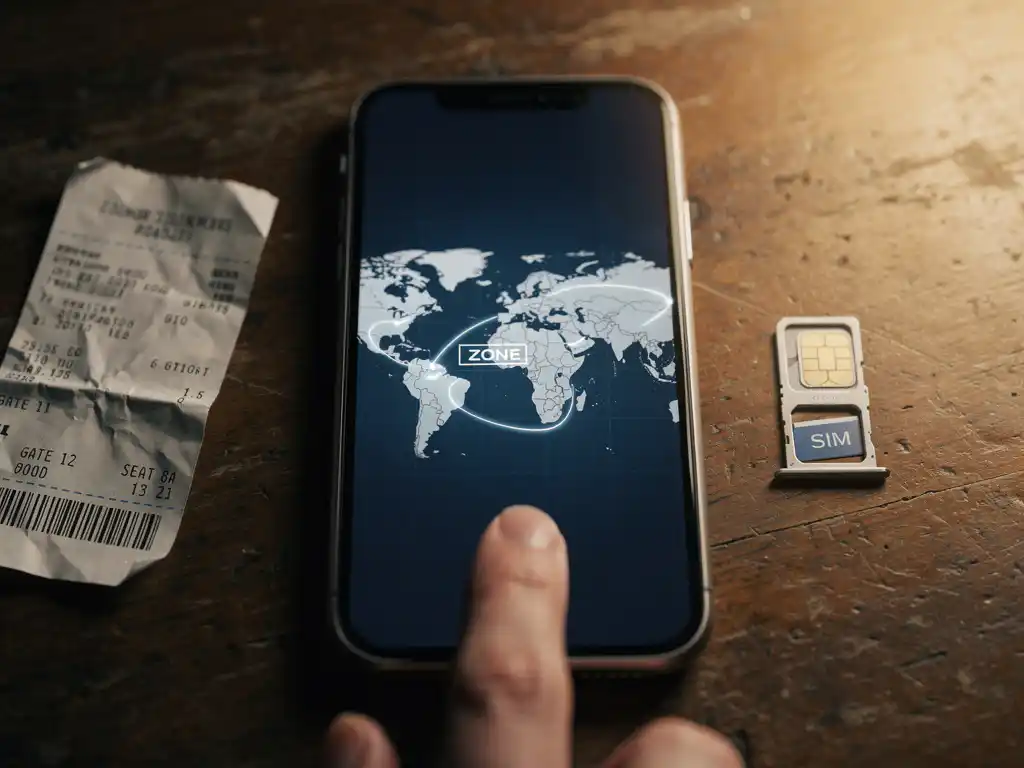
If you rely on internet-based calls to stay connected with people you care about, you have probably wondered whether Wi-Fi calling actually works everywhere. The short answer is: not always. Some countries actively block or restrict internet calling services, which can catch you off guard at exactly the wrong moment. Understanding where these restrictions exist and why they are in place helps you plan ahead and stay connected no matter where you are.
For members of the African diaspora living across Europe, reliable international calling is not a luxury—it is a lifeline. Knowing the landscape of Wi-Fi calling restrictions means you can make smarter choices about how you communicate and which tools actually work when you need them most.
What is Wi-Fi calling, and how does it work?
Wi-Fi calling is a technology that routes voice calls over an internet connection rather than a traditional cellular network. Instead of relying on mobile signal strength, your voice is converted into data packets and transmitted through any available Wi-Fi or mobile data connection, reaching the recipient through their phone number as a regular call.
Most modern smartphones support Wi-Fi calling natively through your mobile carrier, but this is different from internet calling apps. Native Wi-Fi calling is a carrier-enabled feature built into your phone settings. Internet calling apps, on the other hand, work independently of your carrier and use Voice over Internet Protocol (VoIP) technology to place calls through the app itself. Both approaches use your internet connection, but they operate through different systems and face different restrictions depending on the country you are in.
The key advantage of both approaches is flexibility. You can make calls from a basement with no signal, from abroad without paying roaming fees, or from any location with a stable data connection. For people who call internationally on a regular basis, this flexibility translates directly into significant savings.
Which countries block or restrict Wi-Fi calling?
Several countries around the world block or heavily restrict Wi-Fi calling and VoIP services. The most well-known examples include the United Arab Emirates, Oman, Qatar, Kuwait, and Belize, where VoIP calls through apps are either fully blocked or limited to licensed providers. China restricts most foreign VoIP platforms as part of its broader internet controls.
Restrictions vary widely by region and can change without much public notice. In parts of Africa and the Middle East, some countries do not block VoIP outright but throttle internet speeds to the point where call quality becomes unusable. Others require VoIP providers to obtain local operating licenses, which many international apps do not hold.
Countries with known VoIP and internet calling restrictions
- United Arab Emirates — VoIP apps are blocked; only licensed providers can offer voice services
- Oman — VoIP services face significant restrictions, and many apps do not function reliably
- Qatar — Many popular calling apps are blocked or degraded
- Kuwait — VoIP restrictions apply to several major platforms
- China — Foreign VoIP platforms are blocked under national internet regulations
- Belize — VoIP calling is restricted to protect local telecom providers
- North Korea — Internet access itself is almost entirely restricted for ordinary residents
It is worth noting that restrictions apply to the caller’s location, not necessarily the recipient’s. If you are calling from Europe to Nigeria, Eritrea, or Sudan, you are generally not affected by restrictions in those destination countries—the rules that apply are those of the country you are physically in when you make the call.
Why do some countries ban or limit internet calls?
Countries restrict Wi-Fi calling and VoIP services for a combination of economic, political, and regulatory reasons. The most common motivation is protecting the revenue of state-owned or licensed telecom operators, which lose income when users bypass traditional call networks through free or low-cost internet calling alternatives.
In countries where the national telecom provider is government-owned, allowing unrestricted VoIP competition directly affects state revenue. Governments in these cases often frame restrictions as regulatory measures rather than bans, requiring VoIP providers to obtain licenses that are difficult or expensive to secure.
Political and security motivations
Some governments restrict internet calling as part of broader internet control strategies. Encrypted VoIP calls are harder for authorities to monitor than traditional phone calls, which makes them a target for restriction in countries where surveillance of communications is a policy priority. This is particularly relevant in politically sensitive regions where freedom of communication is more broadly limited.
Regulatory and licensing frameworks
Even in countries without outright bans, VoIP services often operate in a legal gray area. Regulators may require apps to register locally, comply with local data storage laws, or meet technical standards that international providers have not met. The result is a patchwork of rules that can make the same app work perfectly in one country and fail completely in another.
Can you still make international calls if Wi-Fi calling is blocked?
Yes, in most cases, you can still make international calls even when standard Wi-Fi calling is blocked, though your options may be more limited. The most reliable workaround is using a Virtual Private Network (VPN), which encrypts your traffic and routes it through servers in countries without restrictions. However, VPN use is itself restricted or illegal in some of the same countries that block VoIP, so you should research the local rules carefully before relying on this approach.
Another practical option is to use traditional mobile or landline calls when you are in a restricted country. While this is more expensive, it guarantees connectivity. Some international calling services are also designed to work through standard phone networks, meaning the call originates from a local number and is then connected internationally—bypassing VoIP restrictions entirely.
If you are based in Europe and calling family in Africa, you are unlikely to face VoIP restrictions on your end. European countries generally allow internet calling freely, which means apps and services that support international calling to African destinations work without interference from your location.
What should you look for in an international calling app?
The right international calling app should offer reliable call quality, transparent pricing, and genuine support for the destinations and languages that matter to you. For anyone calling regularly to African countries, these factors make the difference between a frustrating experience and one that actually feels like being in the same room as the people you love.
Here are the key features to evaluate before committing to any calling service:
- Per-second billing — Avoid apps that round up to the nearest minute. Per-second billing means you only pay for the time you actually use, which adds up to real savings over time.
- No hidden fees or connection charges — Some providers advertise low per-minute rates but add connection fees to every call. Always check the full cost structure before topping up.
- Call quality and reliability — A cheap call that drops every few minutes is not actually cheap. Look for services with a strong reputation for consistent audio quality.
- Language support — If you are not comfortable in English, you need an app that works in your language. The best services support multiple African and European languages so you can navigate the platform confidently.
- No requirement for the recipient to have the app — Many calling apps only work if both parties are registered users. Look for services that can call any phone number, with no app needed on the other end.
- Transparent rates by destination — Rates vary significantly between countries. A good service shows you exactly how many minutes you get for your money before you commit.
Beyond the technical features, consider whether the service understands your community. A platform built specifically for diaspora communities will offer better support, more relevant features, and a user experience that reflects your actual needs rather than a generic global audience.
How FroggyTalk helps with international calling
We built FroggyTalk specifically for people who know what it means to need a reliable, affordable connection to home. Whether you are calling Nigeria, Eritrea, Ethiopia, Sudan, or beyond, we want every call to feel easy, clear, and worth every minute. You deserve to feel heard, seen, and valued—and that starts with a connection that actually works.
Here is what we offer to make international calling straightforward:
- Calls to any phone number — no app or internet needed on the recipient’s end
- Per-second billing with no hidden fees or connection charges
- Weekly calling deals so you know exactly how many minutes you get for your money
- Full app translation into your local language — everything in the app can be used in the language you are most comfortable with, including Tigrinya, Hausa, Amharic, Arabic, French, and more
- Support for destinations across Africa, including Nigeria, Eritrea, Ethiopia, Sudan, South Sudan, Liberia, Sierra Leone, and Zimbabwe
We are more than a calling app. We are a digital home for Africans abroad, built by people who understand the journey. Ready to check the rates for your destination? View our current calling rates and see how many minutes you get for your money. Have questions? Get in touch with our team—we are here to help.