


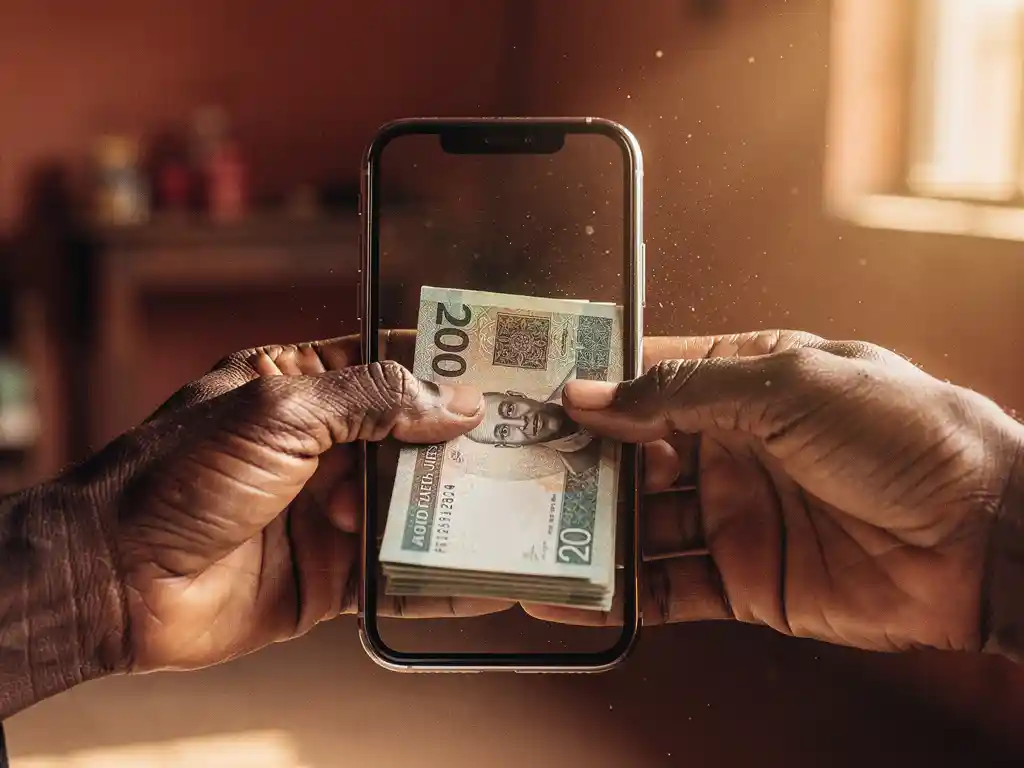
You can send money to Nigeria without the recipient needing a bank account through mobile money wallets, cash pickup services, and agent-based transfer networks. Several international transfer platforms support these delivery methods, making it straightforward to get funds to family or friends who are unbanked. Below, we walk through the most important questions to help you choose the right method.
What options exist for sending money to someone without a bank account in Nigeria?
The main options for sending money to an unbanked recipient in Nigeria are mobile money wallets, cash pickup locations, and airtime top-up transfers. Each method allows the recipient to access funds without ever visiting a bank, using either a basic mobile phone, a local agent, or a designated pickup point such as a pharmacy or supermarket.
Nigeria has a large unbanked population, and the financial infrastructure has adapted accordingly. Mobile money operators like OPay, PalmPay, and Moniepoint have made it possible for anyone with a SIM card to receive money digitally. At the same time, cash pickup networks run by companies like Western Union and MoneyGram maintain thousands of agent locations across the country, from major cities like Lagos and Abuja to smaller towns.
Here is a quick overview of your main choices:
- Mobile money wallets: Funds are sent directly to the recipient’s mobile wallet, accessible via their phone number.
- Cash pickup: The recipient collects physical cash from a designated agent or partner location.
- Airtime transfer: You top up the recipient’s mobile credit, which can sometimes be converted to cash through local agents.
- Home delivery: Some local services in Nigeria offer cash delivery directly to the recipient’s address, though availability varies by region.
How do mobile money wallets work for Nigerian recipients?
Mobile money wallets in Nigeria allow recipients to store, send, and receive money using only a mobile phone number, without a traditional bank account. The recipient registers with a mobile money provider using their SIM card and a valid ID, and once active, they can receive international transfers directly to their wallet within minutes.
Popular mobile money platforms in Nigeria include OPay, PalmPay, and Kuda. These apps are widely used and accepted at thousands of merchant locations, making the money genuinely usable once received. Many also allow cash withdrawals through local agents, so even recipients who prefer physical cash can access their funds easily.
From the sender’s side, you simply select “mobile money” as the delivery method on your chosen transfer platform, enter the recipient’s phone number, and complete the payment. The recipient gets a notification and can access the money immediately. This method tends to be faster than cash pickup and is growing rapidly in popularity across Nigeria.
What is a cash pickup transfer and how does it work in Nigeria?
A cash pickup transfer is a money transfer method where the sender pays online or through an app, and the recipient collects physical cash from a designated partner location in Nigeria, typically an agent, bank branch, or retail outlet. The recipient does not need a bank account, only a valid government-issued ID and a reference number provided by the sender.
The process works like this:
- The sender initiates a transfer through a platform that supports cash pickup in Nigeria.
- The platform generates a unique reference or PIN code, which is shared with the recipient.
- The recipient visits a participating agent location and presents their ID along with the reference code.
- The agent verifies the details and hands over the cash.
Western Union and MoneyGram operate the largest cash pickup networks in Nigeria, with thousands of partner locations including banks, post offices, and retail shops. Some newer fintech platforms also partner with local agent networks to offer this service at competitive rates. The main advantage is accessibility: even recipients in rural areas often have a nearby agent location.
Which money transfer services support unbanked recipients in Nigeria?
Several well-known money transfer services support unbanked recipients in Nigeria, including Western Union, MoneyGram, WorldRemit, Remitly, and Sendwave. Each offers at least one delivery method that does not require the recipient to hold a bank account, whether through mobile wallets or cash pickup networks.
When comparing services, it is worth looking at which delivery methods each platform supports for Nigeria specifically, as availability can vary. WorldRemit and Sendwave, for example, both support mobile money transfers to Nigerian wallets. Western Union and MoneyGram are strongest for cash pickup coverage across a wide range of locations nationwide.
If you regularly send money to Nigeria or to other African countries like Eritrea, Sudan, Ethiopia, or Uganda, it is worth comparing a few platforms side by side to find the one that best matches your recipient’s situation and your preferred payment method.
How much does it cost to send money to Nigeria without a bank account?
The cost of sending money to Nigeria without a bank account typically includes a transfer fee and a currency exchange margin. Transfer fees can range from very low (under €2 on some fintech platforms) to significantly higher on traditional services, while the exchange rate margin is often where services make additional revenue, sometimes adding 1% to 4% above the mid-market rate.
Cash pickup transfers tend to be slightly more expensive than mobile wallet transfers because maintaining a physical agent network carries higher operational costs. However, for recipients without a smartphone or mobile money account, the convenience often outweighs the small price difference.
To keep costs down, look for platforms that offer:
- Transparent, flat transfer fees with no hidden charges.
- Exchange rates close to the mid-market rate.
- No connection fees or surprise deductions on the receiving end.
- Promotional rates for first-time transfers, which many services offer.
Always calculate the total amount the recipient will actually receive before confirming a transfer. The advertised fee alone does not tell the full story if the exchange rate is unfavorable.
What should you watch out for when sending money to Nigeria?
When sending money to Nigeria, the most important things to watch out for are hidden fees, unfavorable exchange rates, unreliable delivery times, and scam platforms. These risks apply whether you are sending to a bank account or to an unbanked recipient, but they are especially relevant when using cash pickup or mobile wallet services where the process is less familiar.
A few practical things to keep in mind:
- Verify the platform’s licensing: Only use services regulated by a recognized financial authority in the country you are sending from.
- Double-check recipient details: Errors in phone numbers or reference codes can delay or misdirect a transfer.
- Confirm pickup location availability: Not every agent location is open at all hours, so make sure your recipient knows where to go and when.
- Watch out for scams: Legitimate transfer services never ask you to send money to claim a prize or verify an account.
- Check delivery timeframes: Some services are instant, others take one to three business days.
It is also worth checking whether the platform offers customer support in your language. For many in the African diaspora community, being able to resolve an issue in Hausa, Arabic, Amharic, or another familiar language makes a real difference when something goes wrong.
How FroggyTalk helps you send money to Nigeria and beyond
We built FroggyTalk around one simple belief: every person deserves to feel heard, seen, and noticed, regardless of where they live or where they come from. Our International Money Transfer Service puts that belief into practice by making it straightforward and affordable to send money to Nigeria, Eritrea, Sudan, Ethiopia, and other African countries, even when the recipient does not have a bank account.
Here is what makes our service different:
- Transparent fees with no hidden charges: What you see is what you pay, every time.
- Competitive exchange rates: We keep margins fair so more of your money reaches your family.
- Real-time transaction tracking: You always know where your money is.
- Multilingual support: Everything in the app can be navigated in your local language, including Tigrinya, Hausa, Arabic, Amharic, French, and more.
- One platform for communication and transfers: Manage your calls and your money in one trusted place.
Whether you are sending money to Nigeria from Europe, Australia, or the United States, we are here to make the process simple, reliable, and genuinely affordable. Ready to get started or have a question? reach out to our team and we will help you every step of the way.
Frequently Asked Questions
Can my recipient in Nigeria use a basic (non-smartphone) phone to receive mobile money transfers?
Yes, most mobile money platforms in Nigeria such as OPay and PalmPay are accessible via USSD codes (e.g., *ussd#), which work on any basic mobile phone without internet access. This means your recipient does not need a smartphone — just an active SIM card registered with the mobile money provider. They can check their balance, withdraw cash through a local agent, and confirm receipt of funds entirely from a feature phone.
What ID does my recipient need to collect a cash pickup transfer in Nigeria?
For most cash pickup services in Nigeria, recipients are required to present one valid, government-issued photo ID — this can be a National Identity Card (NIN slip or card), a Nigerian passport, a driver’s licence, or a voter’s card. The name on the ID must match the name entered by the sender when initiating the transfer, so always double-check spelling before confirming. Some agents may also ask for the transfer reference number or PIN, so make sure your recipient has that on hand before heading to the pickup location.
How long does it take for money to arrive when sending to an unbanked recipient in Nigeria?
Delivery times vary by method: mobile money transfers are typically instant or arrive within a few minutes, while cash pickup transfers are usually available for collection within minutes to a few hours once the sender’s payment has been confirmed. However, transfers paid by bank transfer (rather than card or wallet) on the sender’s side may take one to two business days to process before the funds are released. Always check the estimated delivery time shown on the platform before confirming, especially if your recipient needs the money urgently.
What happens if my recipient misses or can't reach the cash pickup location in time — is there an expiry on the transfer?
Yes, most cash pickup transfers have an expiry window, which typically ranges from 30 to 90 days depending on the service provider. If the recipient does not collect the funds within that period, the transfer is usually cancelled and the money is returned to the sender, sometimes minus a small cancellation or processing fee. To avoid this, confirm that your recipient knows the pickup location, operating hours, and the deadline before you initiate the transfer. If circumstances change, contact the transfer service’s customer support to request an extension or redirect.
Is it safe to send money to Nigeria using fintech apps, or are established providers like Western Union more reliable?
Both fintech apps and established providers like Western Union can be safe and reliable, provided they are properly licensed and regulated. The key is to verify that the platform holds a valid licence from a recognized financial authority in your country of residence — for example, the FCA in the UK, FinCEN in the US, or equivalent bodies in the EU and Australia. Newer fintech platforms often offer better exchange rates and lower fees, while traditional providers may have wider cash pickup networks in rural areas. Checking independent user reviews and confirming regulatory status before using any service is always a smart first step.
Can I send money to Nigeria from any country, or are there restrictions on where I can send from?
Most major transfer services support sending to Nigeria from a wide range of countries, including the United States, the United Kingdom, EU member states, Canada, and Australia. However, availability can vary by platform and by your country of residence, as each service must hold the appropriate licences in each sending country. If you are based in a less commonly supported country, it is worth checking a few platforms to find one that operates in your region. Services like FroggyTalk are specifically designed with the African diaspora in mind and support transfers from multiple countries to Nigeria and other African destinations.
What is the best way to avoid scams when sending money to unbanked recipients in Nigeria?
The most effective way to avoid scams is to use only licensed, regulated transfer platforms and to initiate transfers yourself rather than in response to unsolicited requests. Never share your transfer PIN or reference code with anyone other than your intended recipient, and be cautious of anyone claiming you need to send money to unlock a larger payment or prize. If a recipient or third party pressures you to use an unfamiliar platform or an informal agent, treat that as a red flag. Sticking to well-reviewed services with transparent fee structures and verifiable regulatory credentials is the safest approach.