


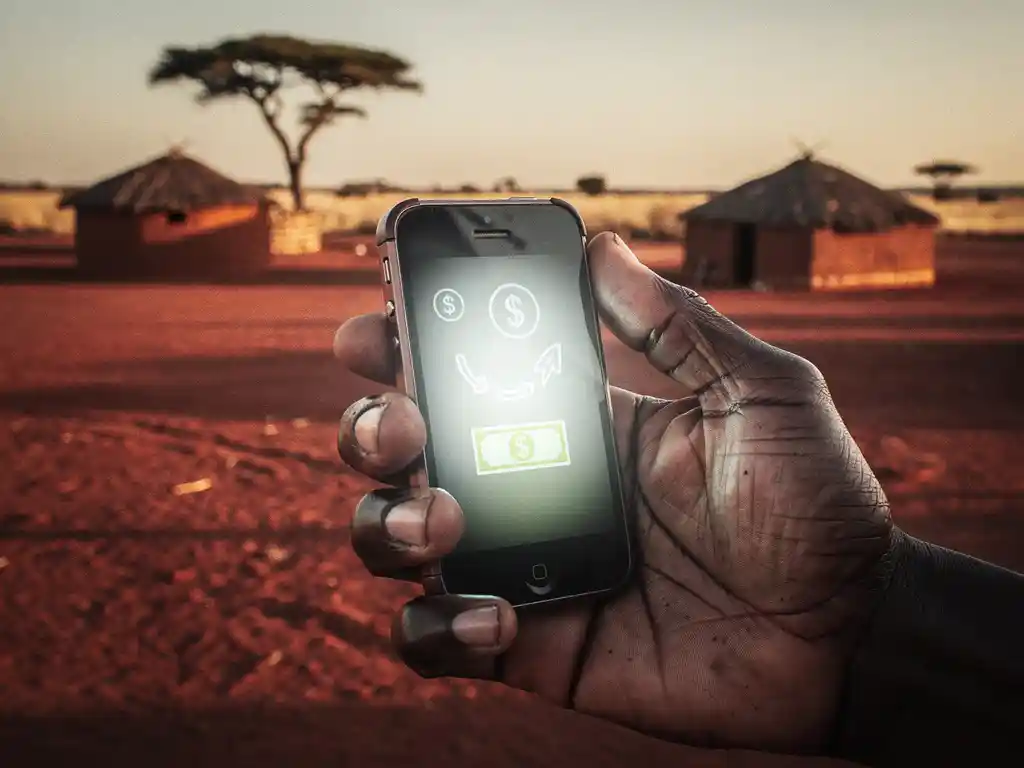
Sending money to someone who lives far from any bank, has no formal ID, or relies on a basic phone with no internet access is a challenge that millions of people face when supporting family abroad. Whether you are covering medical costs, helping with everyday expenses, or contributing to a small business, getting that money to the right person reliably and affordably is not always straightforward. This guide walks you through exactly how international money transfers work for rural and underserved communities, what your options are, and what to watch out for along the way.
The good news is that the landscape for sending money to rural areas has changed significantly in recent years. Solutions now exist that go well beyond the traditional bank wire, and understanding them can save you time, money, and stress.
Why is it so hard to send money to rural Africa?
Sending money to rural Africa is difficult primarily because of limited financial infrastructure. Many rural communities lack bank branches, reliable electricity, and formal identification systems. Roads can be poor, distances are vast, and cash-based economies still dominate. These structural gaps mean that traditional banking channels simply do not reach the people who need them most.
Beyond infrastructure, regulatory and identity requirements add another layer of difficulty. Many international transfer services require the recipient to present a government-issued ID or have an active bank account to receive funds. In rural settings, large portions of the population have neither. This creates a situation where the sender in Europe is ready and willing, but the recipient has no accessible entry point into the formal financial system.
There is also the issue of trust. Families in rural areas may have had bad experiences with informal couriers or delayed transfers, which makes them cautious. Finding a reliable, affordable, and accessible method is not just a logistical challenge; it is also an emotional one, because every transfer represents care, responsibility, and connection across thousands of kilometres.
What are the main ways to send money to rural areas in Africa?
The main ways to send money to rural Africa include mobile money transfers, cash pickup networks, agent-based services, and informal remittance networks. Each method works differently depending on the recipient’s access to technology, identification, and proximity to a service point.
Here is a breakdown of the most common options:
- Mobile money: Services like M-Pesa, Wave, and similar platforms allow recipients to receive funds on a basic mobile phone without a bank account. They are widely used in Kenya, Ethiopia, Senegal, and beyond.
- Cash pickup networks: Providers like Western Union and MoneyGram have agents in many towns and rural areas. The recipient collects cash in person using a reference number and, in some cases, an ID.
- Agent-based transfer services: Local agents act as human bridges, receiving digital transfers and distributing cash in communities with no formal financial presence.
- Hawala and informal networks: Trust-based systems in which money is transferred through a network of brokers. They are fast and often cheaper, but offer limited accountability or recourse if something goes wrong.
- Cryptocurrency and blockchain transfers: Emerging options that can bypass traditional banking, though they require some level of digital literacy on the receiving end.
The right method depends entirely on the recipient’s situation. If they have a mobile phone and a SIM card, mobile money is often the fastest and most cost-effective route. If they have nothing but a trusted contact in a nearby town, a cash pickup service combined with a local messenger may be the only realistic option.
How does mobile money work for people without a bank account?
Mobile money allows people to send, receive, and store funds using a basic mobile phone and a registered SIM card, with no bank account required. The recipient registers with a local mobile money provider, receives a digital wallet linked to their phone number, and can then collect or spend funds through a network of local agents.
The process is straightforward from the sender’s side. You use a transfer service that supports mobile money delivery in the recipient’s country, enter their registered mobile number, and send the funds. The recipient gets a notification on their phone and can withdraw cash from a nearby mobile money agent, which could be a small shop, a market stall, or even a neighbour who is registered with the network.
What makes mobile money so powerful for rural communities is that the agent network often extends into areas where no bank has ever operated. In countries like Ethiopia, Niger, and Nigeria, mobile money infrastructure has grown rapidly, and even small villages often have at least one registered agent within a reasonable distance. The recipient does not need internet access, a smartphone, or a formal bank account. A basic feature phone and a registered SIM are enough.
Which money transfer service is best for sending to rural Africa?
The best money transfer service for rural Africa depends on the destination country, the recipient’s access to mobile money, and how close they are to a cash pickup point. There is no single universal answer, but the key factors to compare are the delivery method, speed, fees, and the reach of the agent or mobile money network in that specific region.
For countries like Kenya, Tanzania, and Senegal, services that integrate directly with established mobile money platforms tend to work best. For Nigeria, several dedicated remittance platforms offer direct bank deposits or cash pickup through widespread agent networks. For Eritrea, Sudan, and Ethiopia, the options are more limited due to financial regulations and, in some cases, sanctions, so it is worth researching which providers are legally authorised to operate in those corridors.
When evaluating services, ask these questions before committing:
- Does the service deliver to mobile money wallets in the recipient’s country?
- How close is the nearest cash pickup or agent location to the recipient?
- What is the total cost, including fees and the exchange rate margin?
- How long does the transfer take to arrive?
- Is there multilingual customer support if something goes wrong?
Speed and reliability matter as much as cost. A slightly higher fee for a service that delivers within minutes is often worth more than a cheaper option that takes three days and offers no customer support in your language.
How do you send money to someone who has no phone or ID?
Sending money to someone with no phone or ID requires a trusted intermediary. The most practical approach is to send funds to a family member, community contact, or local agent who is closer to the recipient and can physically deliver the cash or help them collect it.
This is a reality for many diaspora families, particularly when supporting elderly relatives or people in very remote communities. In these cases, the transfer itself may be straightforward, but the last mile of delivery depends entirely on local trust networks. You send money to a sibling in the nearest town, and that sibling travels to the village or arranges for the funds to reach the intended person.
Some cash pickup services also offer flexible ID requirements in certain markets, accepting alternative forms of identification such as a reference letter, a voter registration card, or community-issued documentation. It is worth contacting the service provider directly to ask what identification options are available in the specific destination country, as policies vary significantly by region.
What fees and exchange rates should you watch out for?
The two main costs in any international money transfer are the transfer fee and the exchange rate margin. The transfer fee is the upfront charge you see when sending. The exchange rate margin is the hidden cost built into the conversion rate, which is often the larger of the two and the one most people overlook.
A service might advertise low or zero fees but offer an exchange rate that is significantly worse than the mid-market rate. That gap is profit for the provider and a loss for you and your recipient. Always compare the total amount the recipient will actually receive, not just the headline fee.
Other charges to watch for include:
- Connection or processing fees: Some services add a small charge on top of the stated fee at the point of confirmation.
- Recipient-side fees: Mobile money providers or cash pickup agents may charge the recipient a small fee when they collect the funds.
- Weekend or off-peak rate changes: Exchange rates fluctuate, and some providers update rates less favourably during weekends or public holidays.
The safest approach is to use a service with transparent, upfront pricing and no hidden charges. Always check the exact amount your recipient will receive before you confirm the transfer, and keep a record of the transaction reference in case you need to follow up.
How FroggyTalk helps with sending money to rural Africa
We built FroggyTalk because we know what it feels like to be far from home and still need to show up for the people you love. Our international money transfer service is designed with these challenges in mind, offering a transparent, affordable, and culturally aware way to send money to families across Eritrea, Sudan, Ethiopia, Niger, Nigeria, and beyond.
Here is what makes our service different:
- Transparent fees with no hidden charges, so you always know what your recipient will receive
- Competitive exchange rates built around fairness, not profit margins
- Multilingual support in Tigrinya, Arabic, Hausa, Amharic, French, and more, because everything in our app can be navigated in your local language
- Real-time transaction tracking, so you are never left wondering
- A single platform where you can manage both your calls and your transfers, because your time is valuable
We want you to feel heard, seen, and valued, not like just another transaction number. Whether you are sending money for the first time or looking for a more reliable alternative to what you are using now, we are here to help.
Get in touch with our team if you have questions about sending to a specific country or region. We speak your language—literally.