


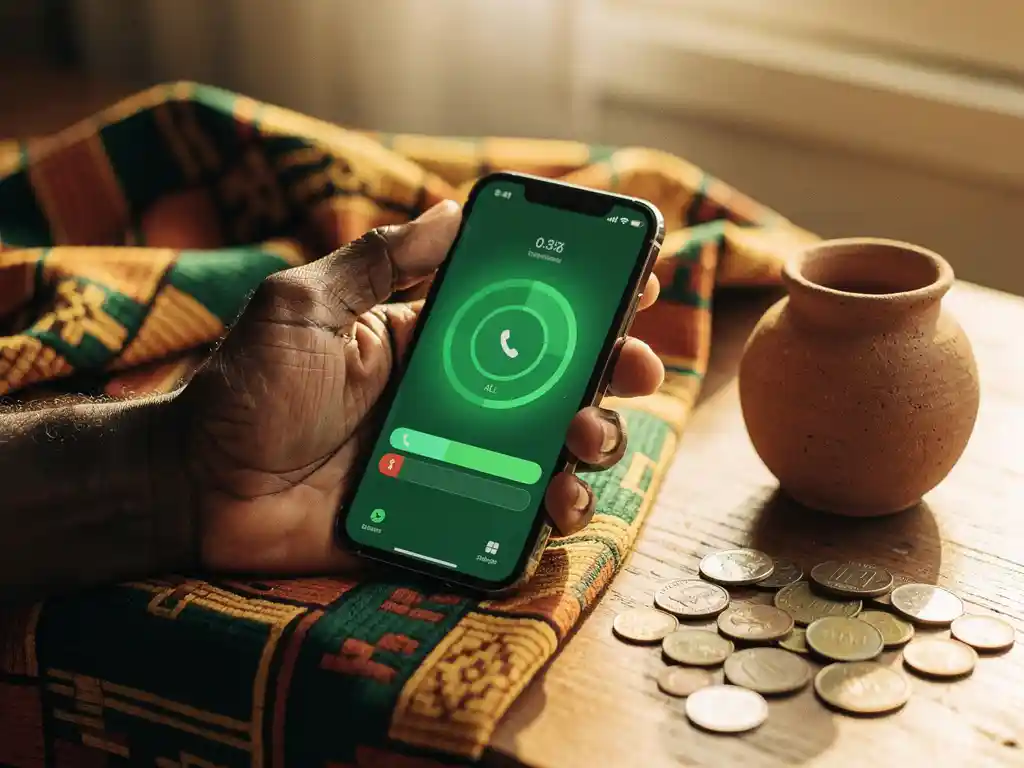
The most effective way to lower your monthly phone bill when calling Africa regularly is to switch from traditional phone carriers to an internet-based calling app with per-second billing and no hidden fees. Standard international rates from mobile operators can be many times higher than what dedicated calling apps charge, and the difference adds up fast when you are making calls every week. Below, we break down the key questions most people have about cutting costs on calls to Africa.
What makes international calls to Africa so expensive?
International calls to Africa are expensive primarily because traditional telecom carriers charge high per-minute rates for routing calls across multiple networks, often adding connection fees and rounding up call durations. These costs reflect legacy infrastructure agreements between carriers rather than the actual cost of the call itself.
When you dial an African number through a standard mobile plan or a phone card to call Africa, your call typically passes through several intermediary networks before it reaches the recipient. Each handoff adds a fee, and those fees are passed on to you. Carriers also tend to round up to the nearest full minute, meaning a 65-second conversation is billed as two full minutes.
For diaspora communities making frequent calls to countries such as Nigeria, Eritrea, Sudan, Ethiopia, or Uganda, these small overcharges compound into a significant monthly expense. A daily five-minute call to a family member can easily cost far more than it should when billed at traditional rates.
Which calling method is cheapest for reaching Africa?
The cheapest way to call Africa from Europe or elsewhere is to use a dedicated internet-based calling app that offers low per-second rates with no connection fees. These apps route your call over the internet rather than through the traditional phone network, which dramatically reduces costs compared to standard mobile plans or prepaid phone cards.
Here is how the main options compare:
- Traditional mobile carrier: High per-minute rates, often with a connection surcharge added per call
- Prepaid phone card to call Africa: Lower rates than carriers, but often include hidden maintenance fees and expiry dates that reduce the actual value
- General VoIP apps (such as WhatsApp or Viber): Free when both parties have internet, but unreliable in areas with poor data connectivity
- Dedicated diaspora calling apps: Purpose-built for affordability, with transparent per-second rates and no hidden charges, and the recipient does not need internet or a smartphone
For people who need to call to Nigeria, call to Eritrea, or reach contacts in Sudan or Tanzania on a regular basis, a dedicated calling app consistently offers the best value per minute.
Does the recipient need internet or a smartphone to receive calls?
No, the recipient does not need internet access or a smartphone to receive your call. With internet-based calling apps designed for diaspora communities, the call is converted from internet data on your end and delivered as a standard phone call to any mobile or landline number on the recipient’s side.
This is a critical distinction from apps like WhatsApp or FaceTime, which require both parties to have the app installed and an active internet connection. Many family members and contacts in rural areas of Nigeria, Sudan, Ethiopia, or Uganda may not have reliable data access, but they do have a basic mobile phone. A good diaspora calling service bridges that gap without asking anything of the person receiving the call.
How does per-second billing reduce your monthly phone bill?
Per-second billing reduces your monthly phone bill by charging you only for the exact duration of each call, down to the second, rather than rounding up to the nearest minute. Over dozens of calls per month, this difference in billing precision can save you a meaningful portion of your total spend.
Consider a practical example. If you make 30 calls per month and each call averages 45 seconds of actual talk time, per-minute billing charges you for 30 full minutes. Per-second billing charges you for exactly 22.5 minutes. On a service where each minute of talk time costs a certain rate, that gap directly translates into money back in your pocket every single month.
Beyond the billing model itself, transparent per-second pricing also means no connection fees are added at the start of each call. Some phone cards and carrier plans charge a flat connection fee of several cents before the per-minute rate even begins, which makes short calls disproportionately expensive. Eliminating that fee makes every call more cost-efficient regardless of its length.
What are the best tips for cutting costs on regular Africa calls?
The best tips for reducing what you spend on regular calls to Africa combine choosing the right service with a few simple habits around when and how you call.
- Switch to a per-second billing app: This alone is often the single biggest saving, especially if you make many short calls throughout the week.
- Avoid connection fees: Choose a service with no per-call connection charge. Even a small fee per call adds up when you are calling daily.
- Use Wi-Fi when available: Calling over a Wi-Fi connection rather than mobile data keeps your data plan usage down while maintaining call quality.
- Group your calls: Instead of multiple short check-in calls, combine updates into fewer but slightly longer conversations to reduce the overhead of dialing multiple times.
- Check the rate for each country: Rates to call to Egypt, call to Uganda, call to Tanzania, and call to South Sudan can differ. Knowing the rate per minute helps you plan your calling habits.
- Use an app that works in your language: When the app interface is available in your language, you avoid misunderstandings about rates, balance, and billing, which prevents unexpected charges.
Should you use a local SIM card or an international calling app?
For most people who call Africa regularly from Europe, an international calling app offers better value and more flexibility than relying on a local SIM card’s international rates. A local SIM card is excellent for calls within your host country, but its international rates are typically set by the carrier and are rarely competitive for African destinations.
Some people in Europe purchase a second SIM card from an African country when visiting home and use it for calls back, but this creates complications around roaming, top-ups, and availability. An international calling app, by contrast, works from any device, on any SIM, and can be topped up digitally at any time.
The one scenario where a local SIM card might have an edge is if your carrier offers a specific international bundle that includes minutes to African countries at a flat monthly rate. However, these bundles often cover only a limited set of countries and may not include the specific destination you need, whether that is a call to Sudan, a call to Nigeria, or a call to Eritrea. Always calculate the actual cost per minute before committing to any bundle.
For guidance tailored to your situation, the international calling guide can help you compare options based on where you are calling from and which African countries you need to reach most often.
How FroggyTalk helps you call Africa without overpaying
We built FroggyTalk specifically for diaspora communities who want to stay connected with family and friends across Africa without watching their phone bill climb every month. Our goal is simple: we want you to feel heard, seen, and noticed, and that starts with making sure cost is never a barrier to picking up the phone.
Here is what makes our service different:
- Per-second billing with no hidden fees: You pay only for the seconds you actually speak, with no connection charges added per call
- No app required for the recipient: Calls are delivered to any mobile or landline number, so your family does not need a smartphone or internet
- Multilingual app interface: Everything in the app can be translated into your local language, including Tigrinya, Hausa, Amharic, Arabic, and more, so you always know exactly what you are paying
- Coverage across key African destinations: Call to Nigeria, Eritrea, Sudan, Ethiopia, Uganda, Tanzania, and beyond, all at transparent per-minute rates
- Reliable call quality: Built for diaspora communities who cannot afford dropped calls or poor audio when connecting with home
If you have questions about rates, how to get started, or which plan fits your calling habits, we are here to help. Reach out to our team and we will make sure you have everything you need to call home with confidence.
Frequently Asked Questions
How do I get started with FroggyTalk if I've never used an international calling app before?
Getting started is straightforward: download the FroggyTalk app, create an account, and add credit to your balance using a standard payment method. Once your balance is loaded, you can immediately dial any mobile or landline number in Africa directly from the app, just as you would from your regular phone. No special setup is required on the recipient's end, making it one of the easiest switches you can make to start saving right away.
What happens if my internet connection drops in the middle of a call?
If your internet connection drops during a call, the call will disconnect, but you will only be charged for the seconds you were actually connected — per-second billing ensures you are never charged for time you did not use. To minimize the risk of dropped calls, it is best to use a stable Wi-Fi connection rather than mobile data, especially for longer conversations. If a call does drop unexpectedly, simply redial; there are no per-call connection fees that would penalize you for calling back.
Are there any countries in Africa that are harder or more expensive to call than others?
Yes, rates can vary significantly depending on the destination country, the type of number being called (mobile vs. landline), and even the specific network operator in that country. Calls to countries with well-developed telecom infrastructure, such as South Africa or Kenya, tend to be cheaper than calls to countries like South Sudan or Eritrea, where network routing is more complex. Always check the per-minute rate for your specific destination before topping up, as the difference between countries can meaningfully affect your monthly spend.
Is it safe to store credit or payment information in a calling app?
Reputable calling apps use encrypted payment processing and do not store your full card details directly within the app, relying instead on secure third-party payment providers. Before adding any payment method, check that the app uses HTTPS, has a clear privacy policy, and processes payments through a recognized provider. As an extra precaution, you can top up smaller amounts more frequently rather than loading a large balance all at once, which limits your exposure in the unlikely event of any account issue.
Can I use an international calling app while traveling, or does it only work from my home country?
International calling apps work from virtually any country as long as you have an internet connection, whether via Wi-Fi or mobile data. This makes them especially useful when you are traveling and want to avoid roaming charges on top of international call rates. Just be mindful of your data usage if you are on a foreign SIM with a limited data plan — connecting to Wi-Fi whenever possible keeps both your data costs and your call costs under control.
What should I do if the call quality is poor or my family says they can barely hear me?
Poor call quality is almost always linked to a weak or unstable internet connection on your end, rather than a problem with the app itself. Start by switching from mobile data to Wi-Fi, moving closer to your router, or closing other apps that may be consuming bandwidth in the background. If the issue persists across multiple calls, try restarting the app or checking whether a newer version is available, as updates often include connection stability improvements.
How does using a calling app compare to buying a prepaid phone card at a local shop?
While prepaid phone cards may advertise attractive headline rates, they frequently include hidden costs such as weekly maintenance fees, per-call connection charges, and expiry dates that cause unused credit to disappear — all of which erode the value you actually receive. A dedicated calling app offers full transparency: you can see your exact balance, the rate per second or minute for each destination, and a clear log of every call you have made. In practice, most regular callers find that switching from phone cards to an app saves them both money and the inconvenience of physically purchasing and scratching cards.