


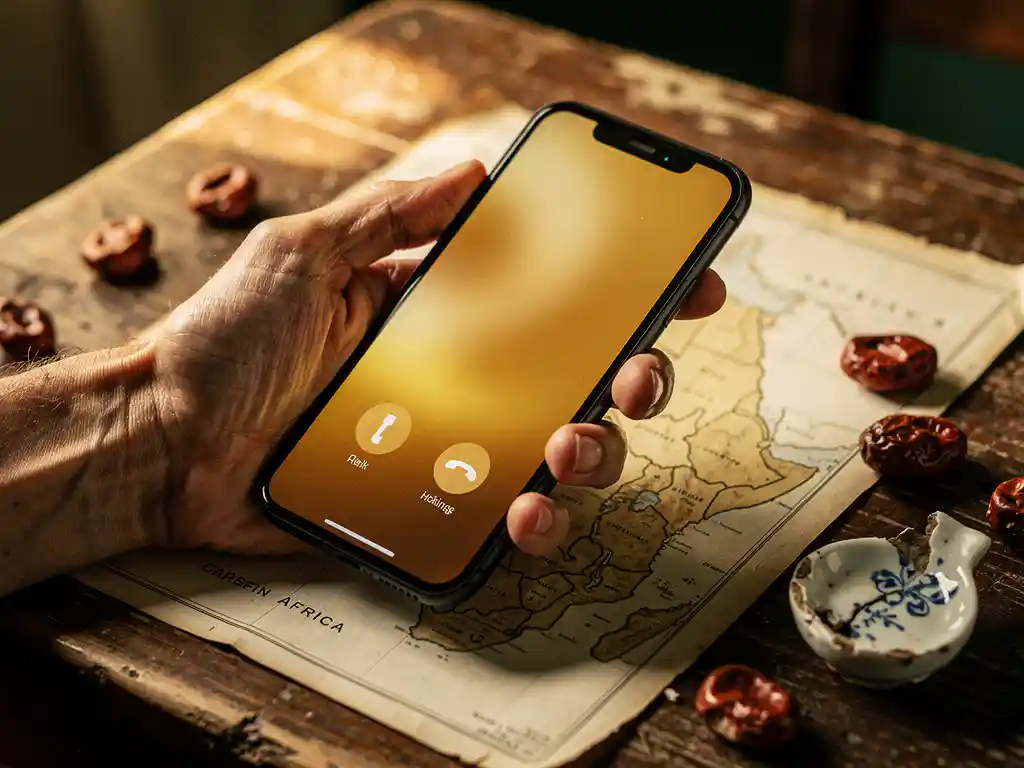
Making a call to Africa from Europe used to mean expensive phone bills, unreliable connections, and frustrating dropped calls. Today, internet-based calling has changed the game entirely, giving diaspora communities a much more affordable and reliable way to stay in touch with family and friends back home. Whether you are calling Nigeria, Eritrea, Ethiopia, or Sudan, understanding your options helps you choose the best solution for your situation.
This guide answers the most common questions people ask when they want to call Africa from Europe, so you can make informed decisions and spend more time talking and less time worrying about costs.
What’s the cheapest way to call Africa from Europe?
The cheapest way to call Africa from Europe is to use an internet-based international calling app. These apps route your call over Wi-Fi or mobile data instead of traditional phone networks, which dramatically reduces the cost per minute. Rates can be as low as €0.08 per minute to countries like Nigeria, compared with standard international rates that can be several times higher.
The key to getting the most value is understanding how pricing works. Many apps offer weekly deals on specific days, where you get a fixed amount of calling time for a set amount of credit. For example, some deals give you up to 2 hours of talk time for around €10 to Nigeria, making it one of the most affordable destinations available.
A few things to keep in mind when comparing costs:
- Look for per-second billing rather than per-minute billing, so you only pay for the time you actually use.
- Check whether the app charges connection fees on top of the per-minute rate.
- Look for weekly or promotional deals that give you more minutes for your money.
- Compare rates by destination, since prices vary significantly between countries.
Transparency matters a great deal here. Some providers advertise low rates but add hidden charges that inflate your actual bill. Always read the fine print before topping up.
Does the person I’m calling need an app or internet?
No, the person you are calling does not need an app or an internet connection. With internet calling apps designed for international calls, the call is delivered directly to any standard mobile or landline phone number. The recipient simply receives a normal phone call, just like any other.
This is one of the most important features to look for when choosing a calling solution, especially when contacting family members in Africa who may not have smartphones or reliable data access. The technology works by converting your voice into data on your end, routing it over the internet, and then connecting it to the local phone network on the other end.
This means your grandmother in Lagos or your cousin in Asmara can pick up their regular mobile phone and hear your voice clearly, without needing to download anything or set up an account. The entire burden of the technology stays on your side, making it genuinely accessible for everyone involved.
Which African countries can I call with internet calling apps?
Most internet calling apps cover a wide range of African countries, including popular destinations such as Nigeria, Ethiopia, Eritrea, Sudan, South Sudan, Liberia, Sierra Leone, Zimbabwe, and many more. Coverage varies by provider, so it is worth checking whether your specific destination is supported before signing up.
Here is an overview of some commonly supported destinations and example rates to give you a sense of what to expect:
- Nigeria — among the lowest rates available, around €0.08 per minute, with deals offering up to 2 hours of talk time
- Ethiopia — approximately €0.17 per minute, with deals offering around 59 minutes per credit amount
- Eritrea — approximately €0.17 per minute, with deals offering around 58 minutes per credit amount
- Sudan — approximately €0.26 per minute, with deals offering around 38 minutes
- South Sudan — approximately €0.35 per minute, with deals offering around 28 minutes
- Sierra Leone and Liberia — approximately €0.29 per minute, with deals offering around 34 minutes each
- Zimbabwe — approximately €0.35 per minute, with deals offering around 28 minutes
Rates and availability can change, so it is always a good idea to check the latest call rates before you top up. Some providers also run destination-specific deals on particular days of the week, which can significantly stretch your budget.
How do per-second billing rates work for international calls?
Per-second billing means you are charged only for the exact number of seconds your call lasts, rather than being rounded up to the nearest minute. If your call lasts 1 minute and 10 seconds, you pay for 70 seconds, not 2 full minutes. This approach is significantly fairer and more cost-effective for callers who make frequent short calls.
To understand why this matters, consider the alternative. With per-minute billing, a 61-second call costs the same as a 120-second call. Over many calls, those rounded-up seconds add up to real money. Per-second billing eliminates this waste entirely.
Here is a simple way to think about it: If the rate to call a country is €0.17 per minute, that works out to roughly €0.0028 per second. A 90-second call would cost approximately €0.25, not €0.34 as it would under per-minute billing. The savings may feel small on individual calls but become meaningful over weeks and months of regular communication.
When evaluating any international calling service, per-second billing combined with no connection charges represents the most transparent and customer-friendly pricing model available.
What should I look for in an international calling app for Africa?
The best international calling app for Africa combines affordable rates, reliable call quality, transparent billing, and support for the specific countries and languages you need. Beyond price alone, the app should feel easy to use and genuinely designed for your community, not just adapted from a generic global product.
Here are the most important factors to evaluate:
- Coverage of your destination country — confirm the app supports calls to the specific region, not just the country’s capital
- Per-second billing with no hidden fees — avoid apps that add connection charges or round up to the nearest minute
- Call quality and reliability — a low rate means nothing if calls drop or sound unclear
- Language support — ideally, the app interface should be available in your preferred language, whether that is Amharic, Hausa, Tigrinya, Arabic, or another language
- Weekly deals and promotions — apps that offer regular deals give you more minutes for your money on a consistent basis
- Ease of topping up — multiple currency options make it easier for diaspora members across different European countries
It is also worth considering whether the app offers anything beyond basic calling. Some platforms include features like access to radio stations from your home country, which helps you stay connected to culture and community, not just to individual contacts. That kind of thoughtful design signals a provider that truly understands what diaspora communities need.
How FroggyTalk helps you stay connected to Africa
We built FroggyTalk specifically for African diaspora communities in Europe because we understand that staying connected is about more than just making a phone call. It is about feeling heard, seen, and valued, no matter where you are in the world.
Here is what we offer to make your international calling experience as easy and affordable as possible:
- Affordable calls to Nigeria, Eritrea, Ethiopia, Sudan, South Sudan, Liberia, Sierra Leone, Zimbabwe, and more
- Per-second billing with no hidden fees or connection charges
- Weekly deals that give you more minutes for your money
- No app or internet required for the person you are calling
- Full app translation into your local language, including Tigrinya, Hausa, Amharic, Arabic, and more
- A Radio Hub with African FM stations, so you can stay connected to your culture
We are more than a calling app. We are a digital home base for Africans abroad. Download FroggyTalk and start calling today, or reach out to us if you have any questions. We would love to hear from you.