


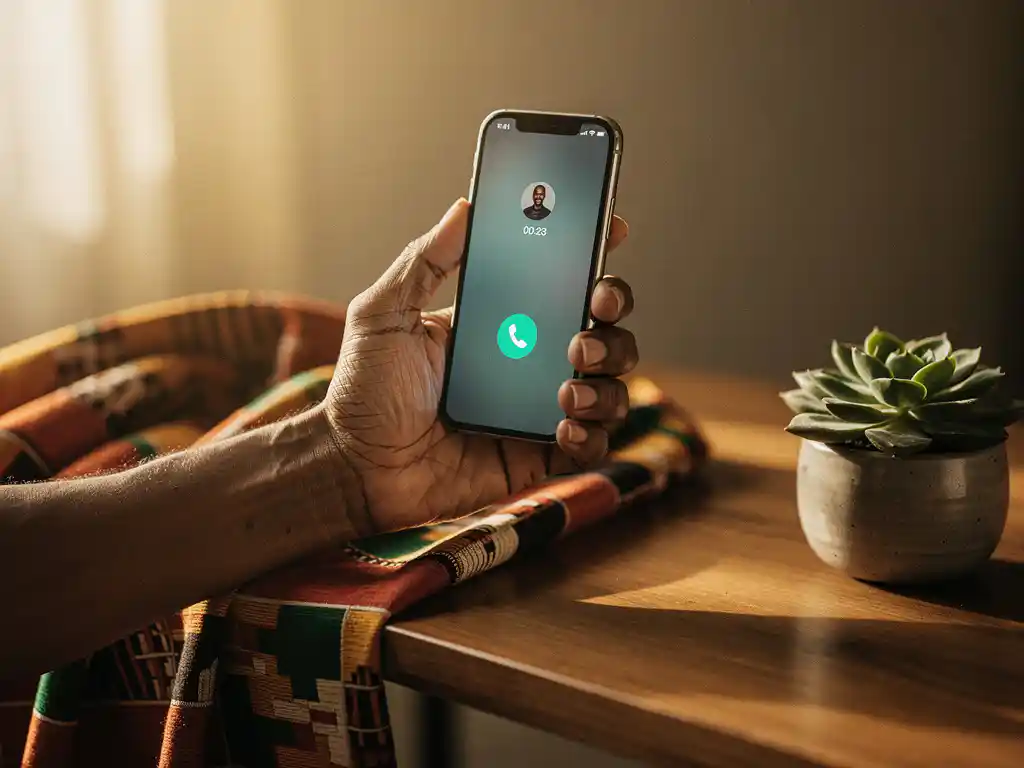
Yes, you can call Africa from your existing phone number without switching to a new plan. All you need is an internet connection and an international calling app. The app uses your internet to route the call, while the person you are calling receives it on their regular mobile or landline, with no app or data required on their end.
This approach works for anyone calling countries like Nigeria, Eritrea, Sudan, Ethiopia, Uganda, Tanzania, Egypt, and more, and it tends to cost a fraction of what your mobile carrier charges for international calls. Below, we answer the most common questions so you can start calling Africa affordably and confidently.
How can you call Africa without switching phone plans?
You can call Africa without switching phone plans by using a Voice over Internet Protocol (VoIP) calling app. These apps route your call through your internet connection instead of your mobile network, so your existing SIM card and phone plan stay completely untouched. You simply download the app, add credit, and call any African mobile or landline number directly.
The big advantage here is flexibility. Whether you are on Wi-Fi at home or using mobile data on the go, the call goes out through the internet rather than through your carrier. You are not locked into any contract, and you do not need to notify your current provider. It is a completely separate layer on top of your existing setup.
This method is especially useful for people in Europe who need to make regular calls to Africa, because carrier roaming and international add-on packages are often expensive and bundled with minutes you may not use efficiently.
What’s the difference between calling through an app versus your carrier?
The key difference is how the call is transmitted and what it costs. When you call through your carrier, the call travels through the traditional phone network and you are billed at your carrier’s international rate, which can be very high per minute. When you call through an internet calling app, the call is routed over your data connection at a much lower cost, often billed per second rather than per minute.
Here is a quick comparison of the two approaches:
- Carrier calls: Use the traditional phone network, charged at international rates, often expensive for calls to Africa, no app needed
- App-based calls: Use your Wi-Fi or mobile data, significantly lower rates, billed per second with no hidden connection fees, requires the app on your side only
- Call quality: App-based calls over a stable internet connection can match or exceed traditional call quality
- Flexibility: Apps let you top up credit as needed, with no monthly commitment or minimum spend
For regular callers to Africa, the cost difference over a month can be substantial. If you are making several calls a week, the per-second billing model of a VoIP app means you only pay for the time you actually spend talking, not a rounded-up minute.
Does the person you’re calling need the app too?
No, the person you are calling does not need the app, an internet connection, or a smartphone. International calling apps that use VoIP technology connect your call directly to any standard mobile or landline number in Africa. From the recipient’s perspective, it simply rings like any other incoming call.
This is one of the most important practical advantages of this approach. Many family members or contacts in countries like Nigeria, Sudan, Eritrea, or South Sudan may not have reliable internet access or may use basic mobile phones. Because the call arrives on their regular phone number, there is no setup required on their end and no need to coordinate which app to use.
Which African countries can you call this way?
You can call a wide range of African countries using internet-based calling apps, including Nigeria, Eritrea, Sudan, South Sudan, Ethiopia, Uganda, Tanzania, Egypt, Niger, and many more. Most reputable apps cover the majority of African nations, reaching both mobile and landline numbers.
Coverage and rates do vary by country, so it is worth checking the specific rate for the country you are calling before you top up. Countries with strong mobile network infrastructure, like Nigeria and Egypt, tend to have competitive rates. Calls to more remote regions or countries with limited telecom infrastructure, such as South Sudan, may carry slightly higher rates, but they are still typically far cheaper than carrier international calls.
If you regularly make calls to multiple African countries, look for an app that lists its per-minute or per-second rates transparently for each destination, so you can compare and plan your spending accordingly.
What’s the cheapest way to call Africa from Europe?
The cheapest way to call Africa from Europe is to use a VoIP calling app with per-second billing and no connection fees. This combination ensures you pay only for the exact time you spend on a call, with no rounding up to the nearest minute and no flat charge just for connecting. Avoiding phone cards with hidden fees or carrier international add-ons will save you the most money.
To get the most minutes for your money, follow these steps:
- Choose an app with per-second billing. Per-minute billing can add up fast, especially for short calls. Per-second rates are fairer and more transparent.
- Check for connection charges. Some services charge a fee just for placing a call, regardless of whether it connects. Avoid these.
- Use Wi-Fi when possible. Calling over Wi-Fi means you are not using your mobile data allowance, keeping overall costs down.
- Compare rates by country. If you call multiple African countries, check the rate for each one before committing to a top-up.
- Avoid phone cards with expiry dates. Traditional phone cards to call Africa often expire quickly, meaning unused minutes are lost. App-based credit typically lasts longer.
The old-fashioned phone card to call Africa still exists, but the rates and transparency rarely match what modern calling apps offer. Apps also give you the convenience of calling from your smartphone without carrying a physical card or dialling access numbers.
What should you check before choosing an international calling app for Africa?
Before choosing an international calling app for Africa, check the billing model, coverage for your specific country, language support, and whether the app charges hidden fees. These four factors have the biggest impact on your experience and your monthly spend.
Here is what to look for in detail:
- Billing transparency: Is the rate per second or per minute? Are there connection fees? Can you see the exact rate before you call?
- Country coverage: Does the app support calls to the specific African country you need, including mobile and landline numbers?
- Language support: Can you use the app in your own language? This matters especially if English is not your first language.
- Call quality and reliability: Look for reviews from other users calling the same region, as quality can vary by destination.
- Customer support: If something goes wrong with a call or a payment, can you reach support easily and in your language?
- Top-up flexibility: Can you add small amounts of credit rather than being forced into large bundles?
It is also worth checking whether the app works in your preferred language. For diaspora communities where English is not the primary language, being able to navigate the app in Tigrinya, Arabic, Hausa, Amharic, French, or another familiar language makes a real difference in day-to-day use.
How FroggyTalk helps you call Africa affordably
We built FroggyTalk specifically for African diaspora communities in Europe, because we know that staying connected with family back home should not cost a fortune or require complicated setups. Here is what makes our international calling service different:
- Per-second billing with no hidden fees: You pay only for the seconds you talk, with no connection charges eating into your credit.
- No app needed on the other end: Your family in Nigeria, Eritrea, Sudan, South Sudan, Ethiopia, Uganda, Tanzania, or Egypt receives the call on their regular phone number.
- Full language support: Everything in the app can be translated into your local language, including Tigrinya, Arabic, Hausa, Amharic, French, Dutch, and more, so you always feel at home using it.
- Built for the diaspora: We want you to feel heard, seen, and noticed. FroggyTalk is more than a calling app; it is a digital home base where connection, culture, and practical support come together.
- Transparent rates by country: Check our international calling guide to see exactly how many minutes you get for your money before you top up.
Ready to start calling Africa without the stress of high costs or confusing plans? Get in touch with us and we will help you get started.
Frequently Asked Questions
What internet speed do I need for a good quality call to Africa?
A stable connection of at least 1–3 Mbps upload and download speed is generally sufficient for clear VoIP calls to Africa. Wi-Fi tends to be the most reliable option, but a solid 4G mobile data connection works just as well. If you notice choppy audio or dropped calls, try switching from mobile data to Wi-Fi, or move closer to your router to strengthen the signal.
Can I use an international calling app while roaming in another European country?
Yes, you can use a VoIP calling app like FroggyTalk while roaming anywhere in Europe, as long as you have access to Wi-Fi or mobile data. Because the call is routed over the internet rather than your carrier's network, you avoid international roaming charges entirely. Just connect to a local Wi-Fi network to keep your data costs down while abroad.
What happens if my call drops mid-conversation — do I lose my credit?
With per-second billing apps, you are only charged for the seconds the call was actually connected, so a dropped call will not drain your credit unfairly. If the call disconnects unexpectedly, you can simply redial at no extra connection fee, provided the app does not charge a per-call connection charge — which is one of the key things to check before choosing an app. FroggyTalk, for example, charges no connection fees, so redialling costs you nothing beyond the seconds you speak.
How do I top up my calling credit, and is there a minimum amount I have to add?
Most international calling apps allow you to top up directly through the app using a debit card, credit card, or digital payment method like PayPal. Reputable apps give you the flexibility to add small amounts rather than forcing you into large bundles, which is ideal if you only call occasionally or want to test the service before committing more credit. Check the app's top-up page to confirm the minimum amount and accepted payment methods before signing up.
Is it safe to use a VoIP calling app for personal or sensitive conversations?
Established VoIP calling apps use encryption protocols to protect your calls and personal data, making them a safe option for everyday conversations. Before using any app, check its privacy policy to understand how your data and call logs are stored and whether they are shared with third parties. Sticking to well-reviewed apps with transparent policies and responsive customer support is the best way to ensure your privacy is protected.
Can I call African landlines as well as mobile numbers, or only mobiles?
Most reputable international calling apps support calls to both mobile and landline numbers across African countries, though it is worth confirming this for the specific country you are dialling. Rates for landlines and mobiles can differ slightly depending on the destination country's telecom infrastructure. When checking an app's rate card, look for both mobile and landline rates listed separately so you know exactly what to expect.
What should I do if the person I'm calling in Africa is not receiving my calls?
First, double-check that you are dialling the correct international format — include the country code followed by the full local number, omitting any leading zero (for example, +234 for Nigeria). If the number is correct and calls still fail, the issue may be on the recipient's end, such as poor network coverage, a switched-off phone, or a full voicemail box. You can also try calling at a different time of day, as network congestion in certain regions can affect call completion rates during peak hours.