


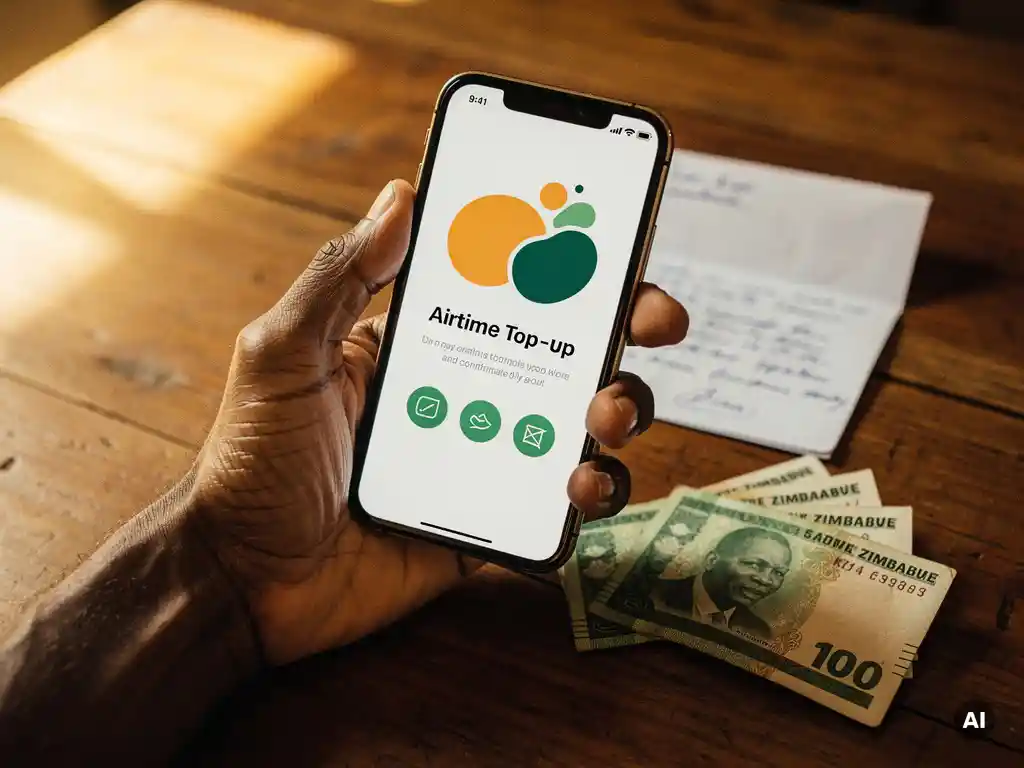
Yes, you can buy airtime to Zimbabwe online. Several platforms allow you to top up a Zimbabwean mobile number remotely, meaning your family or friends receive credit on their phone within minutes, no app required on their end. Below, we cover how it works, which platforms to use, what it costs, and how to stay connected reliably.
How does sending airtime to Zimbabwe online actually work?
Sending airtime to Zimbabwe online works by entering the recipient’s Zimbabwean mobile number on a top-up platform, paying through a debit or credit card, and having the credit delivered directly to their SIM card. The recipient does not need internet access, a smartphone, or any app. The transfer typically completes within a few minutes.
The process is straightforward. You choose the mobile network the recipient uses, in Zimbabwe, the main networks are Econet, NetOne, and Telecel, then select the amount of airtime you want to send. Once your payment is confirmed, the platform sends the credit through the mobile network’s system. It lands on your contact’s phone just like a regular top-up would at a local store.
This kind of remote top-up is sometimes called an international airtime transfer or a mobile recharge. It is one of the most practical ways to support family abroad without needing to coordinate bank transfers or rely on someone physically buying airtime locally.
Which platforms let you buy airtime to Zimbabwe online?
Several platforms support online airtime top-ups to Zimbabwe, including Sendwave, Airtime4U, Recharge.com, and MobileRecharge. These services all allow you to send airtime to Africa from Europe, with payments processed through standard card options. Most support Econet, NetOne, and Telecel numbers.
When choosing a platform, consider these factors:
- Network coverage: Make sure the platform supports the specific Zimbabwean network your contact uses
- Payment methods: Most accept Visa and Mastercard; some also accept PayPal or local European payment options
- Delivery speed: Look for platforms that confirm near-instant delivery
- Fees and transparency: Some platforms add service fees on top of the top-up amount, always check the final price before confirming
- Customer support: If something goes wrong, you want to reach a real person quickly
Reading recent user reviews is a good habit before committing to a platform, especially for first-time transfers. Delivery reliability varies, and community feedback from other diaspora members is often the most honest signal.
What does it cost to send airtime to Zimbabwe from Europe?
The cost of sending airtime to Zimbabwe from Europe depends on the platform, the network, and the amount you send. Most platforms charge a small service fee on top of the airtime value, typically ranging from a flat fee to a percentage of the transfer. What matters most is understanding how many calling minutes your recipient actually gets for the money you spend.
For example, if you send the equivalent of €5 in airtime, it is worth asking: how many local minutes does that give them for calls within Zimbabwe? How many international minutes? Platforms rarely display this upfront, so it is worth checking the recipient network’s current rate card separately.
A few things that affect the total cost:
- Service fee: Charged by the top-up platform, separate from the airtime value
- Exchange rate: If the platform converts euros to Zimbabwean dollars, the rate applied affects the real value received
- Network tariffs: Econet, NetOne, and Telecel each have different per-minute rates, which determine how far the airtime stretches
- Promotion windows: Some networks run bonus airtime promotions that can double the value of a top-up
Always compare the delivered value, not just the headline amount, before choosing a platform.
Are there any limits or restrictions on Zimbabwe airtime top-ups?
Yes, there are limits on Zimbabwe airtime top-ups, though they vary by platform and network. Most platforms set a minimum and maximum top-up amount per transaction, and some impose daily or monthly caps on how much you can send to a single number. These limits exist for fraud prevention and regulatory compliance.
Common restrictions to be aware of include:
- Per-transaction minimums (often around €1 to €2) and maximums (often €20 to €50)
- Daily sending limits per account
- Restrictions on how many different numbers you can top up within a set period
- Network-specific rules, some Zimbabwean operators cap how much airtime can sit on a single account at one time
If you are sending larger amounts regularly, it is worth checking whether the platform you use has a verified account tier that raises the limits. Most platforms make this straightforward by asking for basic identity verification.
What’s the best way to stay connected with family in Zimbabwe?
The best way to stay connected with family in Zimbabwe combines two things: making sure they have airtime on a phone to receive calls, and using a reliable, affordable calling app on your end to place those calls. Sending airtime to Africa keeps their phone active; using a per-second rated calling service keeps your costs fair and predictable.
Airtime top-ups solve the problem on their side. But on your side, the quality and cost of the call itself matter just as much. Many diaspora members in Europe spend far more than they need to on international calls because they use standard mobile plans that charge high per-minute rates to African destinations.
A practical approach is to:
- Top up your family member’s phone so they can receive calls and call you back if needed
- Use an internet-based calling app from your end that charges per second, not per minute, so you are never paying for time you did not use
- Check whether your calling platform supports your home language, being able to navigate the app in Shona, Ndebele, or another familiar language makes the experience far less frustrating
- Look for a platform that offers transparent billing with no hidden connection fees
Staying connected is not just about the call itself. It is about feeling present in each other’s lives across the distance. The right tools make that easier and more affordable.
How FroggyTalk helps you stay connected across borders
We built FroggyTalk specifically for people in this situation, diaspora communities in Europe who want reliable, affordable communication with family back home, without the stress of hidden fees or confusing billing. Here is what we offer:
- Per-second billing: You pay only for the seconds you actually use, no rounding up to the nearest minute, no connection charges
- No app needed on the other end: Your family in Zimbabwe picks up on their regular phone, no smartphone or internet required
- Full language support: Everything in the app can be translated into your local language, so you can navigate it comfortably in the language that feels like home
- Airtime top-ups: You can send airtime directly to a phone in Zimbabwe through our platform, keeping your contact connected
- One platform for more: Beyond calls, we offer a Radio Hub with African FM stations, and our money transfer service for sending funds home securely
At FroggyTalk, we want you to feel heard, seen, and noticed. Communication with the people you love should never feel like a luxury. If you have questions about our services or want help getting started, reach out to our team, we are here for you.
Frequently Asked Questions
What if I send airtime to the wrong number in Zimbabwe — can I get a refund?
Most platforms have strict no-refund policies once airtime has been successfully delivered, since the credit is transferred instantly to the recipient's SIM card and cannot be reversed by the platform. If you entered the wrong number, contact the platform's customer support immediately — in some cases, if delivery failed or is still pending, they may be able to cancel the transaction. To avoid this, always double-check the full number including the country code (+263 for Zimbabwe) before confirming payment.
How do I know which Zimbabwean mobile network my family member is on?
The easiest way is simply to ask your contact, but you can also identify the network by the number prefix. In Zimbabwe, Econet numbers typically start with 077 or 078, NetOne numbers start with 071, and Telecel numbers start with 073. Choosing the wrong network when sending airtime will either result in a failed transaction or the credit going to an unintended recipient, so confirming this detail upfront saves a lot of trouble.
Can I schedule or automate regular airtime top-ups to Zimbabwe so I don't forget?
Some top-up platforms offer a recurring or scheduled top-up feature that lets you set a fixed amount to be sent automatically on a weekly or monthly basis. This is especially useful if you send airtime regularly to the same number and want to make it a routine without logging in each time. Check whether your chosen platform supports this feature, and make sure your payment method stays valid to avoid missed transfers.
Is it safe to use my credit or debit card on airtime top-up platforms?
Reputable platforms use standard SSL encryption and comply with payment security standards (PCI DSS), making card transactions as safe as any online purchase. To protect yourself, stick to well-known platforms with verifiable reviews, look for HTTPS in the browser address bar, and avoid saving your card details on platforms you use infrequently. If you are trying a new service for the first time, consider using a virtual card or a platform that supports PayPal for an added layer of security.
What happens if the airtime doesn't arrive on my family member's phone?
If airtime doesn't arrive within 15–30 minutes of a confirmed payment, first ask your contact to restart their phone, as this can sometimes prompt the network to deliver pending credits. If the issue persists, contact the platform's customer support with your transaction reference number — most reputable services will investigate and either resend the airtime or issue a refund. Keeping a screenshot or email confirmation of every transaction makes this process much faster.
Are there cheaper alternatives to buying airtime for keeping in touch with family in Zimbabwe?
If your family member has access to a smartphone and a Wi-Fi connection, apps like WhatsApp or Telegram allow free voice and video calls over the internet, which can reduce how much airtime they need. However, internet access in Zimbabwe can be unreliable or expensive, which is why topping up their airtime remains the most dependable backup — it works on any phone, on any connection, including basic 2G. A combined approach works best: use internet-based calls when connectivity allows, and ensure they always have airtime for when it doesn't.
Do Zimbabwean mobile networks expire airtime if it isn't used quickly enough?
Yes, airtime expiry is a real consideration on Zimbabwean networks. Econet, NetOne, and Telecel each have their own validity rules, and smaller top-up amounts may expire sooner than larger ones. It is worth checking the recipient network's current validity terms before sending, and where possible, sending amounts that align with what your contact is likely to use within the validity window to avoid wasted credit.