


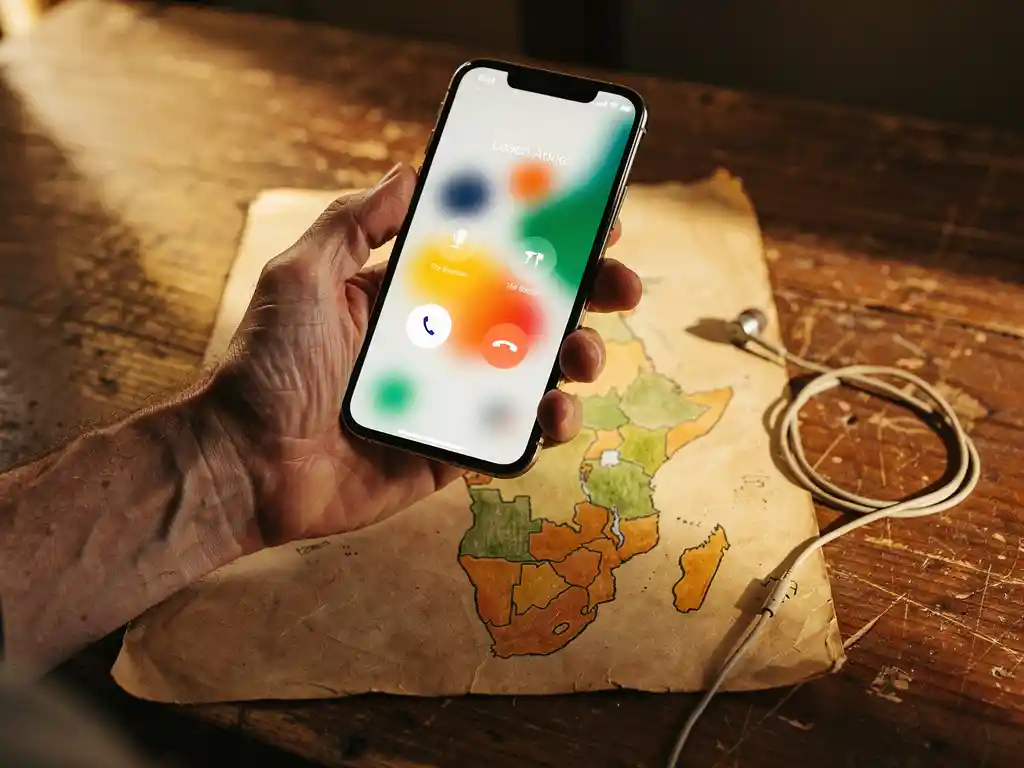
Before choosing a calling app for African countries, check whether it supports the specific country you need to reach, how it charges per call, and whether it offers reliable voice quality over an internet connection. These three factors determine whether an app will actually save you money and keep you connected. The questions below break down exactly what to look for.
Does the app actually support the country you need to call?
Not every calling app covers every African country, so the first thing to confirm is whether the app supports your specific destination. An app may advertise “calls to Africa” broadly but only cover a handful of countries. Before downloading anything, check the country list carefully, whether you need to call Eritrea, Nigeria, Sudan, Ethiopia, Uganda, Tanzania, or Egypt.
Coverage gaps are more common than you might expect. Some apps support major markets like Nigeria or Egypt but leave out countries such as Eritrea, South Sudan, or Niger entirely. Others may list a country but only connect to landlines, not mobile numbers, which is where most people in Africa actually receive calls.
A few things worth confirming before you commit to any app:
- Does it cover both mobile and landline numbers in your destination country?
- Can the recipient receive the call on a regular phone, without needing the app themselves?
- Is the country available at a reasonable rate, or is it listed but priced so high it is not practical?
The recipient not needing the app is a particularly important detail. Many people calling family back home need to reach older relatives or people in rural areas who simply use a standard mobile phone. An app that requires both sides to be online is far less useful for real diaspora communication.
How do calling apps charge for international calls to Africa?
Calling apps charge for international calls to Africa in several different ways: per minute, per second, through credit bundles, or via monthly subscriptions. The billing model matters enormously because small differences in how time is rounded can significantly affect how many minutes you actually get for your money.
Per-minute billing rounds every call up to the nearest full minute. If you speak for one minute and ten seconds, you are charged for two full minutes. Per-second billing charges only for the time you actually use, which means shorter calls cost less and nothing is wasted. For frequent callers, this difference adds up quickly.
Watch out for these common hidden costs:
- Connection fees: A flat charge applied each time you dial, before the call even connects.
- Monthly maintenance fees: Some apps charge a recurring fee just to keep your account active.
- Credit expiry: Prepaid credit that disappears if you do not use it within a set window.
- Inactivity charges: Fees deducted from your balance if you have not called recently.
When comparing apps, focus on the actual minutes you receive for a set amount of money rather than the headline rate alone. An app advertising a very low rate per minute may still cost more overall if it adds connection fees or rounds aggressively. Transparent, per-second billing with no hidden charges is the clearest sign that an app is genuinely affordable.
What call quality should you expect when calling African countries?
Call quality when calling African countries over the internet depends primarily on the internet connection on your end and the network infrastructure available at the destination. With a stable Wi-Fi or 4G connection on your side, most modern calling apps deliver clear, reliable voice quality to major urban areas across Africa.
Calls to more rural destinations or countries with less developed mobile infrastructure may experience more variation. This is not always within an app’s control, but the technology the app uses to compress and transmit audio does make a difference. Apps built specifically for low-bandwidth environments tend to perform better when network conditions are less than ideal.
Practical things that affect your call quality include:
- Your own Wi-Fi or mobile data speed and stability
- Whether you are using VoIP (internet-based calling) or a traditional phone card connection
- The time of day you call, since peak hours can affect network congestion
- The mobile network coverage at the recipient’s location
Reading recent user reviews from people calling the same country you need to reach is one of the most reliable ways to gauge real-world call quality. General app store ratings can be misleading if most reviewers are calling different destinations than yours.
Should you choose an app that supports your home language?
Yes, choosing a calling app that supports your home language makes a significant practical difference, especially when navigating account settings, topping up credit, or understanding billing details. An app available only in English creates unnecessary friction for users who are more comfortable in Tigrinya, Amharic, Hausa, Arabic, or French.
Language support goes beyond just a translated interface. When something goes wrong, whether a call fails or a payment does not process correctly, being able to reach customer support in your own language is essential. An app that feels inaccessible or confusing because of language barriers is one you are less likely to use consistently, which defeats the purpose.
For African diaspora communities across Europe, multilingual support signals that an app was actually built with your needs in mind, not just adapted as an afterthought. The more languages an app supports natively, including both African languages and the European languages of your host country, the more likely it is to serve your full communication context well.
What other features make a calling app worth using for diaspora communities?
Beyond calling, a genuinely useful app for diaspora communities should offer features that support cultural connection and practical daily life, not just a basic dial pad. The most valuable additions are those that reduce the effort of staying connected to home across multiple dimensions at once.
Features worth looking for include:
- Cultural content: Access to radio stations, news, or media from your home country keeps you connected to what is happening back home without needing a separate app.
- Full interface translation: Everything in the app should be navigable in your preferred language, from account management to help sections.
- No requirement for the recipient to have the app: Calls should reach standard mobile and landline phones directly.
- Transparent account management: Clear visibility into your remaining credit, call history, and rates with no surprises.
- Integration tools: Features that help with practical needs like documentation, financial services, or local information for life in Europe.
The best apps for diaspora communities treat communication as one part of a broader support system. Staying in touch with family is important, but feeling genuinely seen and supported as a migrant or refugee navigating life in a new country matters just as much. An app that understands that difference is worth far more than one that simply connects calls.
How FroggyTalk helps you stay connected to Africa
We built FroggyTalk specifically for African diaspora communities in Europe, and everything about how the app works reflects that focus. Here is what that means in practice:
- Country coverage that matches your reality: We support calls to Eritrea, Nigeria, Sudan, Ethiopia, Niger, Uganda, Tanzania, Egypt, and beyond, reaching mobile phones directly with no app required on the recipient’s end.
- Per-second billing, no hidden fees: You pay only for the seconds you actually use. No connection charges, no credit expiry surprises, no monthly fees eating into your balance.
- Full multilingual support: The entire app can be used in your home language, including Tigrinya, Amharic, Hausa, Arabic, French, and more. Everything is translatable, not just the basics.
- Radio Hub: Listen to FM stations from your home region directly inside the app, with over 3.6 million listening minutes logged by our community.
- More than calling: We are expanding into AI-powered tools for financial inclusion, legal aid, and documentation support, because we want to be a digital home base for Africans abroad.
We want you to feel heard, seen, and noticed, not just connected. If you have questions about which plan works for your situation or which countries we cover, get in touch with us and we will help you find the right fit.
Frequently Asked Questions
Can I use a calling app for Africa if I only have a slow or unstable internet connection?
Yes, but your results will vary depending on the app. Some calling apps are specifically optimized for low-bandwidth conditions and use audio compression technology that maintains acceptable voice quality even on slower connections. If your internet is unreliable, look for apps that mention low-bandwidth support, and consider calling during off-peak hours when network congestion is lower. Avoid data-heavy video call features and stick to voice-only calls to reduce the strain on your connection.
What is the best way to top up calling credit without losing money to fees or expiry?
The safest approach is to top up smaller amounts more frequently rather than loading a large balance all at once, especially if the app has credit expiry policies. Before adding any credit, read the terms carefully to understand how long your balance stays active and whether inactivity fees apply. Prioritize apps that offer transparent account dashboards so you can monitor your balance in real time and never get caught off guard by unexpected deductions.
How do I know if an app is actually reliable before committing to it?
The most useful signal is recent user reviews from people calling the same specific country you need to reach — not overall app store ratings, which can reflect entirely different use cases. Look for reviews mentioning call quality, billing accuracy, and customer support responsiveness. If the app has an active community presence or allows a small trial top-up, test it with a short call before loading significant credit.
What should I do if a call fails or my credit is charged incorrectly?
First, check your call history within the app to confirm what was actually billed and compare it against the call duration you experienced. If there is a discrepancy, contact customer support immediately with the date, time, and destination of the call as evidence. Choosing an app that offers support in your home language is a major advantage here, as it makes the resolution process significantly faster and less frustrating.
Is it safe to store payment information or personal data in a calling app?
Reputable calling apps use standard encryption protocols to protect your payment and personal data, but it is always worth checking the app's privacy policy before entering sensitive information. Look for apps that are transparent about how your data is stored, whether it is shared with third parties, and how you can delete your account if needed. If an app does not publish a clear privacy policy, treat that as a red flag.
Can I use the same calling app across multiple devices, such as my phone and tablet?
Most modern calling apps allow you to log into the same account across multiple devices, meaning your credit balance and call history stay synchronized. This is particularly useful if you switch between a phone and a tablet or share an account with a family member. Before assuming this is possible, check the app's terms, as some limit simultaneous logins or charge separately for multi-device access.
Are there any calling apps specifically designed for refugees or newly arrived migrants with limited resources?
Yes, some apps, including FroggyTalk, are built specifically with diaspora and migrant communities in mind, offering multilingual interfaces, per-second billing to minimize waste, and features that go beyond basic calling such as access to home-country radio and support tools for documentation or financial inclusion. These apps tend to be more sensitive to the real-world constraints of their users compared to generic international calling services. When evaluating options, look for apps that explicitly name your community as their target audience rather than treating African diaspora users as an afterthought.