


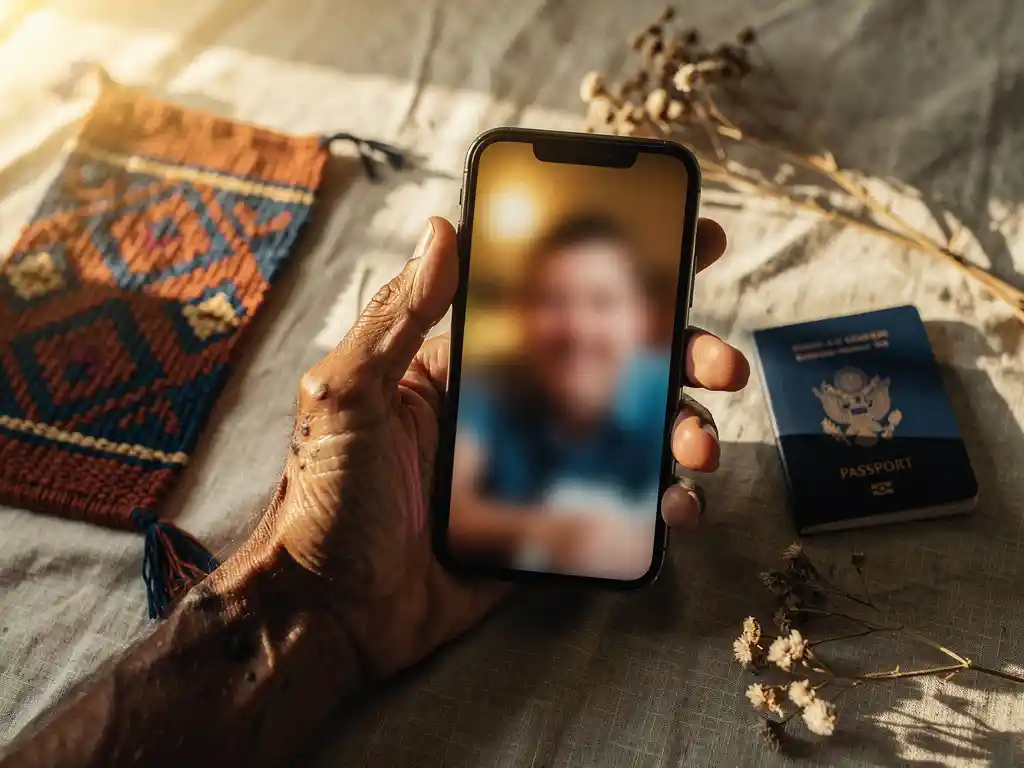
Staying connected across borders has never been more important. For migrants and refugees living far from home, international calling remains frustratingly expensive and unreliable. The barriers to affordable communication are real—and they matter. Whether you are checking in with family, coordinating with relatives abroad, or simply wanting to hear a familiar voice from home, the cost and complexity of international calls can stand in the way.
The good news is that the landscape is changing fast. New technology, smarter apps, and a growing awareness of diaspora needs are reshaping what international calling looks like—and what it can become. This article walks through the most important questions about the future of international calling for diaspora communities, so you can make informed choices about how you stay connected.
Why are international call costs still so high for migrants?
International call costs remain high for migrants primarily because traditional telecom providers charge significant markups on cross-border routing, often layering connection fees, per-minute rates, and hidden charges that add up quickly. Diaspora communities are disproportionately affected because they call frequently, often to destinations where infrastructure costs are genuinely higher.
Several factors drive these inflated prices. Legacy telecom networks rely on interconnection agreements between carriers in different countries, and each handoff in that chain adds cost. Calls to certain destinations involve routing through multiple intermediary networks, which increases the price per minute. Providers have historically treated diaspora callers as a captive market with few alternatives, meaning there has been little competitive pressure to bring prices down.
There is also a transparency problem. Many providers advertise low headline rates but then apply connection fees, round up to the nearest minute, or charge different rates depending on the time of day. For someone calling home several times a week, these hidden costs accumulate into a significant monthly expense. Transparent, per-second billing with no hidden fees is one of the most meaningful improvements a calling service can offer to communities that rely on frequent, affordable contact with family abroad.
For African migrants and refugees living in Europe—whether calling family in Lagos, Asmara, or Addis Ababa—these challenges are particularly acute. Calls to many African nations involve complex routing through multiple networks, and the lack of competitive alternatives has historically kept prices high for these communities.
How does internet-based calling work for international calls?
Internet-based calling, also known as VoIP (Voice over Internet Protocol), works by converting your voice into digital data packets and sending them over an internet connection rather than through traditional phone lines. This approach dramatically reduces the cost of international calls because it bypasses expensive legacy telecom infrastructure.
The practical benefit for diaspora communities is significant. You can make a high-quality call to a standard mobile or landline phone using nothing more than a smartphone and a Wi-Fi or data connection on your end. Critically, the person you are calling does not need to have the app or an internet connection. They simply receive the call on their regular phone, just as they would from any other caller.
This matters especially for calls to countries like Nigeria, Ethiopia, or Eritrea, where the person receiving the call may have limited access to smartphones or data. Call quality over internet connections has improved enormously in recent years. Modern VoIP services use audio compression technology that maintains clear voice quality even on slower connections. The key variables that affect your experience are your internet speed and the stability of your connection. A reliable Wi-Fi connection will almost always deliver better results than a weak mobile data signal.
What features matter most in a calling app for diaspora communities?
The most important features in a calling app for diaspora communities are affordable per-minute rates, reliable call quality, transparent billing, and support for the languages spoken by the community. Beyond these basics, cultural features like access to home-country radio and multilingual app interfaces make a meaningful difference in daily life abroad.
Here is what to look for when choosing a calling app as a diaspora community member:
- Transparent pricing: Look for per-second billing with no connection fees or hidden charges, so you always know exactly how many minutes your credit will buy.
- Language support: The app interface and customer support should be available in your preferred language, whether that is Tigrinya, Hausa, Amharic, Arabic, or another language spoken within your community.
- No requirement for the recipient: The person you call should be reachable on their regular phone without needing to download anything.
- Coverage of your home country: Not every app supports affordable calls to all destinations, so check that your specific country is well covered.
- Cultural connection features: Access to home-country radio, local news, or community content helps you stay connected to more than just individual contacts.
Feeling heard, seen, and noticed is not a luxury. It is a basic human need, and the right app should make that possible without financial stress or technical frustration. The ability to translate everything in the app into your local language is a detail that signals whether a provider truly understands your community or is simply offering a generic product.
How is AI changing communication tools for African migrants in Europe?
AI is transforming communication tools for African migrants in Europe by enabling smarter language translation, more personalized support, and entirely new categories of assistance that go beyond calling. The next generation of apps will use AI to help users navigate legal documents, access financial services, and find mental health support, all within a culturally familiar environment.
At the most immediate level, AI-powered translation is breaking down language barriers that have long prevented migrants from fully accessing services in their host countries. Real-time translation features can help someone who speaks Tigrinya or Hausa communicate with Dutch or Swedish institutions without needing an interpreter. This has practical implications for healthcare appointments, housing applications, and employment processes.
Looking further ahead, AI integration is moving toward what might be called a digital home base model. Rather than using a separate app for each need, migrants could access calling, legal-aid guidance, documentation assistance, and financial-inclusion tools within a single platform that understands their cultural context. This kind of integrated support reflects the reality that communication challenges for diaspora communities are rarely just about making a phone call. They are about navigating an entirely new society while maintaining deep roots in another.
Which countries are hardest to call affordably from Europe?
The countries that are hardest to call affordably from Europe tend to be those with less developed telecom infrastructure, ongoing conflict, or limited competition in the local telecom market. Destinations like South Sudan, Zimbabwe, Liberia, and Sierra Leone typically carry higher per-minute rates than more connected destinations like Nigeria.
To give a concrete sense of the difference, consider how call rates vary across African destinations. Nigeria, with its large and competitive telecom market, can be reached at significantly lower rates, meaning your credit goes much further. A destination like South Sudan, where infrastructure is limited and routing is more complex, carries a higher per-minute cost, which means fewer minutes for the same amount of money.
Weekly calling deals can help stretch your budget considerably. For example, deals on specific days of the week can offer fixed rates to destinations including Eritrea, Ethiopia, Sudan, Nigeria, Liberia, Sierra Leone, South Sudan, and Zimbabwe, with pricing that reflects the true cost of each route. Knowing which day offers the best deal for your destination is a simple but effective way to manage your communication costs.
The following destinations illustrate the range of rates you might encounter when calling from Europe:
- Nigeria is among the most affordable destinations, with low per-minute rates that can give you up to two full hours of talk time on a standard credit amount.
- Ethiopia and Eritrea sit in a mid-range bracket, typically offering close to an hour of talk time for the same credit.
- Sudan is similarly mid-range, with rates that provide around 38 minutes per standard credit.
- Liberia and Sierra Leone have comparable rates, offering roughly 34 minutes per credit.
- South Sudan and Zimbabwe are among the higher-cost destinations, where the same credit typically buys around 28 minutes.
How FroggyTalk helps with international calling for diaspora communities
We built FroggyTalk specifically to address the communication challenges that African diaspora communities face every day in Europe. Our international calling service is designed around the needs of people who call home regularly and need a solution that is affordable, reliable, and genuinely respectful of their time and money.
Here is what we offer:
- Affordable calls to African destinations including Nigeria, Eritrea, Ethiopia, Sudan, South Sudan, Liberia, Sierra Leone, and Zimbabwe
- Per-second billing with no hidden fees or connection charges, so your minutes are never wasted
- No requirement for the person you call to have the app or internet access
- Full app support in multiple languages including Tigrinya, Hausa, Amharic, Arabic, French, and more, with everything translatable into your preferred language
- Weekly calling deals that give you more minutes for your money on specific destinations
- A Radio Hub with African FM stations, so you can stay connected to your home culture as well as your family
We want every person who uses FroggyTalk to feel heard, seen, and noticed. Communication is not just a utility. It is how you stay close to the people and the culture that matter most to you.
Ready to see how far your credit goes? Check our current calling rates or get in touch with our team if you have questions. We are here to help.