


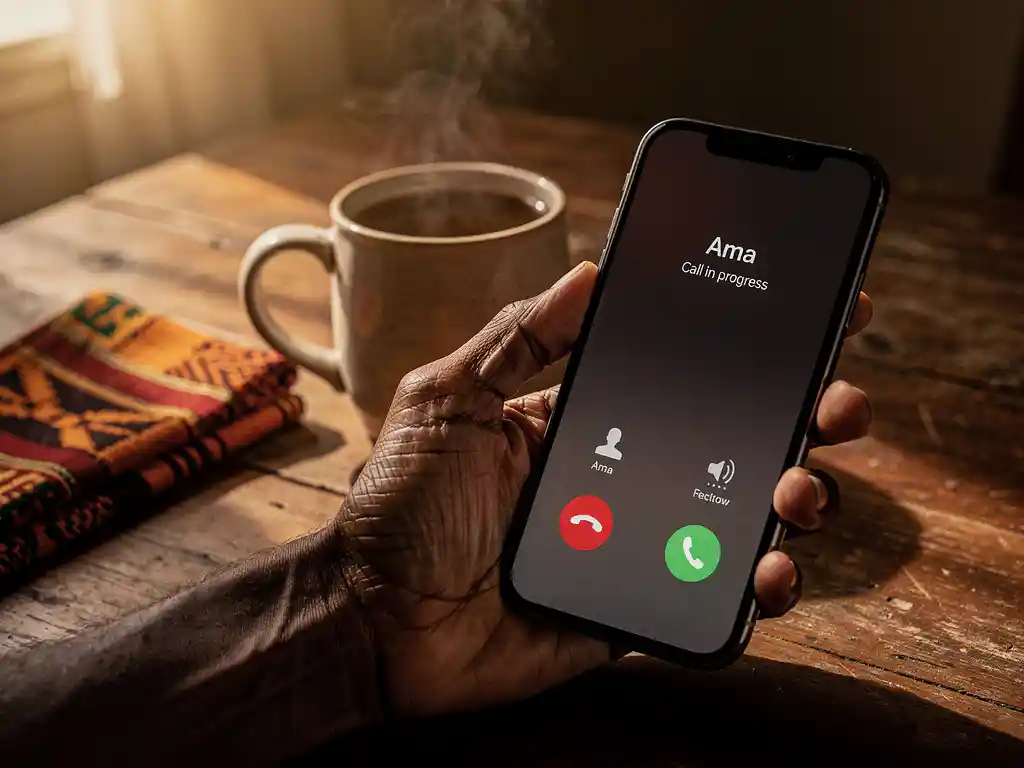
Staying connected with family and friends across borders is one of the most important things you can do when you live far from home. But with so many options available today—from messaging apps to internet-based phone calls—it can be hard to know which method works best for your situation. Understanding the difference between international calling and messaging helps you make smarter choices and stay closer to the people who matter most, whether you are reaching a parent, checking in with a sibling, or coordinating with family across continents.
This guide answers the most common questions people have about international communication, so you can choose the right tool for every moment and every relationship.
What is the difference between calling and messaging internationally?
The key difference between international calling and messaging is the type of connection and the experience it creates. Calling transmits your voice in real time, creating a live, two-way conversation. Messaging sends written text, images, or audio clips that the recipient reads or listens to whenever they choose. Both cross borders, but they serve very different emotional and practical needs.
Calling feels immediate and personal. You hear someone’s tone of voice—their laugh, their hesitation. That kind of nuance simply cannot travel through a text message. Messaging, on the other hand, is asynchronous, meaning the other person does not need to be available at the same moment you are. You can send a message at midnight in Amsterdam, and your mother in Lagos can read it over breakfast.
From a technical standpoint, traditional international calls travel through telephone networks and are billed by the minute or second. Messages typically travel over the internet and cost very little or nothing beyond your data plan. Internet-based calls, sometimes called VoIP calls, combine the real-time quality of a phone call with the low cost of an internet connection, which is why they have become the preferred choice for diaspora communities staying in touch across continents.
Which is better for staying in touch with family abroad?
For staying in touch with family abroad, a combination of calling and messaging works best, but voice calls carry emotional weight that messages simply cannot replicate. Hearing a familiar voice reduces feelings of isolation, strengthens bonds, and communicates care in a way that written words rarely achieve on their own.
Messaging is excellent for sharing daily updates, photos, and quick check-ins throughout the week. It is low-pressure and works around different time zones and schedules. But for meaningful conversations, celebrating milestones, or supporting a family member through a difficult time, a real phone call makes all the difference.
Many people in African diaspora communities describe a weekly phone call home as a ritual that keeps their sense of belonging alive. It is not just about exchanging information. It is about feeling present, even from thousands of kilometres away. That is why having a reliable, affordable way to make those calls matters so much—whether you are calling a parent in Nigeria, checking in with a sibling in Eritrea, or coordinating with family in Ethiopia.
How does calling over the internet work without the other person having an app?
Internet-based calling works by converting your voice into digital data, sending it over the internet, and then converting it back into a regular phone signal on the other end. This means you can call any standard mobile or landline number in another country without the recipient needing a smartphone, an app, or even an internet connection.
This is one of the most important distinctions to understand. Many people assume that internet calling only works if both people have the same app installed. That is true for services like WhatsApp or FaceTime, which require both parties to be on the platform. But dedicated international calling services route your call through the internet on your side and then connect it to the regular phone network on the recipient’s side.
The practical benefit is enormous. Your grandmother in Sudan does not need a smartphone. Your uncle in rural Ethiopia does not need Wi-Fi. You simply dial their number from the app, and their regular phone rings just like any other call. The quality depends on your internet connection, but with a decent Wi-Fi or mobile data signal, the audio is often clearer than with a traditional international call.
Why are international calls so expensive compared to messaging?
International calls are more expensive than messaging because they rely on telephone network infrastructure that involves multiple carriers, routing agreements, and real-time bandwidth. Each call must be connected through a chain of networks, and every operator in that chain charges a fee. These costs are passed on to the caller.
Messaging is far cheaper because it sends small packets of data over the internet, which is a shared, highly efficient global network. Sending a text message uses a tiny fraction of the data that a voice call requires, and it does not need to maintain a continuous live connection the way a call does.
Traditional international calls to Africa can be particularly costly because of the number of network operators involved and the infrastructure challenges in certain regions. This is why so many migrants and refugees face disproportionately high communication costs. Spending a significant portion of your income just to stay in contact with family is a genuine burden, and it is one of the main reasons internet-based calling has become so popular among diaspora communities.
The solution is to use a calling service that routes your call over the internet and charges per second rather than per minute, with no hidden fees or connection charges. This way, you only pay for the time you actually spend talking, and every cent goes toward the conversation itself.
When should you call instead of sending a message?
You should choose a call over a message when the conversation requires emotional depth, urgency, or real-time back-and-forth. Some situations simply cannot be handled well through text, no matter how thoughtfully you write it.
Here are the moments when calling is clearly the better choice:
- When a family member is unwell or going through a difficult time and needs to hear your voice
- When you need to share important news, whether good or bad
- When a misunderstanding needs to be resolved quickly and clearly
- When you are celebrating something together, such as a birthday, graduation, or a new arrival
- When the person you are contacting is not comfortable reading or writing in the language you are using
- When you simply miss someone and want to feel connected
Messaging works well for quick updates, sharing photos, or communicating across significant time zone differences. But the moments that matter most in a family relationship almost always deserve a real conversation. A voice carries warmth, urgency, and presence that no emoji or voice note can fully replace.
What should you look for in an international calling app?
When choosing an international calling app, the most important factors are call quality, transparent pricing, ease of use, and whether the recipient needs to have the app installed. Beyond these basics, the app should genuinely serve your specific communication needs, including the countries you call most often and the language you are most comfortable using.
Here is what to evaluate before committing to any service:
- Call quality: The app should deliver clear, reliable audio even when your internet connection is not perfect.
- Transparent pricing: Look for per-second billing with no hidden connection fees. Know exactly how many minutes you get for your money before you top up.
- No app required for recipients: The best services let you call any mobile or landline number directly, without asking your family to download anything.
- Language support: The app itself should be available in your language, so you can navigate it confidently without needing to understand English.
- Coverage for your home country: Check that the app offers good rates to the specific country and region you call most frequently.
It is also worth looking at whether the service offers any additional features that support your life abroad, such as access to news and radio from your home country, or tools that help with integration in your new country. The best international calling apps do more than connect calls. They help you feel at home wherever you are.
How FroggyTalk helps you stay connected internationally
We built FroggyTalk specifically for people who know exactly how it feels to miss a voice from home. Our international calling service is designed to make sure you feel heard, seen, and supported, no matter how many kilometres separate you from the people you love.
Here is what makes FroggyTalk different:
- No app needed on the other end: Call any mobile or landline in Eritrea, Ethiopia, Nigeria, Sudan, and beyond. Your family just picks up the phone.
- Per-second billing with no hidden fees: You know exactly how many minutes you get before you spend a single cent. No surprises.
- Weekly calling deals: Affordable bundles available every week for destinations across Africa, so you can plan your calls around your budget.
- Full language support: Everything in the app can be used in your local language, including Tigrinya, Hausa, Amharic, Arabic, and many more.
- More than just calls: Access African radio stations, and soon, tools for financial inclusion, legal aid, and documentation support.
We want every call you make to feel effortless and every conversation to feel worth it. Check our current calling rates to see how many minutes you get for your money, or get in touch with our team if you have any questions. We are here for you.