


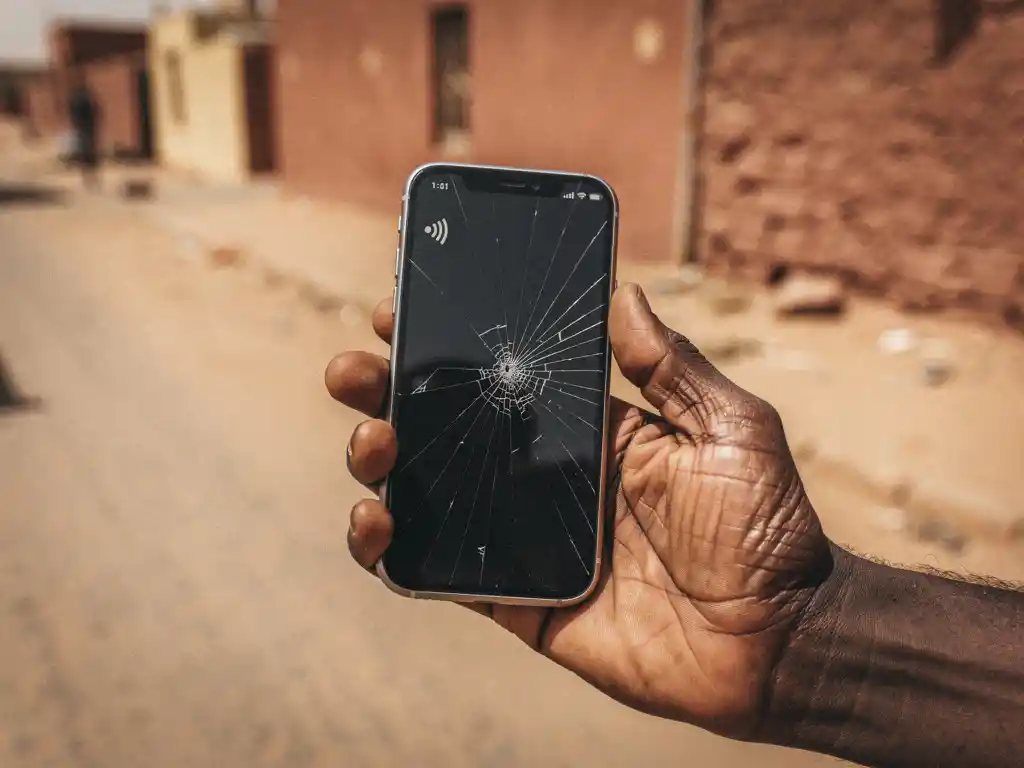
If you have family or friends in Sudan, you already know how stressful it can be to stay connected. Between unreliable networks, high call costs, and questions about which apps actually work, making a simple phone call can feel like a challenge. One of the most common questions we hear from the Sudanese diaspora in Europe is whether WhatsApp calling is even allowed in Sudan.
The short answer is: it’s complicated. Sudan has a history of internet and VoIP restrictions, and the situation can change quickly. Understanding why these restrictions exist, what your options are, and how to make a reliable call to Sudan without overpaying is exactly what this article covers.
Is WhatsApp calling blocked in Sudan?
WhatsApp calling has faced intermittent restrictions in Sudan, particularly during periods of political unrest and civil conflict. The Sudanese government has, at various points, ordered internet service providers to throttle or block VoIP services, including WhatsApp calls. While access may be available at times, it cannot be relied upon as a consistent way to reach people in Sudan.
Sudan has experienced significant political instability in recent years, and authorities have used internet disruptions as a tool during sensitive periods. This means that even if WhatsApp calling appears to work one day, it may be unavailable the next. For diaspora communities trying to check in on loved ones during exactly those moments of crisis, this unreliability is not just inconvenient — it can be deeply worrying.
It is also worth noting that even when WhatsApp is technically accessible, call quality in Sudan can be poor due to limited bandwidth and infrastructure challenges. A dropped call or a voice that keeps cutting out can make meaningful conversation nearly impossible.
Why do VoIP calls get restricted in some countries?
VoIP (Voice over Internet Protocol) calls are restricted in some countries because governments or telecom regulators view them as a threat to national security, revenue control, or political stability. When people use apps like WhatsApp, Skype, or Viber to call instead of traditional phone lines, it bypasses state-controlled or heavily taxed telecom infrastructure.
There are several common reasons why a country might restrict VoIP services:
- Revenue protection: National telecom companies, sometimes state-owned, lose income when people use free or cheap internet-based calls instead of paid phone lines.
- Political control: During protests or unrest, blocking communication apps limits the ability of citizens and journalists to coordinate or share information.
- Security concerns: Encrypted VoIP calls are harder for authorities to monitor, which some governments see as a surveillance challenge.
- Infrastructure limitations: In some cases, restrictions are partly practical — high VoIP usage strains limited bandwidth, affecting other services.
Sudan falls into more than one of these categories. The country has experienced repeated internet shutdowns and targeted app blocks, especially since the 2019 political transition and the ongoing conflict that began in 2023. This makes planning your communication strategy around WhatsApp calls a risky choice.
What happens to your call if WhatsApp is blocked?
If WhatsApp is blocked in Sudan when you try to call, the call simply will not connect. You may see it attempting to ring, or it may fail immediately with an error message. In some cases, the audio connects but is so heavily degraded that conversation is not possible. The experience varies depending on how the restriction is implemented.
There are a few different ways a block can affect your call:
- Complete failure to connect: The most common outcome. The call attempt times out or shows a network error.
- One-way audio: You might hear the other person, but they cannot hear you, or vice versa. This happens when only part of the data stream is being filtered.
- Severe packet loss: The call connects but breaks up so badly that communication is impossible. This often occurs during soft throttling rather than a hard block.
- Delayed connection: The call takes an unusually long time to connect, then drops shortly after.
The frustrating reality is that you often cannot tell in advance which scenario you will face. This unpredictability is one of the strongest reasons to have a reliable backup option for calling Sudan — one that does not depend on the recipient having a specific app or an internet connection at all.
What are the best alternatives for calling Sudan?
The best alternatives for calling Sudan are international calling apps that route calls through the internet on your end but connect to a regular phone number on the recipient’s end. This means the person in Sudan does not need an app, a smartphone, or even an internet connection to receive your call — their regular mobile or landline phone rings like any other call.
This approach sidesteps the VoIP block problem entirely on the recipient’s side. Because the call arrives as a standard telephone call rather than a data-based VoIP request, it is far less likely to be affected by app-level restrictions. The key is choosing a provider that offers:
- Transparent per-minute or per-second pricing with no hidden connection fees
- Reliable call quality to Sudan specifically
- Support in your preferred language, whether that is Arabic, English, or another language
- Flexibility to top up in your local currency
Traditional calling cards are another option, but they often come with expiry dates, connection fees, and poor audio quality. A modern international calling app built for diaspora communities offers a much better experience at a comparable or lower cost.
How do international calling apps work without internet on the other end?
International calling apps that work without internet on the recipient’s end use a technology called VoIP-to-PSTN bridging. Your voice travels over the internet from your phone to the app provider’s servers, and then those servers convert the call into a standard telephone signal that connects to any phone number in the world — no app, no smartphone, and no internet required on the other side.
Think of it like a relay system. You speak into your phone using your internet connection in Europe. The call travels digitally to a server, which then places a local or national call to the number in Sudan. The person in Sudan simply picks up their phone as they would for any normal call.
This is a significant advantage over WhatsApp calling, which requires both parties to have the app installed and an active internet connection. With a bridged international calling app, the only requirement is that you have internet — the person you are calling just needs a working phone number.
The quality of this experience depends heavily on the provider’s infrastructure and routing agreements with telecom networks in the destination country. A provider with strong connections to Sudanese networks will deliver clearer audio and fewer dropped calls than a generic provider with no specific focus on that region.
How can you avoid hidden fees when calling Sudan?
To avoid hidden fees when making a call to Sudan, look for providers that charge by the second rather than by the minute, and that clearly display their rates before you top up. Many traditional calling services add connection fees per call, round up to the nearest minute, or charge a monthly subscription on top of per-call costs — all of which quietly drain your credit.
Here are the specific things to check before committing to any calling service for Sudan:
- Connection fees: Some providers charge a flat fee every time a call connects, separate from the per-minute rate. This adds up fast if you make several short calls.
- Rounding: Per-minute billing means a 90-second call costs you two full minutes. Per-second billing means you only pay for what you actually use.
- Credit expiry: Many prepaid services expire your unused credit after 30 or 90 days. Check the terms carefully.
- Maintenance fees: Some providers deduct a small daily or weekly fee from your balance even when you are not calling.
- Currency conversion markups: If you are paying in euros or Swedish kronor, check whether the provider applies an unfavorable exchange rate on top of the advertised price.
The clearest sign of a trustworthy provider is full transparency on their pricing page — a rate per minute or per second to Sudan, stated plainly, with no asterisks leading to footnotes about additional charges. You should be able to calculate exactly how many minutes you will get before you spend a single cent.
How FroggyTalk helps with calling Sudan
We built FroggyTalk specifically for people in your situation — diaspora communities in Europe who need a reliable, affordable way to stay connected with family and friends back home. When it comes to Sudan, we offer a dedicated Friday deal at €0.26 per minute, giving you 38 minutes of talk time for a standard top-up amount. No hidden fees, no connection charges, and billing by the second, so you never pay for time you did not use.
Here is what makes calling Sudan with us different:
- The person you call in Sudan does not need the app or internet — their regular phone rings
- The entire app can be translated into your local language, including Arabic, so you always feel at home using it
- Transparent pricing, so you always know exactly how many minutes you are getting
- Support available in Arabic and multiple other languages, because we want you to feel heard, seen, and valued
- Available across Europe with multiple currency options, including euros, Swedish kronor, British pounds, and more
You deserve communication that works when it matters most. Check our current rates for Sudan and see exactly what you get for your money, or reach out to our team if you have any questions. We are here to help you stay close to the people you love.