


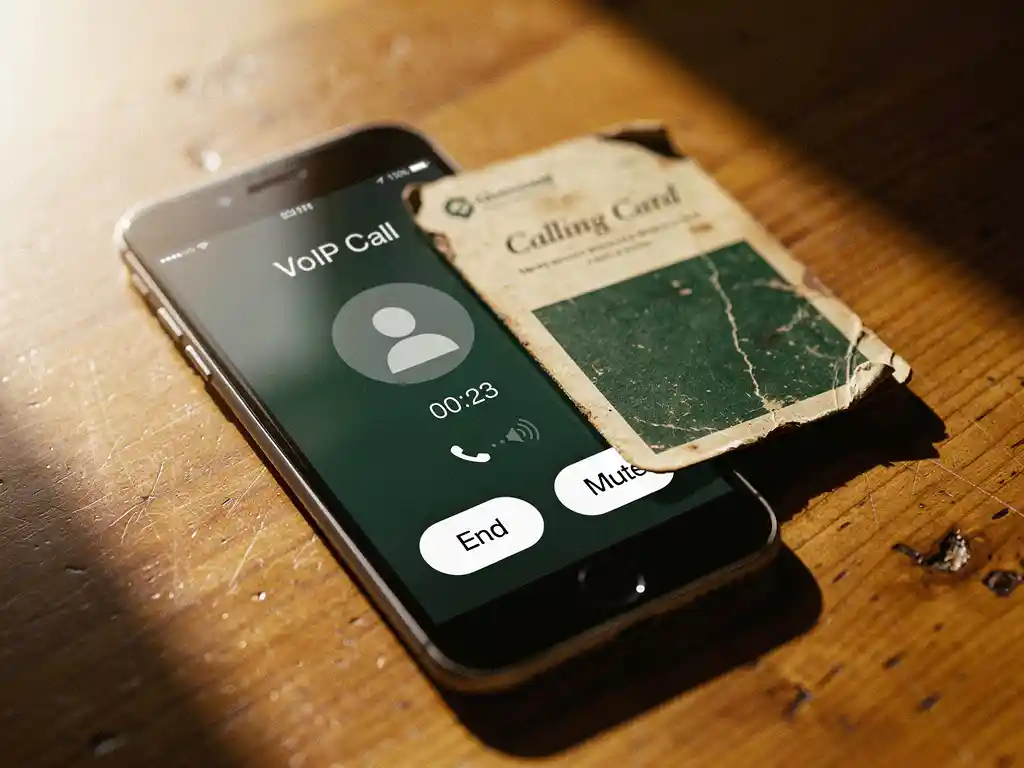
If you have ever stood at a convenience store counter buying a calling card to reach family back home, you already know the frustration. Scratching off a PIN, dialing a long access number, and watching your minutes disappear faster than expected—it is a familiar story for millions of people living far from home. Today, international calling has changed dramatically, and VoIP technology is at the center of that shift.
This article breaks down exactly how VoIP calling compares with traditional calling cards, so you can make an informed choice about the best way to stay connected with the people who matter most to you.
What is VoIP calling and how does it work?
VoIP stands for Voice over Internet Protocol. It is a technology that converts your voice into digital data and sends it over the internet, rather than through a traditional telephone network. You make calls using a smartphone app or computer, and the person on the other end answers on their regular phone—no app or internet connection required on their side.
The process happens in real time and is largely invisible to the user. You open an app, dial a number, and the call connects just like any other phone call. The key difference is that the infrastructure running underneath is internet-based, which is why costs tend to be significantly lower than traditional international calls. As long as you have a stable Wi-Fi or mobile data connection, VoIP delivers clear, reliable call quality to destinations around the world.
What are calling cards and how do they work?
A calling card is a prepaid card that gives you a set amount of calling credit, which you use to make international calls from any phone. You typically dial a local or toll-free access number, enter a PIN printed on the card, and then dial the international number you want to reach. The credit on the card is deducted as you talk.
Calling cards were once the most accessible option for migrants and diaspora communities who needed affordable international calling. They required no smartphone, no app, and no internet connection. You could buy them at a corner shop and use them immediately. For many people, they represented independence and simplicity. However, the way calling cards actually bill your minutes is where things often get complicated, as we will explore shortly.
How do VoIP calls and calling cards compare on cost?
VoIP calling is almost always cheaper than calling cards when you look at the real per-minute cost. Calling cards frequently advertise low headline rates, but hidden fees such as connection charges, maintenance fees, and rounding up to the nearest minute can cut your actual talk time by 30 to 50 percent. With VoIP, per-second billing means you pay only for what you actually use.
Consider a practical example. A calling card that promises 60 minutes to a destination might charge a connection fee per call, a weekly maintenance fee, and round every call up to the nearest three minutes. In reality, you might get 35 to 40 usable minutes from that card. A VoIP app charging a transparent per-minute rate with no connection fees gives you exactly the minutes your credit covers, and not a second less.
For diaspora communities making frequent international calls, those differences add up quickly over a month. Knowing exactly how many minutes you get for your money is not just convenient—it is essential for budgeting when you are supporting family across borders.
Which is better for international calling—VoIP or calling cards?
For most people in the diaspora, VoIP is the stronger choice. The combination of lower, transparent rates, no hidden fees, and the ability to call regular mobile and landline numbers without the recipient needing any special equipment makes VoIP far more practical and cost-effective for staying connected with family and friends abroad.
Calling cards can still work in situations where someone has no smartphone or internet access at all. But for anyone with a basic smartphone and a data or Wi-Fi connection, VoIP delivers better value and a more reliable experience. Call quality over VoIP has improved enormously in recent years, and connections to destinations that once felt unreliable are now consistently clear.
This is particularly true for communities calling across Africa. Whether you are reaching family in Nigeria, Ethiopia, Eritrea, or Sudan, VoIP offers transparent per-minute rates and reliable connections to both mobile and landline numbers across the continent—without the hidden fees that so often erode calling card credit.
Another important factor is language. Many calling card services operate only in English or a handful of major European languages. A VoIP app built for the African diaspora can offer support in languages like Tigrinya, Hausa, Amharic, and Arabic, making the entire experience more accessible and comfortable for users who are not confident in English. Everything in a well-designed app can be navigated in your own language, which removes a significant barrier for many community members.
What are the main drawbacks of using calling cards?
The main drawbacks of calling cards are hidden fees, expiration dates, and inconvenience. Together, these three issues mean that calling cards rarely deliver the value they appear to offer on the front of the packaging.
Here is a summary of the most common problems calling card users face:
- Connection fees: Many cards charge a flat fee each time you dial, which eats into your credit before the conversation even begins.
- Maintenance fees: Some cards deduct a daily or weekly fee simply for having unused credit on the card.
- Rounding up: Calls are often billed in blocks of one, two, or three minutes, meaning a 90-second call costs you three minutes of credit.
- Expiration dates: Unused credit can expire within days or weeks, leaving you with nothing.
- Poor call quality: Routing through multiple networks to keep costs low can result in delays, echoes, or dropped calls.
- No transparency: It is often impossible to know your real per-minute rate until after you have used the card.
These issues disproportionately affect migrants and refugees who are already managing tight budgets. Losing credit to hidden fees is not just frustrating—for someone trying to check in on a sick parent or coordinate a family emergency, it can feel like a genuine injustice.
How do you switch from calling cards to a VoIP app?
Switching from calling cards to a VoIP app is straightforward and takes only a few minutes. You do not need any special equipment beyond the smartphone you likely already own.
- Download a VoIP app designed for international calling in your region. Look for one that supports calls to the specific countries you need to reach.
- Create an account using your phone number or email address. Most apps take less than two minutes to set up.
- Add credit to your account. Choose an amount that suits your calling habits—you can usually top up in multiple currencies depending on where you are based.
- Check the rates for the countries you call most often before committing. A good VoIP provider will show you exact per-minute rates with no hidden extras.
- Make your first call by dialing the number directly in the app, just as you would on a regular phone. The person you call answers on their mobile or landline as normal.
One practical tip: before making longer calls, test the connection quality with a short call first. Most VoIP apps also allow you to set your preferred language within the app settings, so you can navigate everything comfortably in your own language from the very first use. You can also explore international calling rates and destinations before you top up, so there are no surprises.
How FroggyTalk helps with international calling
We built FroggyTalk specifically for diaspora communities who want affordable, transparent, and reliable international calling—because we believe everyone deserves to feel heard, seen, and valued, no matter where in the world they are calling from or calling to.
Here is what makes FroggyTalk different:
- Per-second billing with no hidden fees or connection charges, so you know exactly how many minutes you get for your money
- Calls to regular mobile and landline numbers across Nigeria, Eritrea, Ethiopia, Sudan, and more—the person you call does not need the app
- Weekly calling deals that give you more minutes for your credit on specific days
- Full app support in multiple languages, including Tigrinya, Hausa, Amharic, Arabic, French, and more—everything in the app can be used in your local language
- A platform designed with African diaspora communities at its heart, not as an afterthought
Ready to see exactly what your credit gets you? Check our current calling rates and find out how many minutes you can get to the countries you care about most. If you have questions or want to know more, get in touch with our team—we are here to help.