


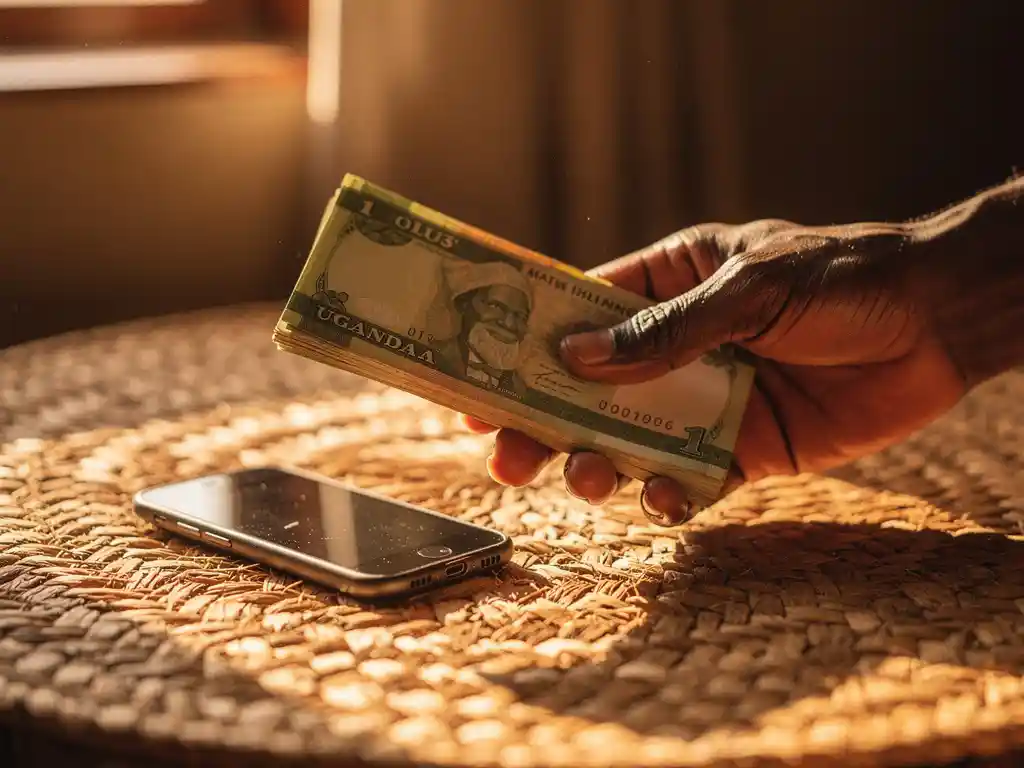
You can send money to Uganda even if the recipient has no bank account, thanks to mobile money services like MTN Mobile Money and Airtel Money, which are widely used across the country. Most major international money transfer providers support these services, meaning your recipient can receive funds directly on their phone. Below, we answer the most common questions about how this works in practice.
What are the most reliable ways to send money to Uganda without a bank account?
The most reliable ways to send money to Uganda without a bank account are mobile money transfers and cash pickup services. Mobile money is by far the most popular option in Uganda, with MTN Mobile Money and Airtel Money covering millions of users nationwide. Cash pickup through agent networks is another solid alternative for recipients in areas with limited mobile connectivity.
Here is a quick overview of the main options available in 2026:
- Mobile money transfer: Funds are sent directly to the recipient’s MTN or Airtel mobile wallet, accessible instantly on a basic phone.
- Cash pickup: The recipient collects cash at a local agent location, with no phone or bank account required.
- Home delivery: Some providers offer doorstep cash delivery in select areas, though availability varies.
- Agent-assisted transfers: Local mobile money agents can help recipients without smartphones receive and withdraw funds easily.
For most people sending money to Uganda from Europe, mobile money is the fastest and most convenient route. Uganda has one of the highest mobile money adoption rates in Africa, so the infrastructure is reliable and well established.
How does mobile money work for receiving transfers in Uganda?
Mobile money in Uganda works by linking a SIM card to a digital wallet that can store, send, and receive money without a bank account. When an international transfer arrives, the funds are deposited directly into the recipient’s mobile wallet. They can then withdraw cash at any registered mobile money agent, pay bills, or use the balance for everyday purchases.
The process for the recipient is straightforward. Once the transfer is initiated from abroad, they receive an SMS notification confirming the incoming funds. To withdraw, they visit a nearby MTN or Airtel agent, present their ID, and receive cash on the spot. Agents are widely available across Uganda, including in rural areas, which makes this method accessible even outside major cities like Kampala.
One important detail: the recipient must have an active SIM card registered in their name. In Uganda, SIM card registration is mandatory, so most users are already set up. If your family member is not yet registered with a mobile money service, they can sign up for free at any agent location with a valid ID.
Which money transfer services support Uganda mobile money or cash pickup?
Several well-known international transfer services support Uganda mobile money and cash pickup, including WorldRemit, Remitly, Sendwave, and Western Union. Each service has different strengths in terms of fees, exchange rates, and delivery speed, so it is worth comparing before you send.
When choosing a provider, look at these key factors:
- Supported delivery methods: Confirm the service offers MTN Mobile Money or Airtel Money as a payout option for Uganda.
- Exchange rate transparency: Some services offer attractive fees but compensate with a weaker exchange rate.
- Transfer speed: Mobile money transfers are often instant or near-instant, while bank transfers can take one to three business days.
- Customer support language: If you or your recipient need help, check whether support is available in your preferred language.
- App usability: A clear, easy-to-navigate app reduces errors and saves time.
It is always a good idea to do a test transfer with a smaller amount before sending larger sums, especially if you are using a new provider for the first time.
How much does it cost to send money to Uganda without a bank account?
The cost of sending money to Uganda without a bank account varies by provider, but transfer fees typically range from zero to around five euros or dollars per transaction, depending on the amount sent and the delivery method. Mobile money transfers are often cheaper than cash pickup because they involve less manual handling. Always check the total cost, including both the transfer fee and the exchange rate margin.
The exchange rate is where many providers quietly add cost. A service may advertise zero fees but offer an exchange rate significantly below the mid-market rate, meaning your recipient gets fewer Ugandan shillings than expected. Always compare the amount the recipient will actually receive, not just the headline fee.
To keep costs down, consider sending larger amounts less frequently rather than many small transfers, as flat fees have less impact on bigger sums. Also, check whether your provider offers loyalty discounts or promotional rates for regular senders.
How long does it take for money to arrive in Uganda?
Money sent to a Uganda mobile money wallet typically arrives within minutes, often instantly once the transfer is confirmed. Cash pickup transfers are also usually available within a few hours to the same business day. Bank-to-bank transfers, where applicable, can take one to three business days depending on the provider and the sending country.
Factors that can affect delivery time include the time of day you initiate the transfer, whether additional identity verification is required, and any technical delays on the receiving network. Transfers sent during local business hours in Europe and Uganda tend to process most smoothly.
If your transfer is urgent, choose a provider that explicitly guarantees instant or same-day delivery to mobile money, and double-check that the recipient’s mobile wallet is active and has no restrictions on incoming transfers.
What do you need to send money to Uganda from Europe?
To send money to Uganda from Europe, you generally need a valid ID, a payment method such as a bank account or debit card, and the recipient’s mobile money number or agent location details. Most providers require you to verify your identity before your first transfer, which is a standard anti-fraud requirement across the industry.
Here is what to prepare before you start:
- Your ID: A passport, national ID card, or residence permit is typically accepted.
- Proof of address: Some providers ask for a utility bill or bank statement for larger amounts.
- Recipient’s details: Their full name and mobile money number (including country code for Uganda: +256).
- Payment method: A bank account, debit card, or credit card linked to your transfer account.
- Your transfer account: A registered account with your chosen provider, verified and ready to use.
The verification process is usually a one-time step. Once your account is approved, future transfers are much faster to complete. Many apps also save your recipient details so repeat transfers take just a few taps.
How FroggyTalk helps you stay connected while supporting your family
Sending money home is one part of staying close to the people you love. Staying in touch through affordable calls is the other. We built FroggyTalk specifically for African diaspora communities in Europe who want to feel heard, seen, and noticed, no matter the distance.
Here is what we offer to make that easier:
- Affordable international calls to Uganda, Nigeria, Eritrea, Sudan, Ethiopia, and many more African countries, billed per second with no hidden fees.
- No app needed for the recipient — you call regular phone numbers, so your family does not need a smartphone or internet connection.
- Full app translation into your local language — everything inside the app can be displayed in your preferred language, including Hausa, Amharic, Arabic, Tigrinya, and more.
- Radio Hub — listen to FM stations from your home region and stay culturally connected.
- International money transfers — send money directly through the app with transparent rates and no surprise charges.
We also offer bill payment services for families back home, so you can handle essential payments directly from Europe. Whether you are calling Uganda to check in or sending funds to support your family, FroggyTalk brings it all together in one trusted place. Get in touch with us and we will help you get started.
Frequently Asked Questions
Can I send money to Uganda if my recipient does not have a smartphone?
Yes, your recipient does not need a smartphone to receive mobile money in Uganda. MTN Mobile Money and Airtel Money both work on basic feature phones via SMS, so even a simple SIM-enabled handset is enough. The recipient will get an SMS notification when funds arrive and can withdraw cash at any nearby agent by presenting their ID.
What happens if my recipient enters the wrong mobile money number or details?
If an incorrect mobile money number is entered, the transfer may be sent to the wrong recipient or fail entirely, and recovering funds can be difficult and time-consuming. Always double-check the recipient's full name and mobile money number, including the Uganda country code (+256), before confirming any transfer. Most providers display a name confirmation screen before you finalise the transaction, so take a moment to verify it matches your intended recipient.
Are there limits on how much money I can send to Uganda at one time?
Yes, most international transfer providers impose sending limits that vary depending on your verification level, the platform you use, and local regulations. Fully verified accounts typically have higher limits, sometimes allowing transfers of several thousand euros or dollars per transaction. Uganda's mobile money wallets also have their own receiving limits set by MTN and Airtel, so for very large amounts it is worth confirming the recipient's wallet tier and daily cap before sending.
Is it safe to send money to Uganda through online transfer apps?
Reputable providers like WorldRemit, Remitly, Sendwave, and FroggyTalk are licensed and regulated financial services, meaning they operate under strict anti-fraud and anti-money-laundering rules that protect both senders and recipients. To stay safe, always use official apps or websites, enable two-factor authentication on your account, and avoid sharing your login details with anyone. If a deal or transfer offer sounds too good to be true, treat it as a red flag and verify through official customer support channels.
What should I do if my transfer to Uganda is delayed or does not arrive?
Start by checking your transfer status directly within the provider's app or website, as most platforms offer real-time tracking. If the status shows delivered but your recipient has not received the funds, ask them to check their SMS notifications and confirm their mobile wallet is active and not restricted. If the issue persists beyond the provider's stated delivery window, contact customer support with your transaction reference number, as this speeds up the investigation significantly.
Can I schedule recurring transfers to Uganda so I do not have to send manually each time?
Several providers, including Remitly and WorldRemit, offer the option to set up recurring or scheduled transfers, which is ideal for sending regular support to family members. This feature lets you automate a fixed amount at a chosen frequency, such as weekly or monthly, without logging in each time. It is a convenient way to ensure your family receives consistent support while also helping you budget more predictably from your end.
Are there any tax or legal implications for sending money to Uganda from Europe?
In most European countries, personal remittances sent to family members abroad are not subject to income tax for the sender, and recipients in Uganda are generally not taxed on money received from abroad for personal use. However, if you are sending large or frequent amounts, it is worth checking the specific rules in your country of residence, as some jurisdictions require declaration above certain thresholds. For business-related transfers, different regulations may apply, and consulting a local financial adviser is recommended.