


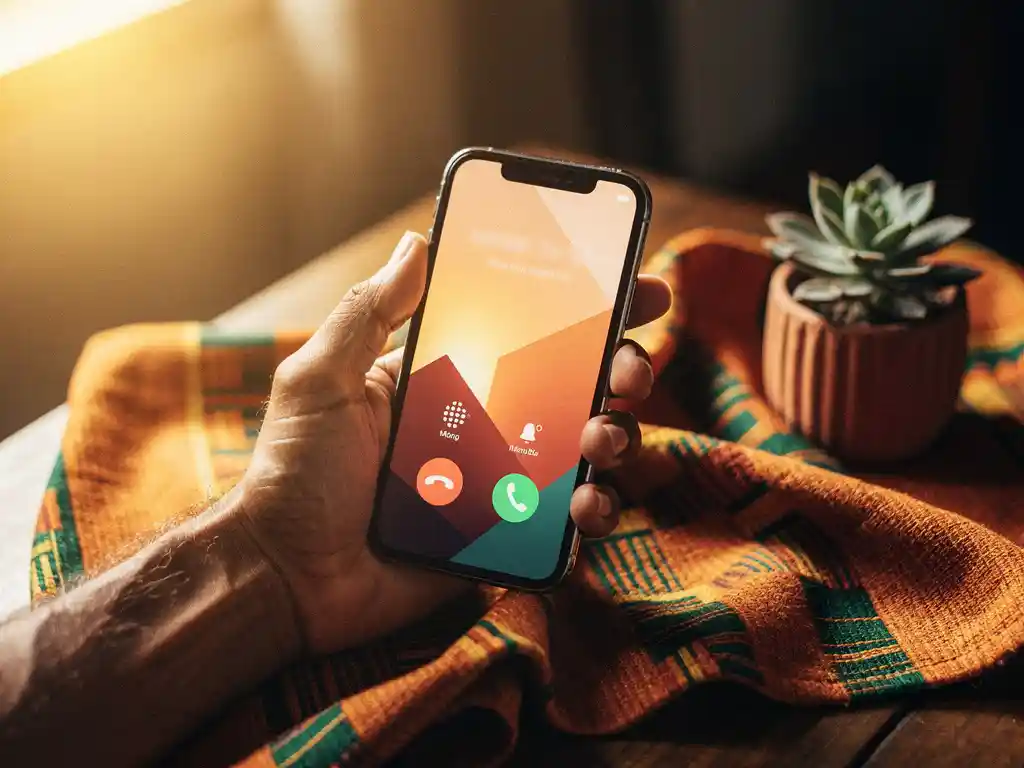
To find a trustworthy app to call Africa from Europe, look for transparent per-second billing, no hidden connection fees, strong user reviews, and support for the specific countries you need to reach. The most reliable apps are built with diaspora communities in mind, meaning they understand the real cost and cultural weight of staying connected across borders. Below, we answer the most common questions people ask before choosing an app for international calls to Africa.
What makes an international calling app actually reliable?
A reliable international calling app delivers consistent call quality, honest pricing, and stable connections to the countries you need most. Reliability is not just about whether a call connects — it is about whether it stays connected, sounds clear, and costs what you were told it would cost before you dialed.
When evaluating an international calling app, these are the factors that matter most:
- Call quality: The app should use a stable VoIP infrastructure that handles poor internet conditions without constantly dropping calls.
- Country coverage: It must support the specific countries you call, whether that is Eritrea, Nigeria, Sudan, Ethiopia, Uganda, Tanzania, or South Sudan.
- Uptime and consistency: Occasional outages happen, but a trustworthy provider communicates issues openly and resolves them quickly.
- Customer support: Real help in your language makes a significant difference when something goes wrong.
- No app required on the other end: The best apps let you call any regular phone number, so your family does not need to download anything.
Reliability is ultimately built on trust. An app that has been used by tens of thousands of diaspora members and continues to grow is a stronger signal than any marketing claim.
How do you spot hidden fees before you top up?
Hidden fees in calling apps typically appear as connection charges, rounding up call durations to the nearest minute, or inactivity fees that drain your balance over time. Before you add credit to any app, read the rate card carefully and look specifically for these charges listed in the fine print.
Here is a practical checklist to run through before topping up:
- Check the billing unit: Apps that bill per second give you more value than those that round up to the nearest minute. If a call lasts 90 seconds and you are billed for two full minutes, you are losing money on every call.
- Look for connection fees: Some providers charge a flat fee the moment a call connects, regardless of how long you speak. This can make short calls disproportionately expensive.
- Check balance expiry policies: Many apps expire your credit after 30 or 90 days of inactivity. If you do not call frequently, your balance can disappear without warning.
- Test with a small top-up first: Before committing a large amount, add a small credit and make a test call. Check your remaining balance immediately after and compare it to what you expected to spend.
- Read reviews specifically about billing: User reviews on app stores often mention billing surprises. Search the app name alongside words like “hidden fees” or “balance disappeared” before you commit.
Transparent pricing means you know exactly how many minutes you get for your money before you dial. If that information is hard to find on the app’s website, that itself is a warning sign.
What features should a calling app have for African diaspora users?
A calling app built for African diaspora users should go beyond basic calling to address the specific communication needs of people maintaining connections across cultures and time zones. The most important features are multilingual support, broad African country coverage, low per-minute rates, and the ability to call regular phone numbers without requiring the recipient to have the app.
Beyond the basics, features that genuinely serve diaspora communities include:
- Language support in your native tongue: The entire app experience, including menus, support, and billing information, should be available in your language. For many users, this means Tigrinya, Hausa, Amharic, Arabic, or French, not just English.
- Coverage for harder-to-reach countries: Apps should support calls to Eritrea, Sudan, South Sudan, Niger, Ethiopia, Nigeria, Uganda, and Tanzania, not just the most commercially attractive markets.
- Cultural features: Access to home-country radio, news, or community content makes an app feel like more than a utility. It makes it feel like a connection to home.
- Simple top-up options: Payment methods that are accessible across Europe, with clear confirmation of how many minutes your credit buys.
- Consistent performance on low-bandwidth connections: Many users call from areas with variable internet quality. The app should handle this gracefully.
The best apps for diaspora users understand that a phone call is not just a transaction. It is how you check on your mother, congratulate a sibling, or support a family member through a difficult moment. The technology should get out of the way and let that happen.
How do you verify an app is safe to use with your payment details?
To verify that a calling app is safe for payments, check that it uses encrypted payment processing, has a clear privacy policy, is registered as a legitimate business, and does not store your full card details on its own servers. Apps that use established payment gateways like Stripe or similar processors handle your financial data through systems that meet international security standards.
Practical steps to verify safety before entering payment details:
- Check the company registration: A legitimate app should have a registered business address and company details available. Apps with no traceable company behind them are a risk.
- Look for HTTPS and secure payment logos: The payment page should always load over a secure connection.
- Read the privacy policy: It should clearly explain what data is collected, how it is stored, and whether it is shared with third parties.
- Check the app store listing: Official listings on Google Play or the Apple App Store include developer information. A verified developer with a real contact address is a positive signal.
- Search for news about the company: Legitimate startups, especially those that have received investment funding, will have a public record of their activities.
Never enter payment details into an app that does not have a verifiable company behind it, regardless of how low the rates appear.
Which countries in Africa are hardest to call affordably?
Countries that are hardest to call affordably from Europe include Eritrea, South Sudan, Sudan, and Niger. These destinations typically have higher per-minute rates due to limited telecommunications infrastructure, fewer competing carriers, and geopolitical factors that affect international routing. Nigeria, Egypt, Uganda, and Tanzania tend to be more affordable by comparison, though rates still vary significantly between providers.
If you regularly need to call Eritrea or call Sudan, it is especially important to compare rates across multiple apps before committing to one. The difference between providers can be substantial on these routes, and a per-second billing model makes a meaningful difference when calls to these destinations are already more expensive.
For countries like Nigeria, Egypt, Uganda, and Tanzania, competition between providers is stronger, which generally keeps rates lower. However, even on these routes, connection fees and per-minute rounding can erode the value of what appears to be a good rate. Always calculate the effective cost per minute after all fees, and check how many minutes a standard top-up actually buys you for the specific country you are calling.
If you want to understand rates for calls from the Netherlands specifically, the Netherlands calling guide breaks this down in detail.
Should you use a free calling app or a paid one for calls to Africa?
For calls to Africa from Europe, a paid calling app is almost always the better choice over a free one. Free apps like WhatsApp or Messenger require the person you are calling to have the same app, a smartphone, and a reliable internet connection. Most people you call in Africa will not always have all three of these at the same time, which makes free apps unreliable for consistent communication.
Paid calling apps connect to regular phone numbers, which means your family member can receive your call on any mobile or landline phone without needing an app or internet access. This is a fundamental difference that matters enormously in practice.
Free apps also come with trade-offs that are easy to overlook:
- Call quality degrades significantly when either party has a weak connection.
- The person receiving the call must be available on the app at that moment.
- Privacy practices of large free platforms are often less transparent.
- There is no accountability if call quality is consistently poor.
Paid apps, especially those with per-second billing and no connection fees, offer predictable costs and genuine reach. For the amount most diaspora members spend on international calls each month, the difference in reliability and reach is well worth the cost.
How FroggyTalk helps you stay connected to Africa
We built FroggyTalk specifically for African diaspora communities in Europe, because we know that staying connected to home is not optional. It is essential. Here is what we offer:
- Per-second billing with no hidden fees: You know exactly how many minutes you get for your money before you dial. No connection charges, no rounding up.
- Calls to regular phone numbers: Call Nigeria, Eritrea, Sudan, South Sudan, Egypt, Uganda, Tanzania, and more, without the recipient needing an app or internet access.
- Full multilingual support: Everything in the app can be used in your local language, including Tigrinya, Hausa, Amharic, Arabic, French, and more. You should never have to navigate a service in a language that is not yours.
- Radio Hub: Listen to FM radio stations from your home region, because staying connected to culture matters as much as staying connected to people.
- Transparent, trustworthy company: We are a registered business based in The Hague, backed by impact investment, and built by people who understand what it means to be far from home.
At FroggyTalk, we want you to feel heard, seen, and noticed. Not just as a customer, but as someone whose connections across borders genuinely matter. If you have questions about our service or want to know more before you top up, get in touch with us and we will help you find the right solution.
Frequently Asked Questions
How much credit should I top up the first time I try a new calling app?
Start with a small amount — the equivalent of €5 to €10 — so you can test call quality, verify the billing is accurate, and confirm the app connects reliably to your specific destination before committing more. After your test call, immediately check your remaining balance and compare it against what you expected to spend based on the advertised rate. If the numbers match and the call quality was good, you can top up with confidence.
What should I do if my call drops repeatedly or the audio quality is poor?
First, rule out your own internet connection by switching from Wi-Fi to mobile data or vice versa, as the issue is often on your end rather than the app's. If the problem persists across different connections, contact the app's customer support and report the specific country you were calling, the time of the call, and how long it lasted — this gives them the information they need to investigate. If poor quality is consistent and unresolved, it is a signal to switch providers, since reliable call quality to your destination should be a baseline expectation, not a bonus.
Can I use an international calling app while roaming in another European country?
Yes, most VoIP-based calling apps work anywhere you have an internet connection, including when you are roaming across Europe. Since the call is made over your data connection rather than your phone's cellular network, your location within Europe does not affect the rate you pay for calls to Africa. Just be mindful of your mobile data roaming allowance if you are not on Wi-Fi, as longer calls will consume more data.
Is it cheaper to call a mobile number or a landline in African countries?
In most African countries, calling a mobile number is actually the more affordable option, because mobile networks are far more developed and widely used than landlines across the continent. Landline rates can sometimes be higher due to older infrastructure and routing costs, though this varies by country and provider. Always check the specific rate card for both mobile and landline numbers in your destination country before dialing, as the difference can be significant on some routes.
What happens to my balance if I don't make calls for a few weeks?
This depends entirely on the app's balance expiry policy, which is why checking it before you top up is so important. Many providers expire unused credit after 30, 60, or 90 days of inactivity, meaning your balance can disappear without any warning if you do not call regularly. Look for apps that either do not expire balances or have a clearly stated and generous expiry window, and make a note of the deadline after each top-up so you are never caught off guard.
Do I need a strong internet connection to make good-quality international calls?
A stable connection matters more than a fast one — a consistent 3G or 4G mobile data signal is typically enough for clear voice calls, while an unstable Wi-Fi connection can cause more disruption than slower but steady mobile data. Well-built calling apps are optimised to handle variable bandwidth and will adjust call quality dynamically to maintain the connection. If you are in an area with weak signal, switching to mobile data and moving to a location with better reception will usually resolve most quality issues.
Can I share my account or credit with a family member who also calls Africa?
Most calling apps are designed for individual use and tie the account to a single phone number or device, so sharing a login is generally not recommended and may violate the app's terms of service. The better approach is for each person to create their own account, which also gives each user their own call history, balance, and billing transparency. If cost-sharing is important to your household, look for apps that make topping up quick and easy so each family member can manage their own account without friction.