


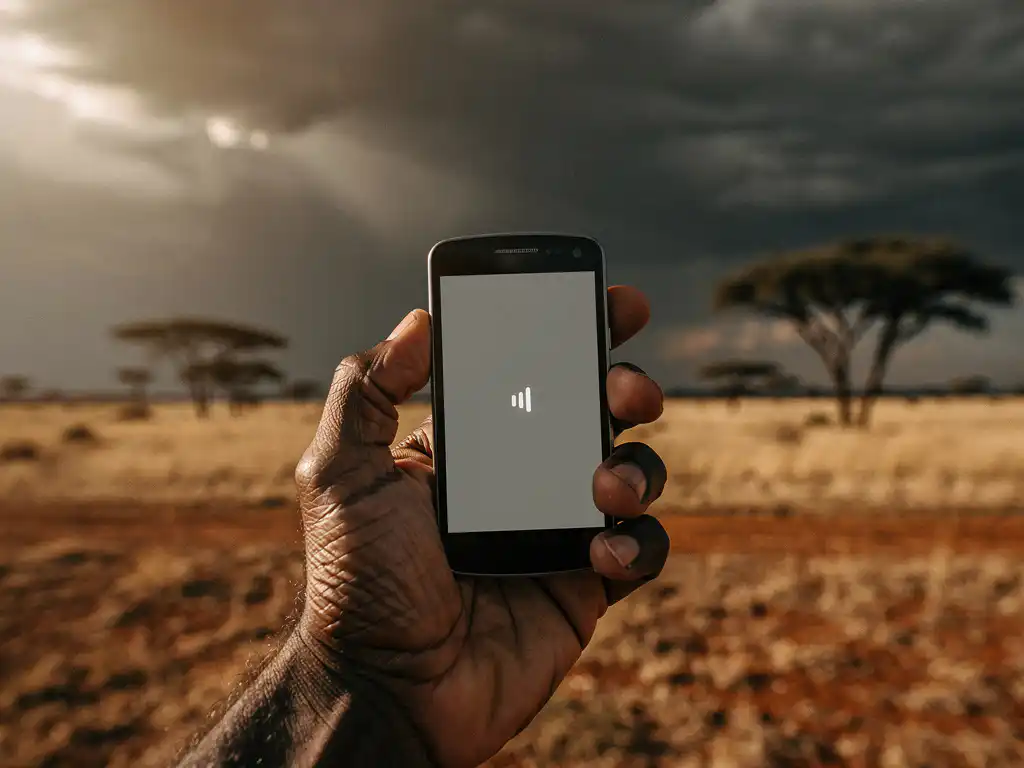
Calling South Sudan from Europe is genuinely difficult, and the main reason is infrastructure: South Sudan has one of the least developed telecommunications networks on the continent, with limited landline coverage, patchy mobile signal outside major towns, and frequent service outages. For diaspora communities trying to stay connected with family back home, this creates real frustration. Below, we answer the most common questions about calling South Sudan so you know exactly what to expect and how to make it work.
Why is it so hard to reach phone numbers in South Sudan?
Reaching phone numbers in South Sudan is hard because the country’s telecom infrastructure is severely underdeveloped. Years of conflict have damaged or destroyed much of the physical network, and rural areas often have no mobile coverage at all. Even in Juba, the capital, calls drop frequently, and connection quality varies hour by hour depending on network load and power availability.
Several factors combine to make the situation particularly challenging:
- Limited network coverage: Mobile towers are concentrated in urban areas. Large parts of the country, especially in the south and east, have no signal at all.
- Power instability: Towers and devices rely on generators or solar power, which can fail. When power goes out, the network goes with it.
- Few active operators: South Sudan has a small number of mobile operators, which means less redundancy when one network goes down.
- SIM card availability: In remote communities, people may not have an active SIM or may share one device between several family members.
Understanding these structural realities helps set realistic expectations. A call not going through is rarely a problem on your end. It is almost always a reflection of conditions on the ground in South Sudan.
What are your options for calling South Sudan from Europe?
When calling South Sudan from Europe, your main options are traditional international calling through your mobile carrier, prepaid phone cards, or internet-based calling apps. Each has trade-offs in cost, reliability, and ease of use. For diaspora communities making frequent calls, internet-based calling tends to offer the best combination of affordability and call quality.
Here is a quick comparison of the three main routes:
- Mobile carrier international calls: Convenient but expensive. Standard international rates from European carriers to South Sudan can be very high per minute, and call quality depends entirely on the South Sudanese network at the other end.
- Prepaid phone cards: A traditional option that many in the diaspora have used for years. Rates are lower than carrier calls, but cards often come with connection fees, expiry dates, and hidden charges that eat into your minutes.
- Internet-based calling apps: Apps that route your call over the internet before connecting to the recipient’s regular phone number. This approach typically offers the lowest per-minute cost and does not require the person you are calling to have a smartphone or internet connection.
For calls to countries with unstable networks like South Sudan, internet-based calling is often the most practical choice because the routing technology can find the best available path to connect your call.
Does the person you’re calling need internet or a smartphone?
No, the person you are calling in South Sudan does not need internet access or a smartphone. When you use an internet-based calling app, only the caller needs the app and an internet connection. The call is routed over the internet on your side and then connects to the recipient’s regular mobile or landline number, just like any ordinary phone call arriving at their end.
This is an important distinction for diaspora communities, because family members in South Sudan or other parts of Africa often use basic feature phones with a local SIM card. As long as their phone has a signal and is switched on, they can receive your call. There is no setup required on their side, no app to download, and no data plan needed.
This also means you can reach people even in areas with limited smartphone penetration, which is particularly relevant for South Sudan, where access to modern devices and data plans is far from universal.
How do per-second billing rates affect the cost of calling South Sudan?
Per-second billing means you are charged only for the exact duration of your call, down to the second, rather than being rounded up to the nearest minute. For calls to unstable networks like South Sudan, where calls frequently drop after just a few seconds, this billing model can save you a significant amount of money over time.
Consider what happens with per-minute billing when a call to South Sudan drops after 15 seconds. You are charged for a full minute. If that happens five times in one session as you try to get through, you have paid for five full minutes but spoken for barely over a minute. With per-second billing, you pay only for those 15 seconds each time.
For families who call regularly, perhaps several times a week, the difference adds up quickly. Per-second billing is especially valuable when calling countries with unreliable networks, because dropped calls are part of the reality, not the exception. When comparing international calling services, always check whether the rate shown is per minute or per second, and whether there is a connection fee on top of the per-call rate.
What should you do when a call to South Sudan keeps dropping?
When a call to South Sudan keeps dropping, the most effective response is to try again at a different time of day, switch to a stronger internet connection on your end, and use an app that routes calls intelligently to find the best available path. Persistence and timing matter more than most people realize when dealing with an unstable network.
Here are practical steps to improve your chances of getting through:
- Try early morning or late evening: Networks in South Sudan tend to be less congested outside of peak hours. Early morning local time often gives the clearest connections.
- Use a stable Wi-Fi connection: If your own internet connection is weak or on mobile data, switching to Wi-Fi can improve the quality of the call routing from your side.
- Ask the recipient to move to a better signal area: If you can reach them via text or messaging first, ask them to step outside or move to a location where they usually get better reception.
- Keep calls short and confirm key information quickly: In low-signal conditions, prioritize the most important parts of the conversation early, in case the line drops again.
- Try calling a different number: If your contact has access to more than one SIM or device, a different number may be on a different operator with better coverage at that moment.
Dropped calls are frustrating, but they are a structural reality of calling South Sudan. Adjusting your approach rather than assuming something is broken on your end will save you time and stress.
Which African countries have similar calling challenges to South Sudan?
Several African countries share similar calling challenges to South Sudan, particularly those with ongoing conflicts, limited infrastructure investment, or large rural populations with sparse network coverage. Understanding which countries face comparable conditions helps diaspora communities across Europe plan their communication strategies accordingly.
Countries with notably similar challenges include:
- Sudan: Network reliability has worsened significantly since 2023 due to ongoing conflict. Many areas have intermittent or no coverage, and international calls often require multiple attempts.
- Eritrea: Telecommunications are tightly controlled and infrastructure is limited. Calling from the Netherlands or elsewhere in Europe to Eritrea can be particularly challenging and expensive through standard carriers.
- Niger: Rural coverage is sparse, and network quality varies considerably between urban centers and the rest of the country.
- Ethiopia: While Ethiopia has a larger and more developed network than South Sudan, rural connectivity remains inconsistent, and international call quality can fluctuate.
Countries like Nigeria, Uganda, Tanzania, and Egypt generally have more developed telecom infrastructure, making calls more reliable, though cost remains a concern for frequent callers in the diaspora.
How FroggyTalk helps you stay connected to South Sudan and beyond
We built FroggyTalk specifically for diaspora communities who know exactly how frustrating it is to call home when the network is unreliable, the rates are unclear, and the app does not speak your language. Our goal is simple: we want you to feel heard, seen, and noticed, whether you are calling South Sudan, Eritrea, Sudan, Nigeria, or anywhere else across Africa.
Here is what makes a real difference when you call with us:
- Per-second billing with no hidden fees: You pay only for the seconds you actually speak. No connection charges, no rounding up, no surprises at the end of the month.
- No app needed on the other end: The person you are calling in South Sudan just needs their regular phone. They pick up like any normal call.
- Full app translation into your local language: Everything in the app can be translated into your preferred language, including Tigrinya, Arabic, Hausa, Amharic, French, and more, so you never have to navigate in a language that is not yours.
- Reliable internet-based routing: Our technology routes your call to find the best available connection, which makes a real difference when calling countries with unstable networks.
- Transparent minute rates: We show you clearly how many minutes you get for your money, so you can plan your calls without guessing.
If you have questions about calling South Sudan or want to know the current rates for your country, get in touch with us and we will help you find the most affordable and reliable option for staying connected with the people who matter most.
Frequently Asked Questions
What is the country code for South Sudan, and how do I dial it correctly from Europe?
South Sudan's country code is +211. To call from Europe, dial your international exit code (usually 00 or +), followed by 211, then the recipient's full local number without the leading zero. For example, a Juba number starting with 09X XXX XXXX would be dialed as +211 9X XXX XXXX. Double-check the number format with your contact beforehand, as incorrect dialing is a common reason calls fail to connect.
Which mobile networks operate in South Sudan, and does it matter which one my contact uses?
The main mobile operators in South Sudan are MTN South Sudan, Zain, and Digitel, though coverage and reliability vary significantly between them. It does matter which network your contact is on, because one operator may have better signal in a specific area or town than another at any given time. If your contact has access to SIM cards from more than one operator, it is worth knowing which network tends to work best in their location, especially if you are regularly struggling to get through.
Is it better to call South Sudan or use a messaging app like WhatsApp to stay in touch?
Messaging apps like WhatsApp are excellent for staying in touch when your contact has a smartphone and a data connection, but in South Sudan, data access is far from guaranteed, especially outside Juba. A direct phone call via an internet-based calling app is often more reliable because it connects to a regular phone number and does not require the recipient to have mobile data or a smartphone. The best approach for many diaspora families is to use messaging when possible and fall back on direct calling when internet access on the recipient's end is limited or unavailable.
How do I know if the calling rate I'm seeing is genuinely competitive for South Sudan?
To evaluate whether a rate is competitive, compare the per-minute or per-second cost across at least three services, and always check for connection fees, which can add a fixed charge to every single call regardless of duration. For South Sudan specifically, a low headline rate can quickly become expensive if there is a connection fee on top, since dropped calls mean you pay that fee repeatedly. Look for services that offer per-second billing and clearly state there are no connection fees, as these two factors together give you the most accurate picture of what you will actually spend.
What is the time difference between Europe and South Sudan, and when is the best time to call?
South Sudan operates on East Africa Time (EAT), which is UTC+3. Depending on your location in Europe, this means South Sudan is typically 2 to 3 hours ahead. The best time to call is generally early morning South Sudan time, around 7–9 AM local time, when network congestion is lower and power supply to mobile towers is more likely to be stable after overnight generator cycles. Avoid calling during midday peak hours or late evening when network load tends to be highest.
Can I use a calling app while traveling within Europe, or does it only work from my home country?
Most internet-based calling apps, including FroggyTalk, work anywhere you have a reliable internet connection, so you can use them whether you are at home, traveling within Europe, or even further afield. Your account balance and rates stay the same regardless of where you are calling from, as long as you have Wi-Fi or mobile data. This is a significant advantage over country-specific phone cards, which are often locked to a particular country's network or phone line.
What should I do if my contact in South Sudan has changed their number and I have no way to reach them?
This is a common challenge for diaspora communities, particularly when family members switch operators or share devices. The best first step is to reach out through a mutual contact or community network who may have the updated number. If your contact uses any messaging platform at all, even occasionally, try sending a message to the old number in case it is still active on a data-linked account. For future-proofing, it helps to maintain contact details for more than one person in the same household or community, so you always have an alternative route if one number goes out of service.