


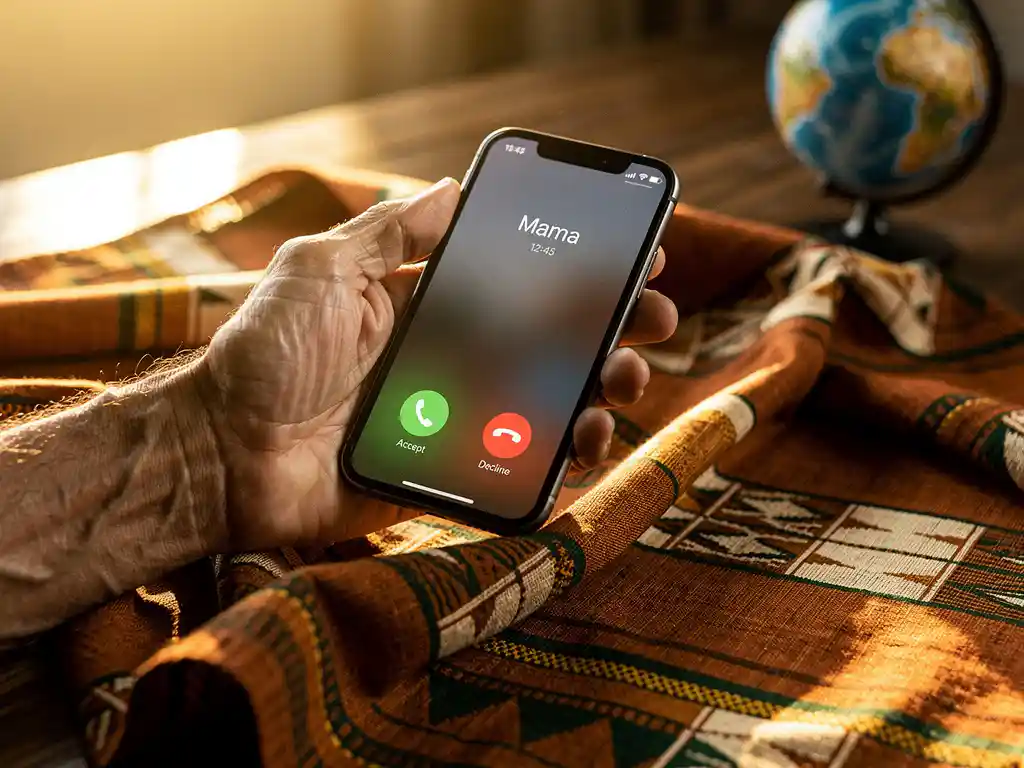
Staying connected with family and friends back home in Africa is one of the most important things you can do as part of the diaspora. Whether you’re calling a parent in Nigeria, a sibling in Ethiopia, or a friend in Sudan, making an international call to an African number can sometimes feel more complicated than it should be. This guide answers the most common questions about how to call Africa, so you always know exactly what to do and what to expect.
What does it mean to call an African number?
Calling an African number means placing an international phone call to a mobile or landline number in an African country. To do this successfully, you need to dial the correct international exit code, the country code for the destination country, and then the local phone number without its leading zero. The call travels across international networks and connects to the recipient’s phone, just like any other call.
What makes calling African numbers different from local calls is the routing involved. Your call leaves your home country’s network, passes through international telecommunications infrastructure, and connects to a local network in the destination country. This routing is what drives up costs with traditional providers, and it is also why specialized apps designed for these routes can offer much better value.
Why are international calls to Africa so expensive?
International calls to Africa are expensive because of the interconnection fees that telecom operators charge each other to route calls across borders and networks. These fees, often called termination rates, are set by local carriers in each country and can vary significantly. The more steps a call takes to reach its destination, the more fees accumulate along the way.
Several factors push these costs even higher for African destinations specifically:
- Limited competition among local telecom operators in some countries, which keeps termination rates high
- Infrastructure investment costs that carriers pass on to consumers
- Currency exchange margins applied by traditional providers
- Connection fees and per-minute rounding that many standard telecom providers add on top of the base rate
The good news is that internet-based calling services have disrupted this model significantly. By routing calls over the internet before connecting to local networks, these services bypass many of the traditional cost layers and pass those savings directly to you.
How do you dial an African number from Europe?
To dial an African number from Europe, follow these steps in order: dial the international exit code (00 or +), then the country code for the African country you are calling, and finally the local phone number without its leading zero. For example, to call a Nigerian mobile number, you would dial +234 followed by the local number.
Here are the country codes for some of the most commonly called African destinations:
- Nigeria: +234
- Ethiopia: +251
- Eritrea: +291
- Sudan: +249
- South Sudan: +211
- Liberia: +231
- Sierra Leone: +232
- Zimbabwe: +263
When using a calling app, the dialing process is often simplified. Most apps allow you to select the country from a list and enter the local number directly, handling the country code automatically. This reduces the risk of dialing errors and makes the process faster, especially if you call multiple countries regularly.
What’s the cheapest way to call Africa from abroad?
The cheapest way to call Africa from abroad is to use an internet-based international calling app that offers per-second billing and no hidden connection fees. These apps route your call over Wi-Fi or mobile data, which dramatically reduces the cost compared to traditional phone carriers or roaming plans. Rates vary by destination, so it pays to compare before you top up.
To give you a concrete sense of what affordable looks like, here are some example rates and the calling time you can get for around €10, or the equivalent in your local currency:
Calls to Nigeria can be as low as €0.08 per minute, giving you around 2 full hours of talk time. Calls to Eritrea and Ethiopia run around €0.17 per minute, delivering close to an hour of conversation. Calls to Sudan cost roughly €0.26 per minute, giving you about 38 minutes, while Liberia and Sierra Leone come in at €0.29 per minute for around 34 minutes. Destinations like South Sudan and Zimbabwe sit at approximately €0.35 per minute, providing about 28 minutes of talk time.
Beyond the rate itself, look for weekly deals on specific destinations. Many calling apps offer discounted rates on set days of the week, which can stretch your credit even further if you plan your calls around those windows.
Does the recipient need an app to receive calls from abroad?
No, the recipient does not need an app or an internet connection to receive your call. When you use an internet-based calling service, the call travels over the internet on your end and then connects to the local phone network at the destination. The person you are calling receives it as a regular incoming phone call on their mobile or landline, just as if you had called from a standard phone.
This is a crucial point for many diaspora communities. Family members back home may not have smartphones, reliable internet, or any familiarity with apps. The fact that they simply need to answer their phone means there is no technical barrier on their side. You handle the technology; they just pick up.
What should you look for in an app to call Africa?
When choosing an app to make calls to Africa, the most important factors are transparent pricing, call quality, and ease of use. A good app should show you exactly how many minutes you get for your money before you top up, with no surprise connection fees or hidden charges deducted at the start of each call.
Here are the key things to evaluate before committing to a calling app:
- Per-second billing: Apps that charge per second rather than rounding up to the nearest minute save you money on shorter calls
- No connection fees: Some services deduct a flat fee at the start of every call regardless of how long you speak
- Language support: If you are more comfortable in Hausa, Amharic, Tigrinya, Arabic, or another language, look for an app that lets you navigate and use it in your preferred language
- Weekly deals: Discounted rates on specific days can significantly increase the value of your credit
- Call reliability: Consistent audio quality matters, especially for important conversations with family
- No app required for recipients: As covered above, this removes a major barrier for contacts who are less tech-savvy
It is also worth considering whether the app is designed with your community in mind. An app built for the African diaspora will reflect your needs in ways that a generic calling service simply cannot.
How FroggyTalk helps you call African numbers affordably
We built FroggyTalk specifically for African diaspora communities in Europe because we know that staying connected should never feel like a luxury. Our international calling service is designed around the things that matter most to you: fair prices, honest billing, and calls that just work.
Here is what we offer:
- Affordable per-second billing with no hidden fees or connection charges
- Weekly calling deals on popular African destinations, including Nigeria, Ethiopia, Eritrea, Sudan, and more
- No app or internet required on the recipient’s side — they simply answer their phone
- Full app navigation available in multiple languages, including Tigrinya, Hausa, Amharic, Arabic, French, and more, so everything feels familiar and comfortable
- Transparent rates so you always know how many minutes you get before you spend a cent
We want you to feel heard, seen, and valued — and that starts with being able to pick up the phone and call the people who matter most without worrying about the bill. Check our current calling rates to see exactly what you get for your money, or get in touch with us if you have any questions. We are here to help.