


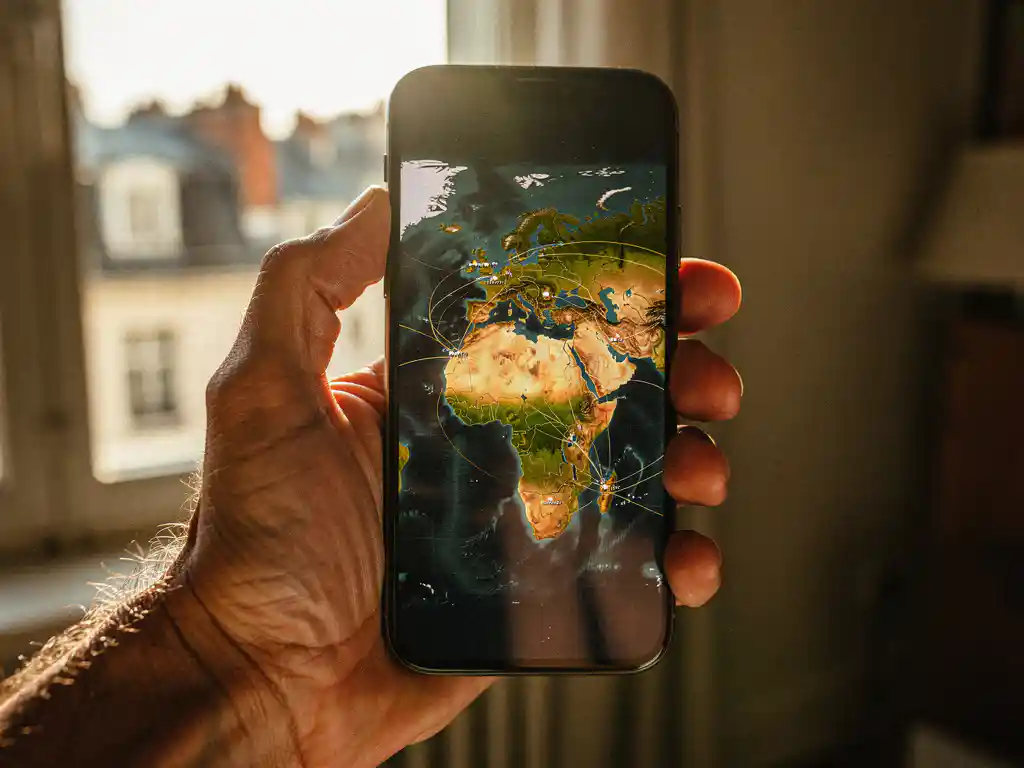
Staying connected with family and friends across borders is one of the most important things you can do as part of a diaspora community. Understanding how international calling works can save you time, money, and frustration, whether you are calling home for the first time or looking for a more affordable way to stay in touch. This guide answers the most common questions people ask before making their first international call from Europe.
From activating international calling on your phone to finding the most affordable rates, we cover everything you need to know in plain, friendly language. And because we know that feeling heard and understood matters, everything we do is designed to make that connection as easy and affordable as possible.
What is international calling and how does it work?
International calling is the process of making a phone call from one country to a recipient in another country. It works by routing your call through telecommunications networks across borders, either via traditional phone lines or, increasingly, through internet-based technology known as Voice over Internet Protocol (VoIP).
Traditional international calls travel through a chain of telephone networks, often involving multiple carriers in different countries. Each handoff between networks adds cost, which is why standard international calls from a mobile or landline plan can be surprisingly expensive. The call is billed per minute, and connection fees are sometimes added on top of the per-minute rate.
Internet-based international calling
A more modern approach uses your internet connection to transmit voice data as digital packets. Apps that use this method can significantly reduce costs because they bypass traditional phone network infrastructure for most of the call’s journey. The key advantage is that the person you are calling does not need to have the app or even an internet connection. The call arrives on their regular phone number, just like any other call.
This technology makes it possible to call a family member in Lagos or Asmara from Amsterdam or Stockholm at a fraction of the cost of a standard mobile plan.
How can I activate international calling on my phone?
To activate international calling on your phone, you have two main options: enable it through your mobile carrier’s settings or plan, or download an internet-based calling app that handles international calls without requiring any changes to your SIM or carrier plan.
Activating through your mobile carrier
Most mobile carriers in Europe disable international calling by default on standard plans to prevent unexpected charges. To activate it, you typically need to:
- Contact your carrier by phone, app, or in-store and request that international calling be enabled on your account.
- Check whether your current plan includes international minutes or whether you need to add an international calling add-on.
- Confirm the per-minute rates to your specific destination country before making any calls.
- Save the correct international dialing format: the plus sign (+), followed by the country code, followed by the local number.
Keep in mind that carrier-based international calls can be expensive, particularly to African countries. Rates vary widely by destination and carrier, and connection fees are common.
Using an internet-based calling app
The faster, more flexible option is to use a calling app that works over Wi-Fi or mobile data. There is no need to call your carrier or change your plan. You simply download the app, create an account, add credit, and start calling. The recipient receives the call on their regular phone number, so there is no barrier on their end. This approach gives you much more control over your costs and call quality.
Which countries can I call with an international calling app?
A good international calling app covers a wide range of destinations worldwide. Apps focused on the African diaspora typically prioritize connectivity to countries across East, West, and North Africa, including Nigeria, Ethiopia, Eritrea, Sudan, South Sudan, Liberia, Sierra Leone, Zimbabwe, Niger, and many more.
The range of destinations matters because diaspora communities are not monolithic. A single household in Europe may have family ties to multiple countries across the continent. Having access to affordable rates for all of those destinations in one place, rather than juggling multiple apps or SIM cards, makes a real difference in daily life.
When choosing an app, look at the specific rate per minute for your destination country. For example, rates vary considerably by country. Calls to Nigeria can be among the most affordable, while calls to countries like South Sudan or Zimbabwe may carry a higher per-minute rate due to network infrastructure in those regions. Always check the rate for your specific destination before adding credit.
If you want to explore current rates by destination, you can check the latest international call rates to see exactly how many minutes you get for your money.
Why are international calls so expensive, and how can I reduce the cost?
International calls are expensive primarily because they involve multiple telecommunications networks across different countries, each of which charges a fee for carrying the call. Carriers also apply their own margins on top of these interconnection costs, and many add connection fees before the per-minute rate even begins.
Several factors drive up the cost of international calls:
- Interconnection fees: Each network that handles your call along the route charges a fee, and calls to some African countries pass through several networks.
- Infrastructure gaps: Countries with less developed telecommunications infrastructure often have higher termination rates, meaning it costs more to complete a call there.
- Carrier markups: Mobile and landline providers in Europe add their own margins, which can be substantial for international routes.
- Connection charges: Many providers charge a flat fee just for connecting a call, before the per-minute rate starts. This makes short calls disproportionately expensive.
The most effective ways to reduce your international calling costs are to use an internet-based calling app with transparent per-second or per-minute billing, look for weekly deals on specific destinations, and avoid providers that charge connection fees. Choosing an app that bills per second rather than rounding up to the nearest minute also means you pay only for the time you actually spend talking.
What do I need to make international calls from Europe?
To make international calls from Europe, you need a smartphone or device with either a mobile data connection or access to Wi-Fi, an account with an international calling service, and sufficient credit loaded on that account. That is genuinely all it takes when using a modern calling app.
If you are using a traditional carrier plan, you will also need to confirm that international calling is activated on your account and that your plan covers your destination country. However, for most people in the African diaspora, an internet-based calling app is the more practical and affordable option.
A few things worth checking before you make your first call:
- Your internet connection is stable, whether Wi-Fi or mobile data, as call quality depends on it.
- You have the correct international number format for your recipient, including the country code.
- You understand the billing model of your chosen app, specifically whether it charges per second or per minute, and whether there are any connection fees.
- The app you choose supports your preferred language, so you can navigate it comfortably without language barriers getting in the way.
One often overlooked detail is language support within the app itself. If English is not your first language, using a service that lets you navigate the app in Hausa, Amharic, Tigrinya, Arabic, French, or another familiar language makes a significant difference. Being able to use a service in your own language means you feel seen and understood, not just tolerated.
For anyone unsure about getting started, learn more about how internet-based international calling works before committing to a plan or adding credit.
How FroggyTalk helps with international calling
We built FroggyTalk specifically for diaspora communities that need reliable, affordable international calling without the confusion of hidden fees or complicated plans. Here is what makes our approach different:
- Transparent per-second billing with no connection charges, so you only pay for what you use.
- Weekly calling deals for popular destinations, including Nigeria, Eritrea, Ethiopia, Sudan, South Sudan, Liberia, Sierra Leone, and Zimbabwe, giving you more calling minutes for your money.
- No app required on the recipient’s end; calls arrive on their regular phone number.
- Full language support across the entire app, including Tigrinya, Hausa, Amharic, Arabic, French, and more, so you can use every feature in your own language.
- A platform built around you, because we believe everyone deserves to feel heard, seen, and valued, no matter where in the world you are calling from or calling to.
Ready to start calling? Check the current rates for your destination and see how many minutes you get for your money. If you have questions or need help getting started, get in touch with our team and we will be happy to help.